
Presented by Randy Lightfoot & Guy Borenstein
The Washington D.C. GIA Alumni Chapter was honored to welcome two prominent professional experts in gemology to present two presentations on current issues and challenges regarding lab-grown diamond screening.

- Randy Lightfoot

Low-priced lab-grown diamond is widely sought after by the public as an alternate to much-higher priced natural diamond because, to the average consumer, the physical properties, including hardness, as well as atomic crystal structure, are perceived as the same. Recent studies showed
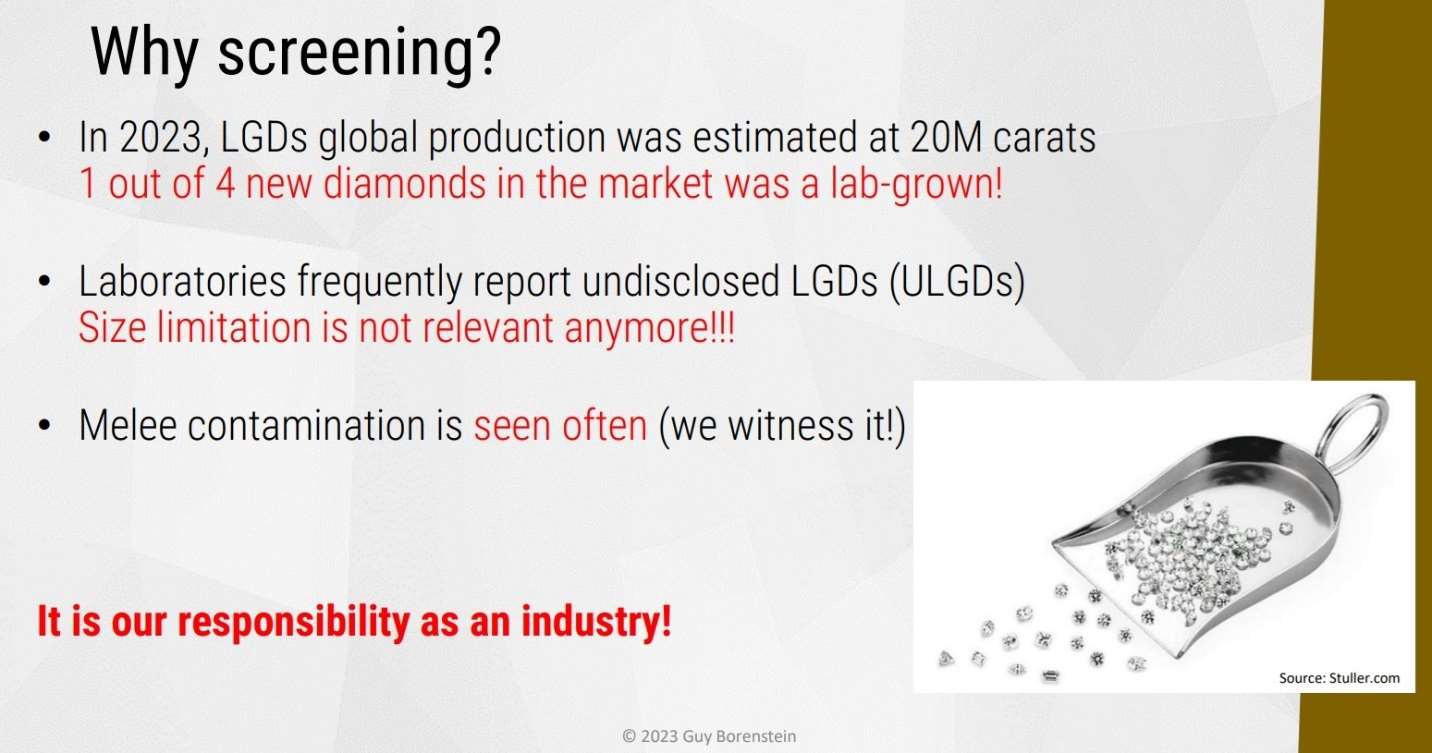
that lab-grown diamond engagement rings sold in the U.S. represent an estimate of 50% of the total sales, demonstrating an increase in demand over natural diamond. Since lab-grown and natural diamonds are of nearly identical properties and judged by the 4 C’s all the same, the main
challenge is how to reliably and confidently separate them using standard screening methods.
Randy Lightfoot, GG, CG, CM, RGA, earned his B.A. in Geology from Augustana, IL. Mr. Lightfoot is skilled in using illumination techniques such as cross-polarized filters (CPF) and UV-imaging to identify clues to diamond origin. He is knowledgeable in gemstone identification using standard
non-destructive testing methods and enjoys the art-science of inclusion photomicrography.
Guy Borenstein, FGA EGG, is Stuller’s Senior Gemologist, leading the company’s comprehensive diamond screening and gemological testing operations at its global facilities. Besides directing gemological laboratory operations, Borenstein’s other responsibilities include developing screening protocols for all diamonds and gemstones and researching for evolving new
technology-based screening and identification solutions to adopt.
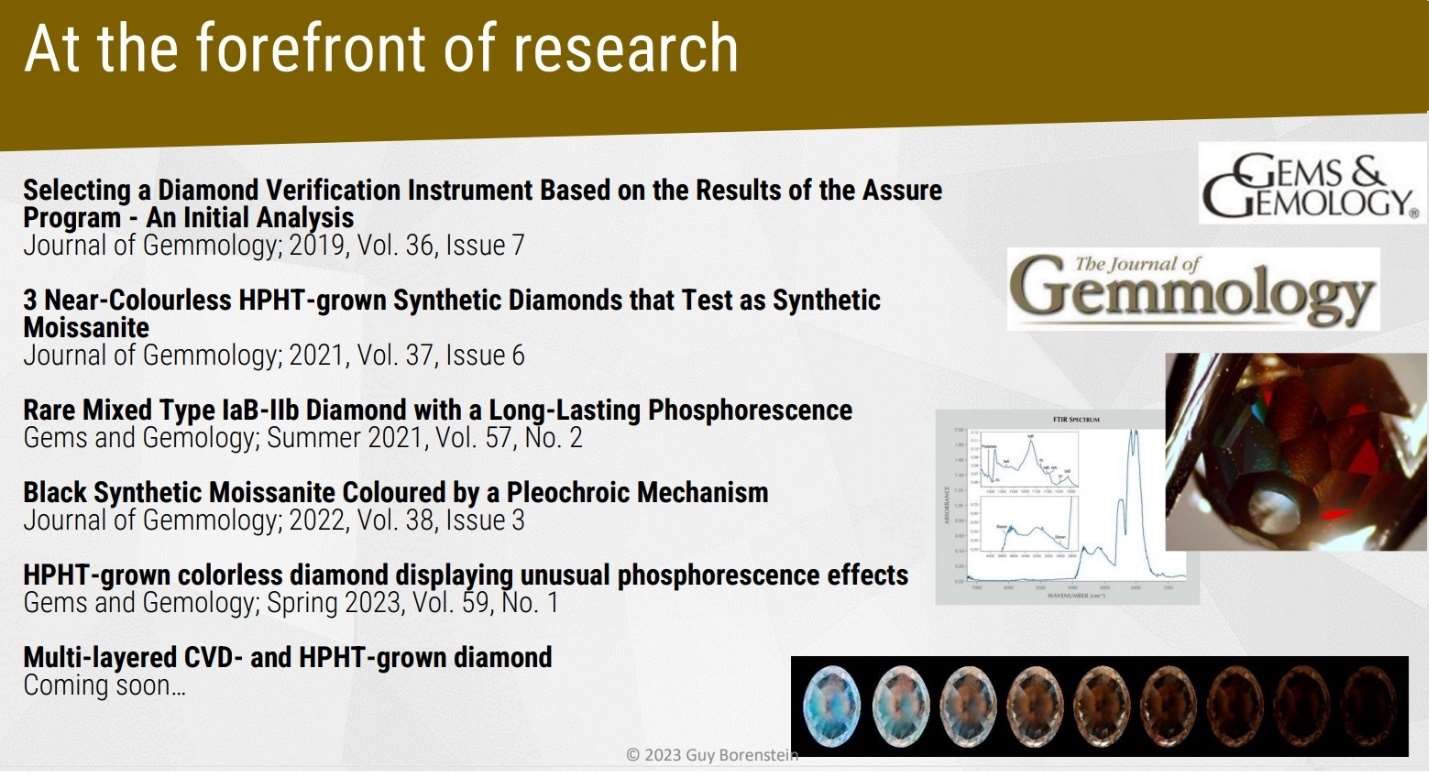
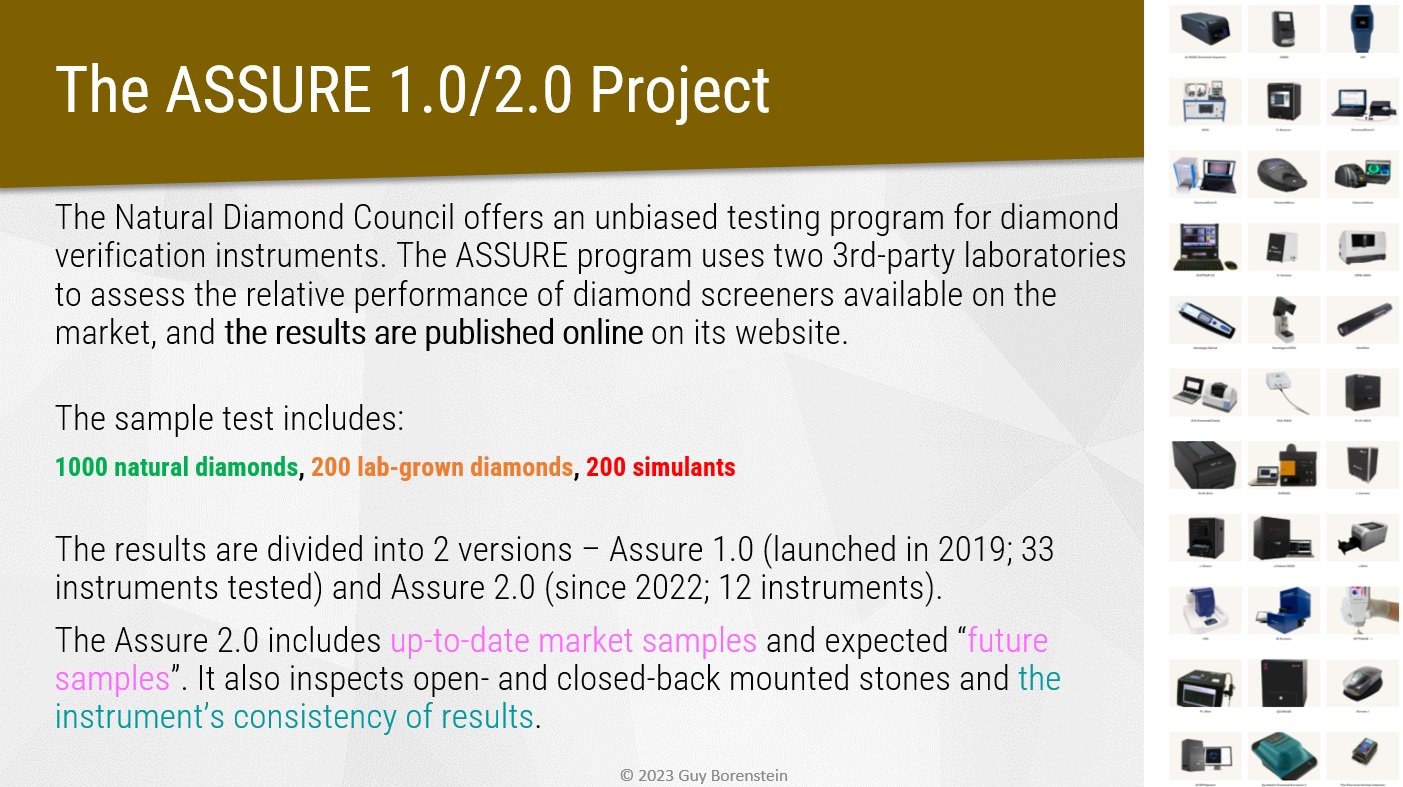
Guy provided DCGIA Chapter with an update on the common technologies used in diamond verification instruments and their performance.

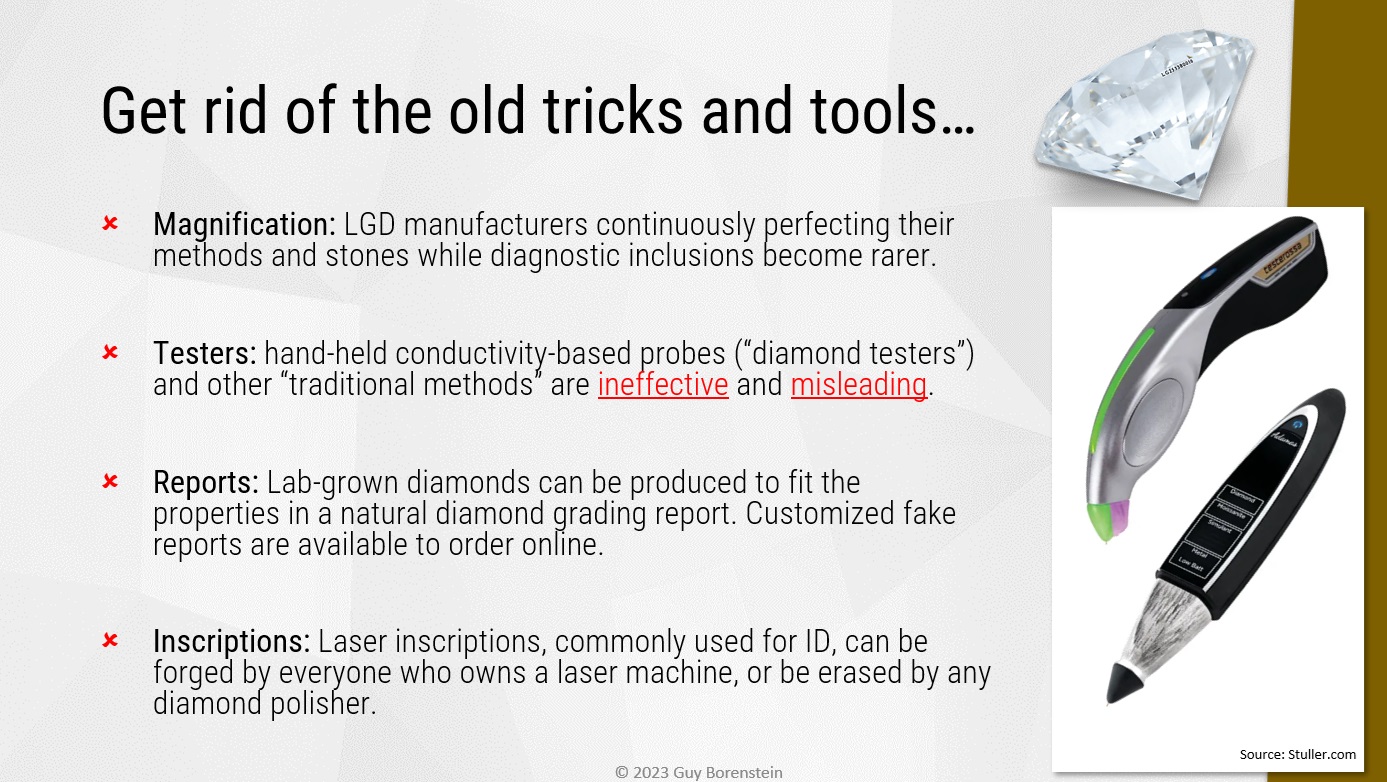
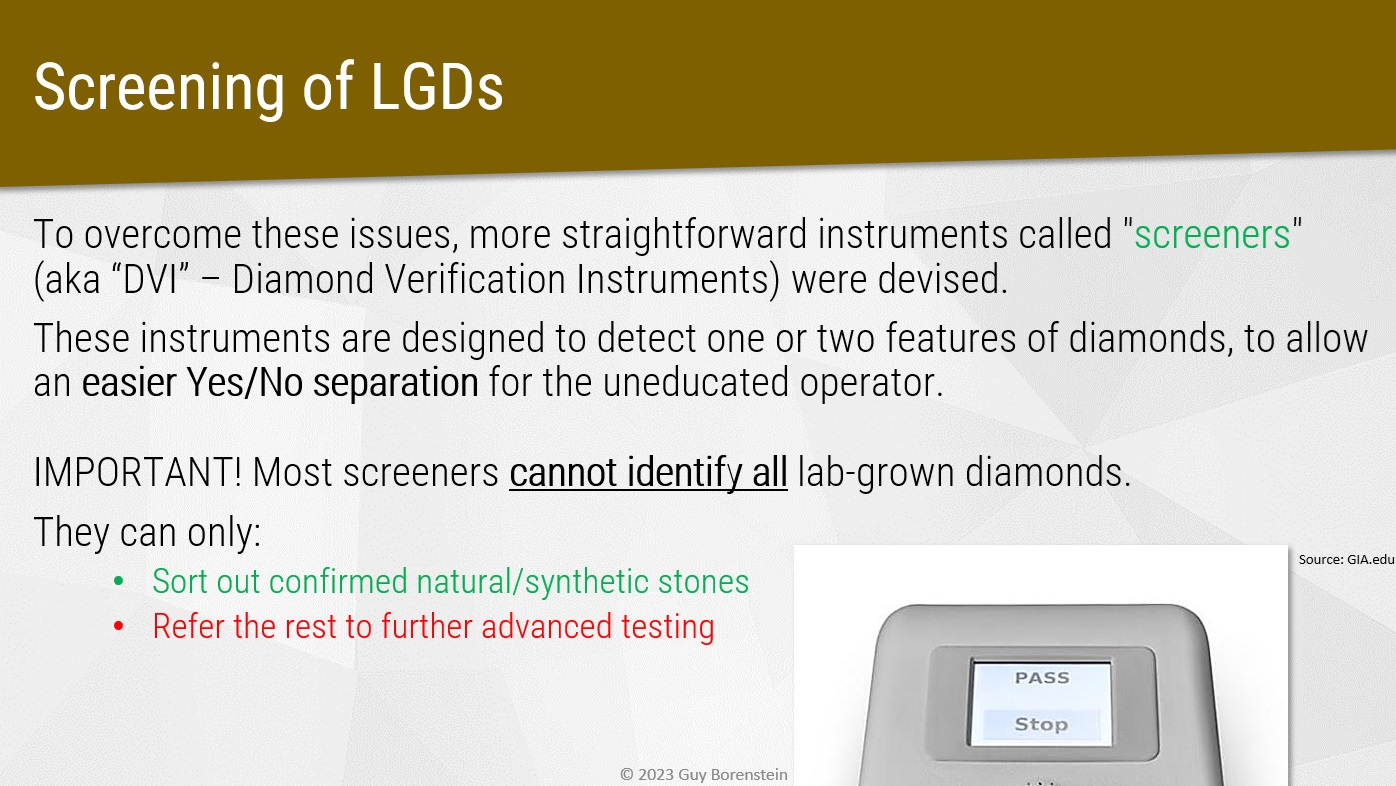
Most diamond verification instruments on the market today test for properties related to diamond origin, with a straightforward objective: to analyze one or two distinct characteristics specific to natural or lab-grown diamonds.
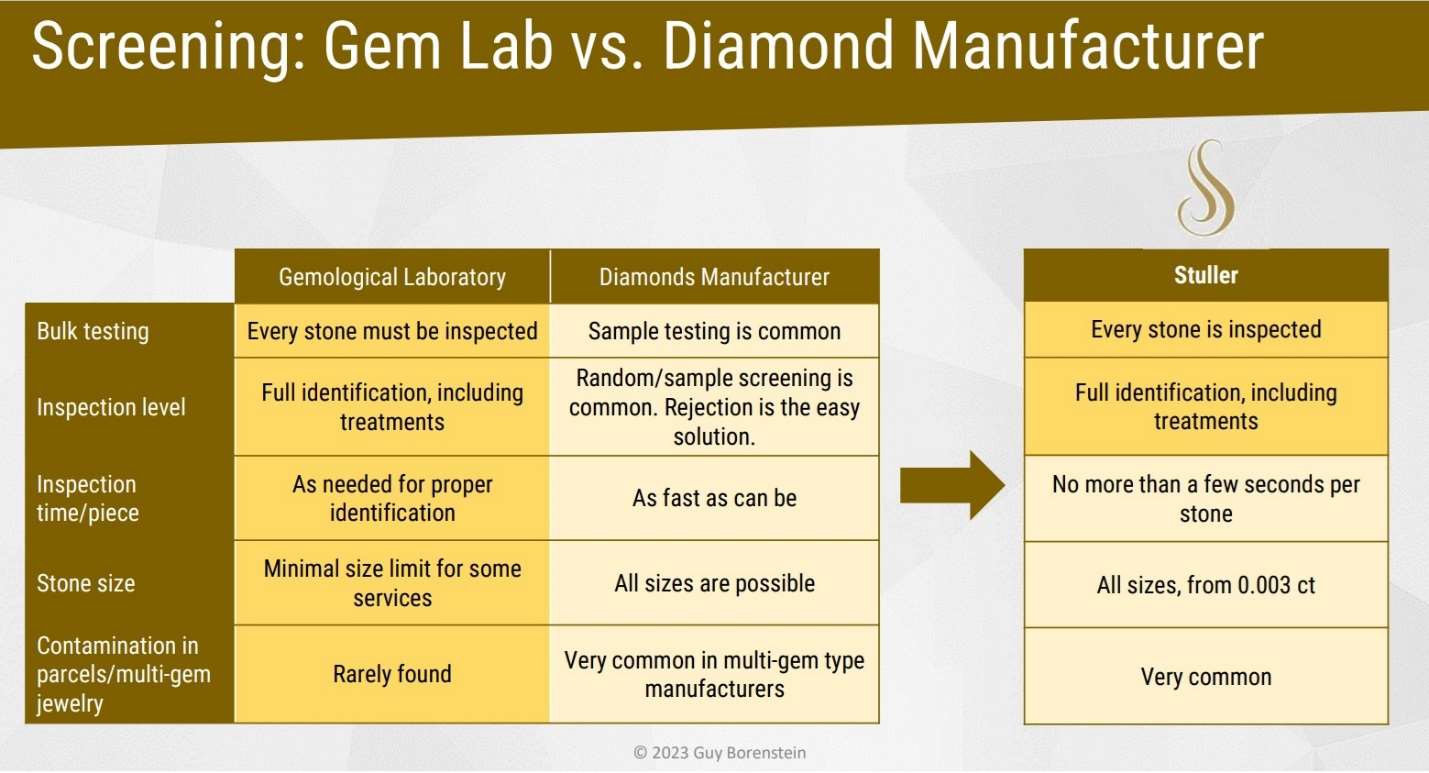
An understanding of the science behind them isn’t required, but because there are so many manufacturers and models of screening devices today, knowing the available diamond verification instruments and their performance is mandatory.


 dcgia.org