Holiday Dinner & Auction

The Holiday Dinner & Auction was once again a great success!

Thanks go out to everyone that worked so hard, before, during and after, to put this annual event together. Thanks also go out to everyone who came and shared the evening with us!

Pictures are posted on the Archive Page ! Check it regularly for updates and newly posted photos.

Because of the Record Breaking 2010 Auction results, the Board of Directors has decided to roll back the meeting fees, to reward all our members, who helped in making this happen, and to increase attendance at our monthly meetings. The 2011 Meeting Fees will be $55.00 for the year or $10.00 per meeting.

Special Thanks go out to all the Donors (in no particular order) for all the great items that went up for auction, and all the bidders that pushed the prices up.

2010 Honor Roll of Donors

Bob Davis “Jewellery by da Vis”
Andy & Helen Serras-Herman “Gem Art Center”
Kusam & Kiran Malhotra “K & K International”
Lisa Carp
Charlie & Melanie Marts
Theresa McGowan & Bobby Mann
Josh Hall “Pala International”
Adam A. Weschler & Son Auctioneers
Richard Drucker “Gemworld International”
Christine O.C. Miller
Carolyn Chappell “Carolyn’s Crystals”
L.Courtland Lee
Madeleine Albright
Ackikian Goldsmiths
Lois Berger
GIA Alumni Association
Skinner’s Auctioneers
Tim Roark Inc.
Brenda Forman
Reiko Nagoya
Pam Stair
Mangan Jewelers
Adele Cramer
John Lees
Denise & Dennis Nelson
Camilla Nasr
Tim Morgan “Treasures from the Earth”
Michele McMurtry “Eclectic by Design Jewelry”
Joan Lillis
Hap & Dee Williams
Joan Ward
Mason Kay
Laura McCloud
Eddie Greenan Jewelers
Kathy Bonnell
Donna Sibley & Tony Conway
Duncan & Clark
John & Dorothy Foellmer
Toby & Helen Fitzkee “Five Star Jewelers”
Jeff & Sharon Allison
Sherleen Bradbury
Ana Escobar & John Chagnon
Solovey Jewelers
Anonymous

Posted in Meeting Archives | Leave a comment

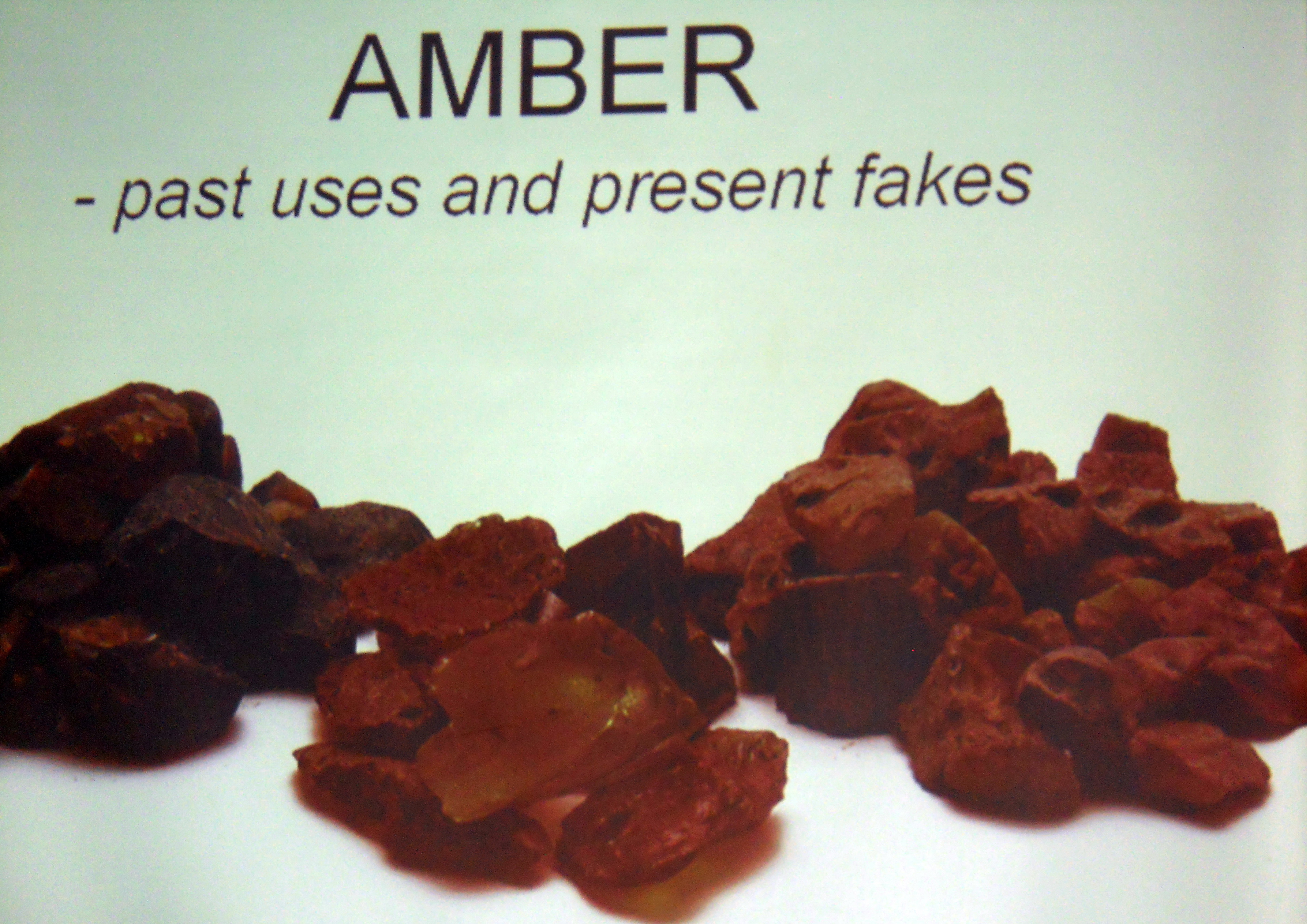
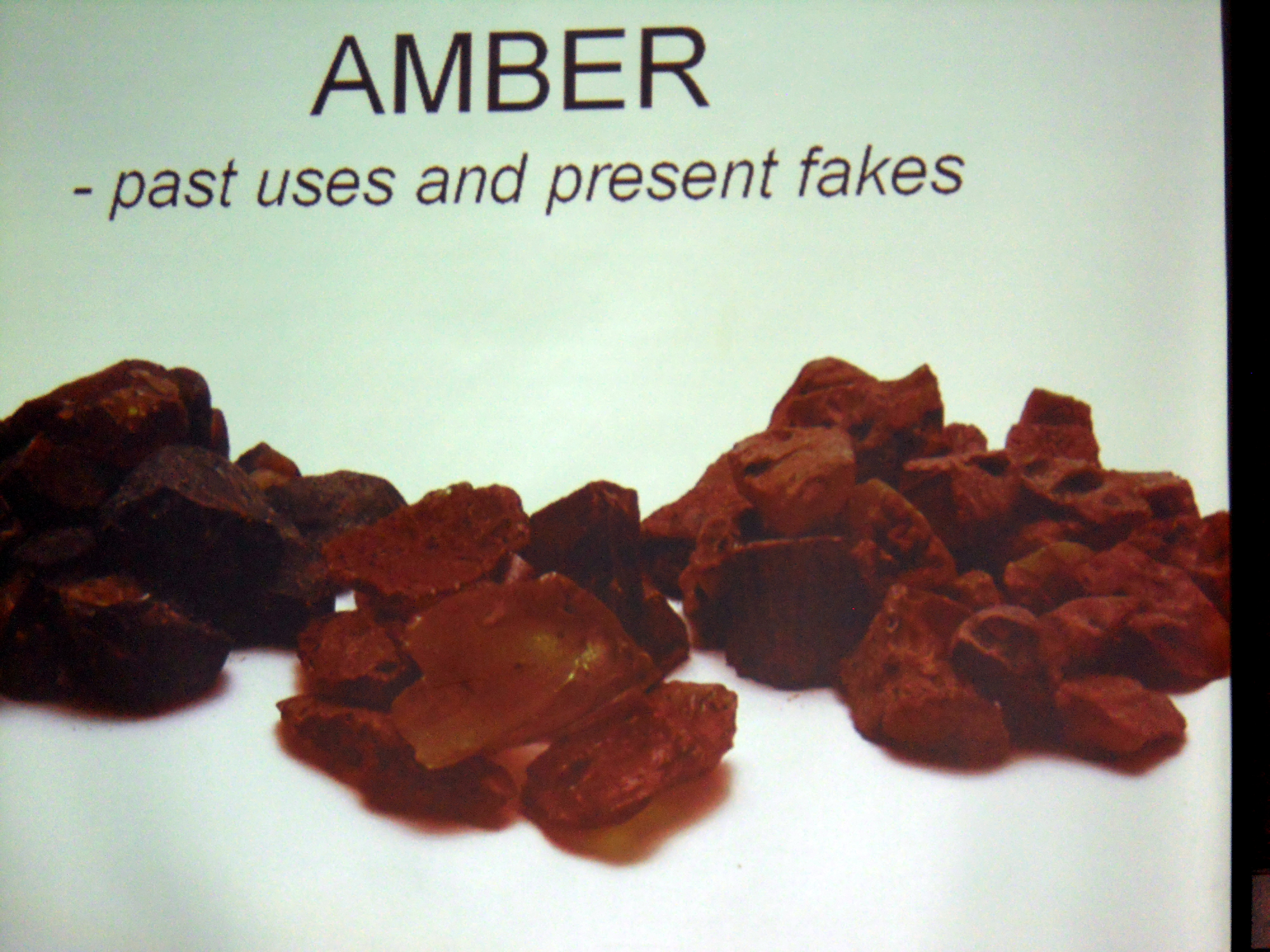
AMBER: Past Uses and Present Fakes

Maggie Campbell Pendersen

Maggie Campbell Pendersen

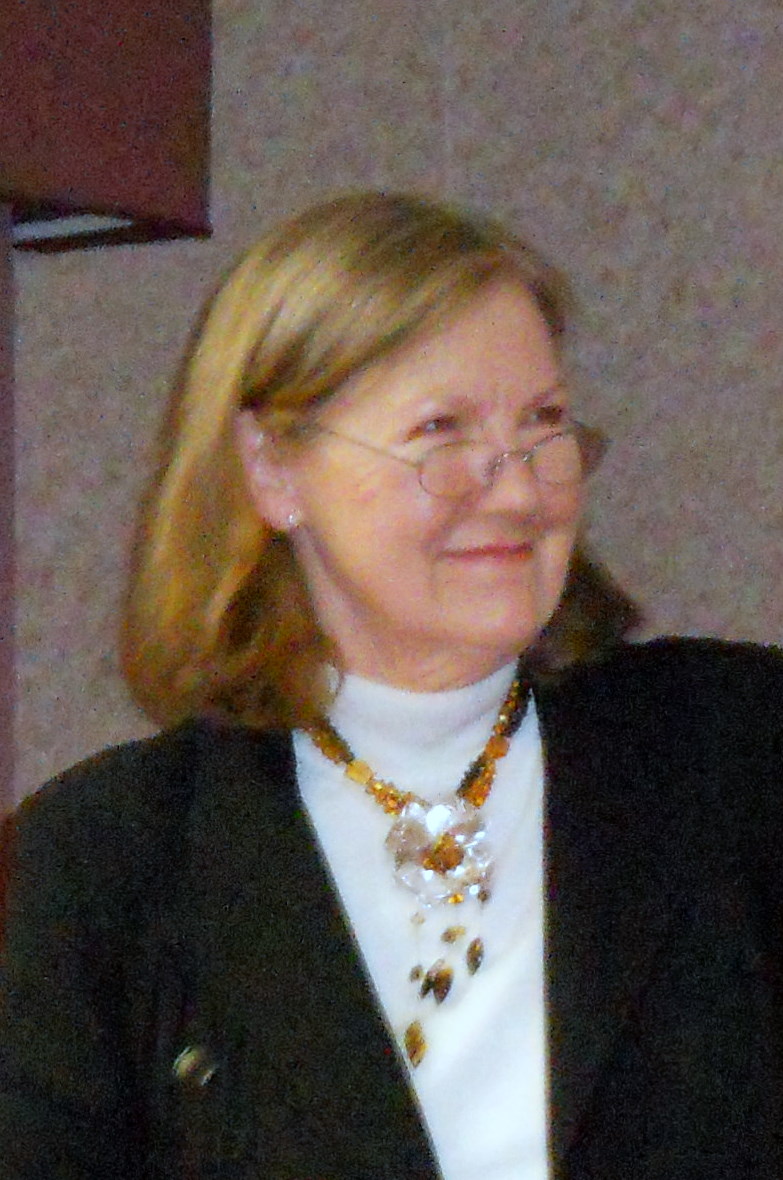
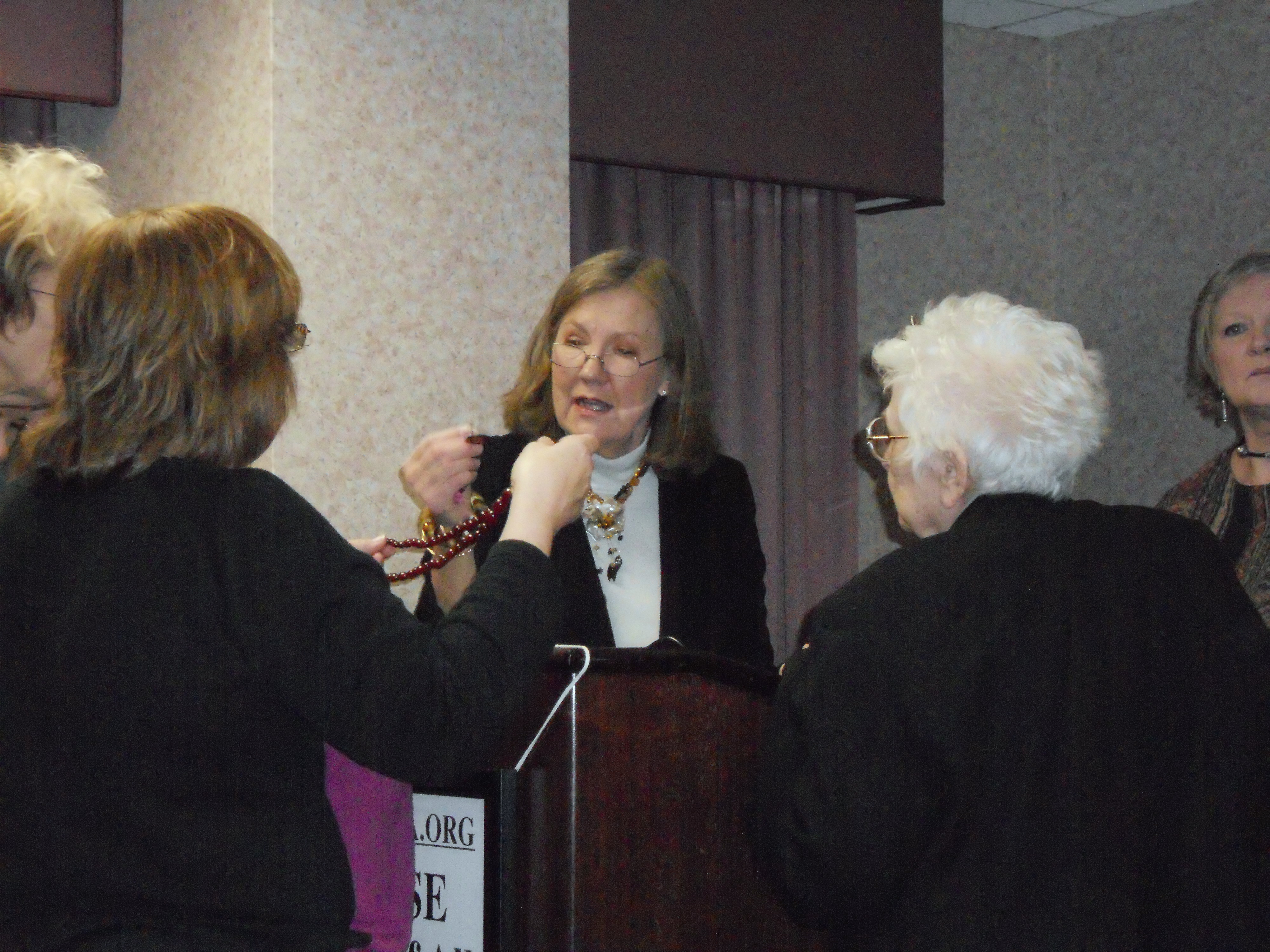
Maggie Campbell Pendersen was insightful and informative in her discussion November 18th on Amber.

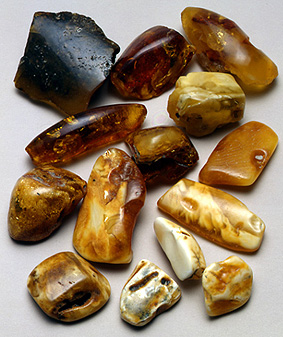
Amber is fossilized tree resin (not sap), which has been appreciated for its color and natural organic beauty since Neolithic times.

Amber is used as an ingredient in folk medicine, as jewelry, and in art.

Amber Past Uses and Present Fakes

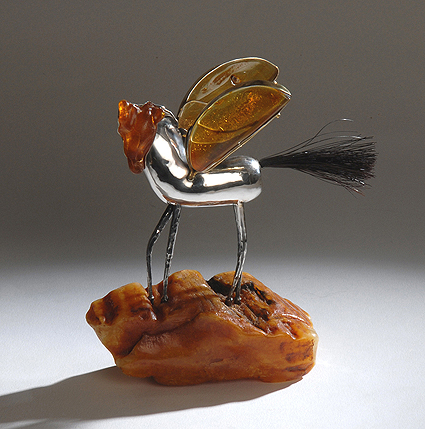
The 17th century was the Golden Age for Amber use in art and carving, often combined with Ivory.

Pegasus

Pegasus

The process by which plant resin matures to become ‘amber’ is through a gradual transition over millions of years, from liquid Tree Resin, to a dried out solid stone, without any abrupt changes. The youngest Amber has been dated to 12 Milllion Years, while the oldest may be up to 300 Million Years old.

Baltic amber

Baltic Amber

There is no dividing line or specific age at which we can definitely say that the resin became amber.

Young resins (copal) are less stable than older ones (amber).  The process of polymerisation is incomplete in copal, volatiles are still evaporating, and the material is, in effect, still drying out. 
This causes the surface to shrink and subsequently flake away. 

Copal is also more susceptible than mature amber to excessive heat or solvents.

Amber3There are a few rules of thumb that we can use when buying “Natural” Amber.  Color: 
Natural Amber occurs in colors ranging from pale honey to dark brown, and some can be transparent or opaque.

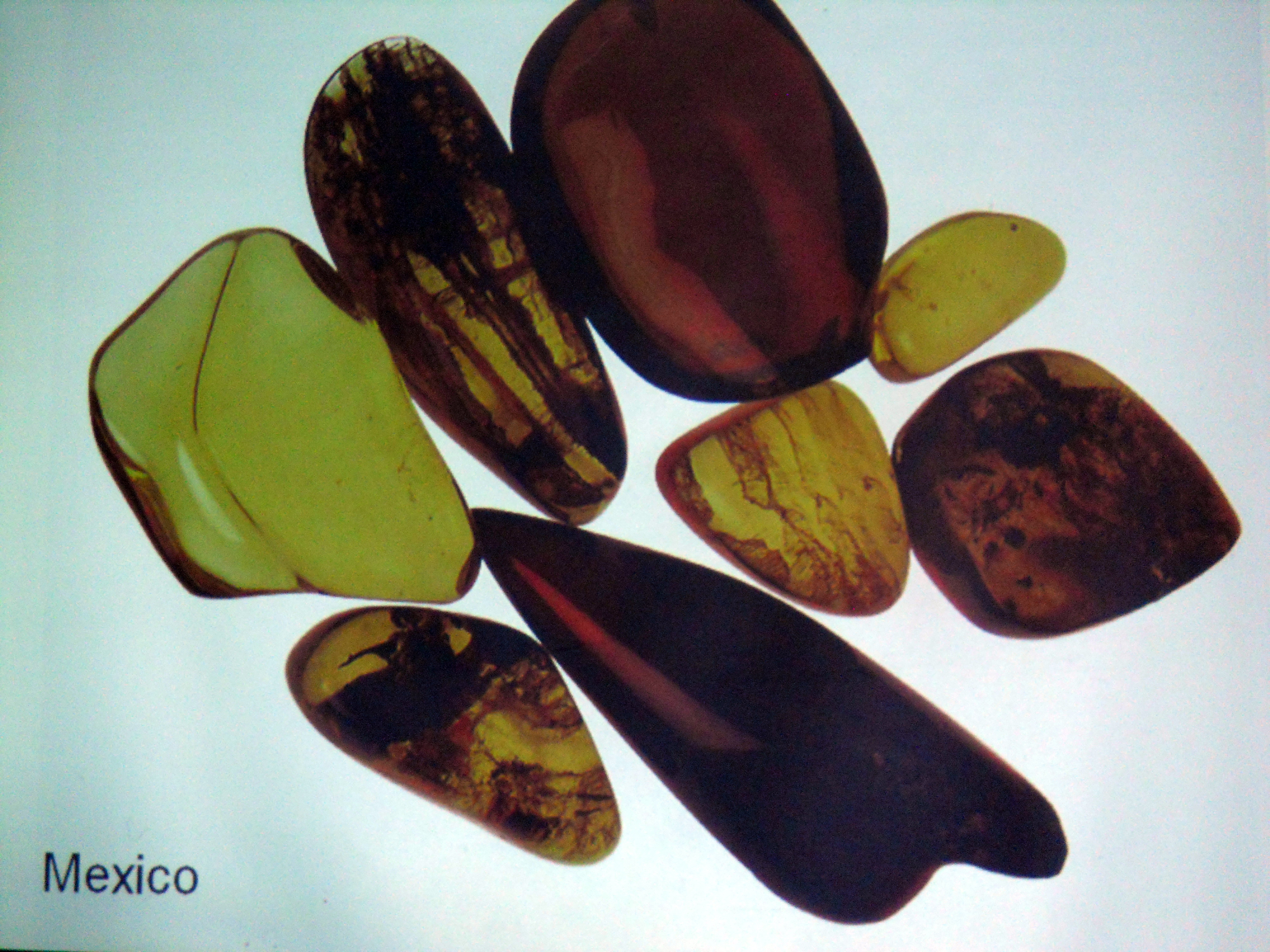
Natural BLUE Amber does not exist.  Amber may have a blue tinge to it when viewed in light containing ultra violet rays (e.g. sunlight), as it can fluoresce giving a blue color.  This is especially true of some amber from the Dominican Republic, Mexico and Myanmar. 

Natural RED amber does exist, but it is extremely rare, and the natural color is a slightly rusty red. The amber found in Myanmar, called ‘burmite’ is 100 million years old and occurs in colors that range from clear golden thru red to very dark brown.  It is only mined occasionally and in very small quantities, so the chances of coming across it are remote.

Natural GREEN Amber does not exist, any material on the market that appears green has been subjected to some kind of treatment.

Baltic amber is the most common, making up 98% of the market, it is treated in many ways, one of them being to heat the back of a piece till it is burnt,  This makes the amber look green, when
viewed from the top/front. From the side it will be the natural color. The same effect can be produced by backing the amber with black material, usually plastic. 

Some, Dominican and Mexican ambers can  fluoresce and look green in the right light, but the amber is in fact golden. A new process has recently been developed which does turn amber green.
But it must be emphasized that the resulting ‘green amber’ is not natural. Additionally, most of it is produced from imature copal, which may only be 300 years old.

The long-term stability of this relatively new material is, as yet, not known. The general public is under the impression that ‘amber’ is millions of years old.  To sell a material that is only 300 years old (and may not be stable), as ‘amber’, seems to most gemmologists to be misleading.

Small fragments or powders, formerly thrown away or used only for varnish, are now used on a large scale in the formation of “amberoid” or “pressed amber”. The pieces are carefully heated and then compressed into a uniform mass by intense hydraulic pressure. The softened amber is then forced through holes in a metal plate. The product is extensively used for the production of cheap jewelry.

Often amber (particularly with insect inclusions) is counterfeited using a plastic resin. A simple test consists of floating the piece in heavily salted water, where amber will float most heavier plastics will sink.

Additionally, counterfeits will often have a large insect with too-perfect a pose and position of the trapped insect.

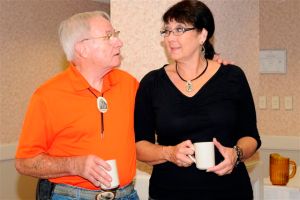
Members Discussion

Members Discussion

This may be all you need to know about amber, but should you wish to learn more about it, and the treatments and imitations on the market today visit: http://maggiecp.com and sign up for her Organic Gems On-line information center.

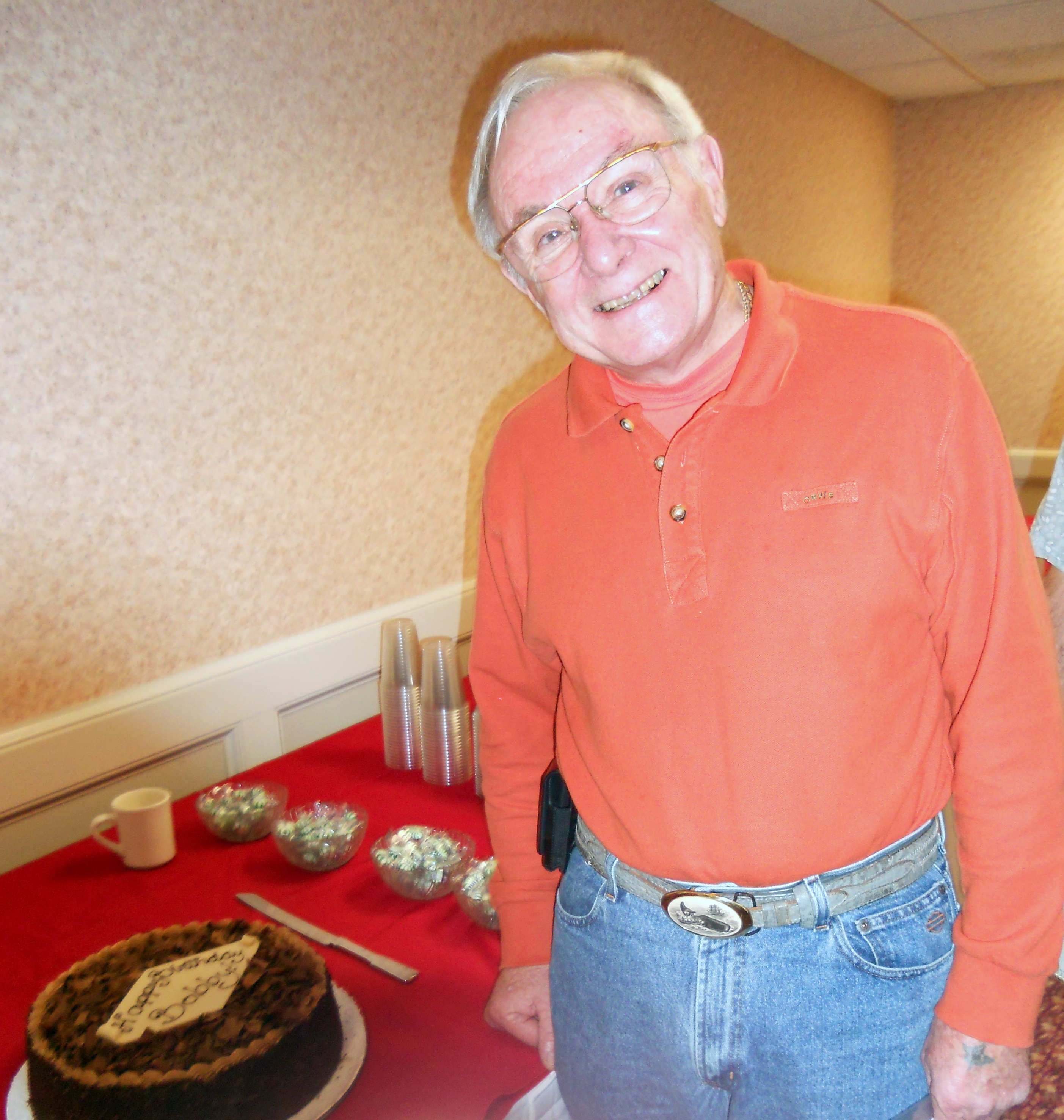
Birthday Mann

Bobby Mann

A Special Happy Birthday to Bobby Mann – DCGIA Chapter President !

50/50 Raffle Winner !

Raffle Winner

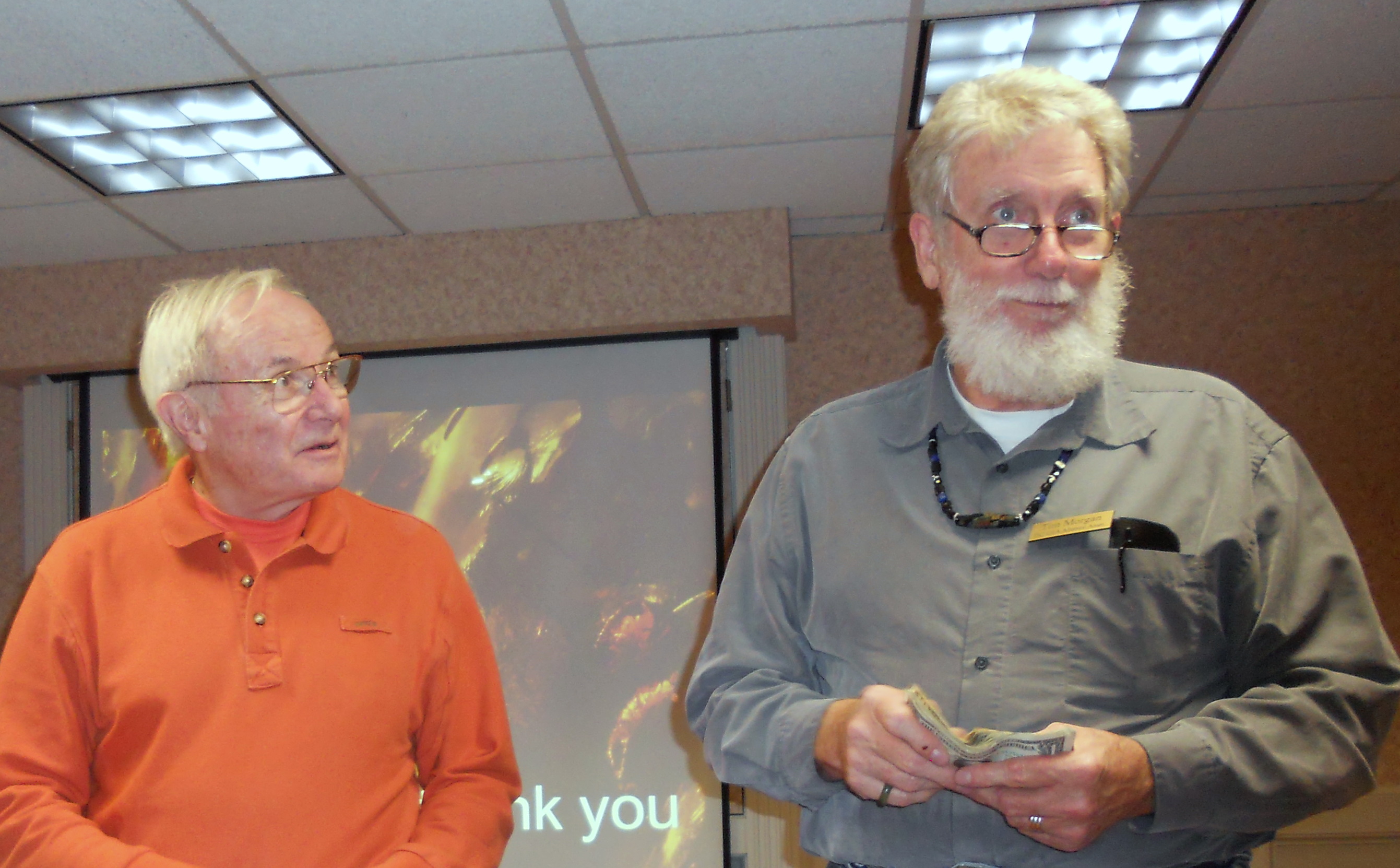
Bobby Mann & Timothy Morgan the Winner

Meeting Summary by: Charlie Marts

Photos by: Theresa McGowan – Bobby Mann & Maggie Campbell Pendersen

Posted in Meeting Archives | Leave a comment

Brenda Forman – “The 18th Century: Elegance & Delicacy, Slanders & Heist”

Brenda Foreman

Brenda Foreman

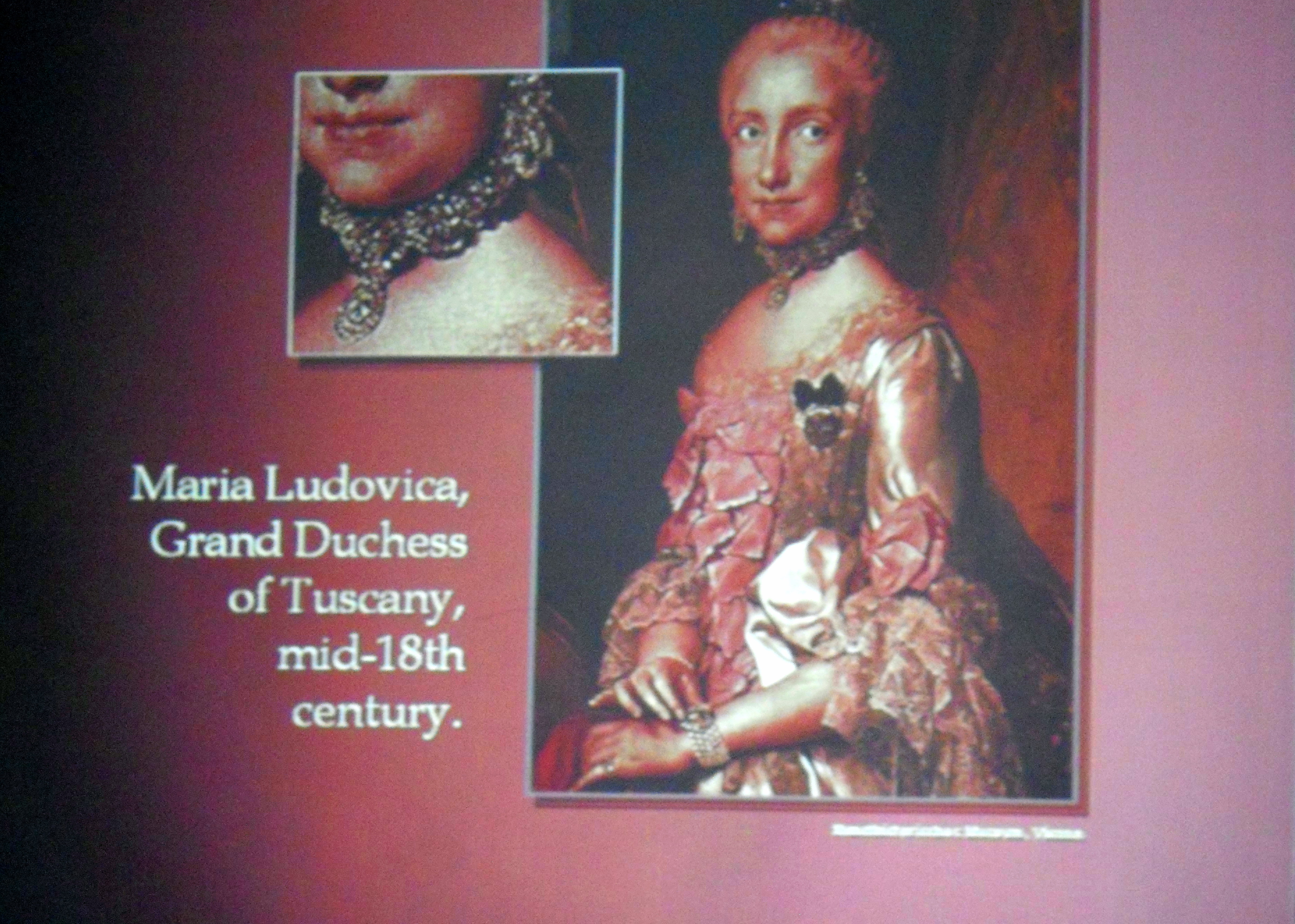
Brenda Forman’s presentation on Tuesday, October 12th, entitled “The 18 Century: Elegance & Delicacy, Slanders & Heists,” explored both the aesthetics and the scandals of the period, through the mirror of jewelry.

The era produced both masterpieces of elegant design and “masterpieces” of scandal.

Maria LudovicaDesign emphasized lightness, airiness, and delicacy, yet society and politics were rife with the darker arts of libel and theft.

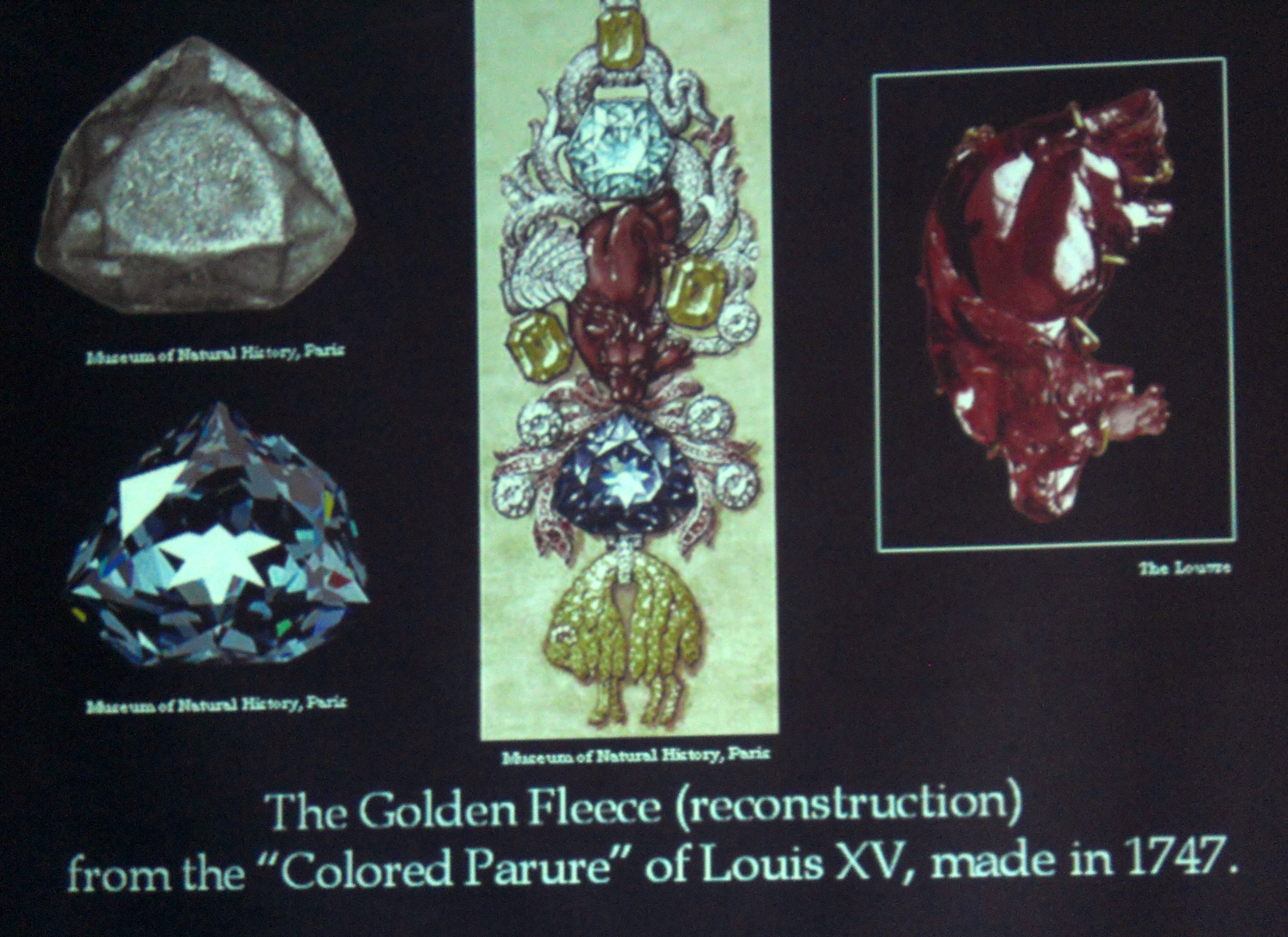
Elisabeth ChristineTo illustrate these concepts, Brenda recounted incidents such as the tale of the Queen’s Necklace and the story of how the French Crown Jewels were stolen from the Garde Meuble in September of 1792.

Paste Jewels

The Golden Fleece

Posted in Meeting Archives | Leave a comment

Helen Serras-Herman – Visit Southern Arizona’s Mines for History & Inspiration

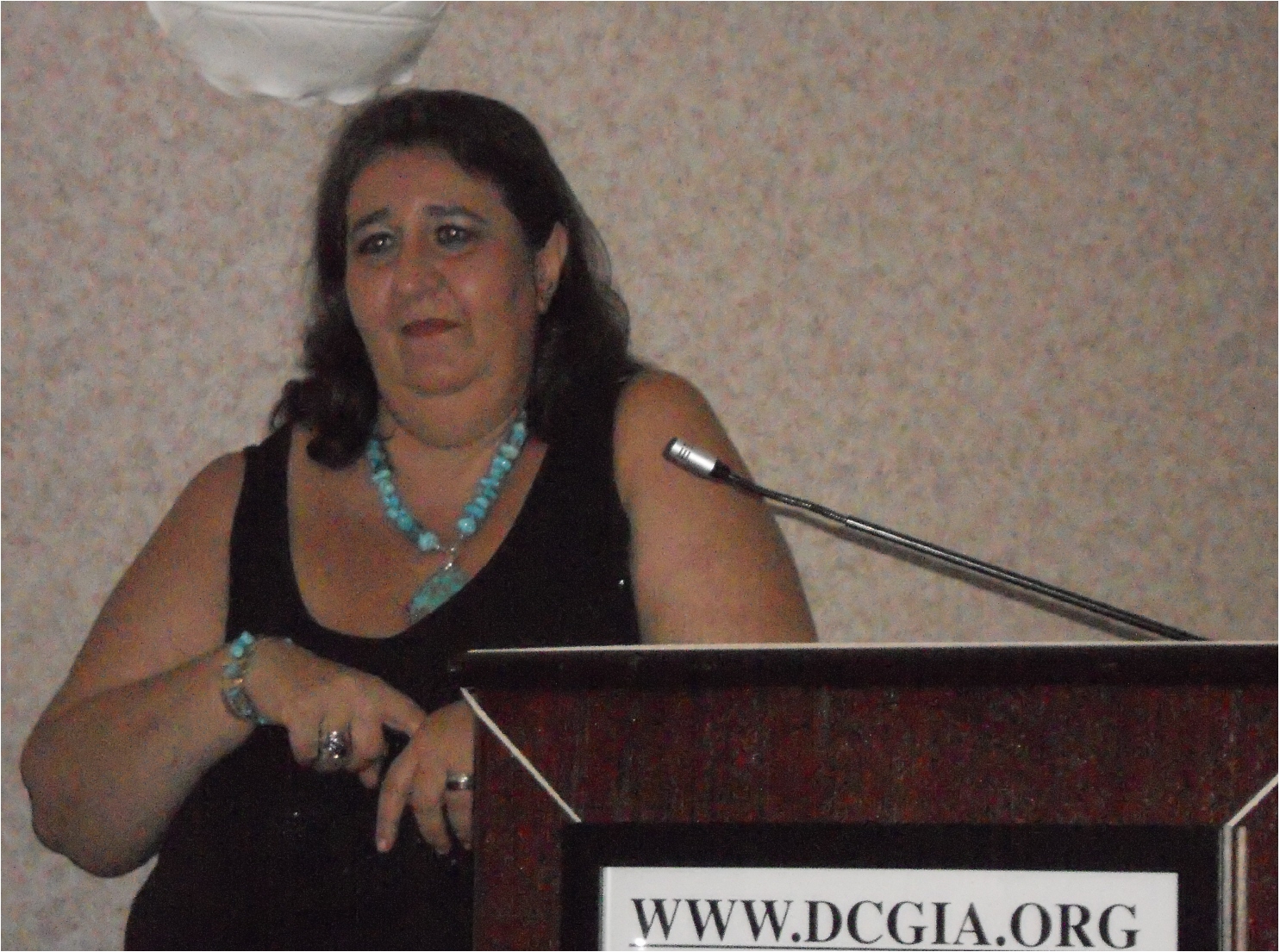
Helen Serras-Herman

Helen Serras-Herman

The DCGIA gathered in the Georgetown Room on Thursday, September 23, 2010 to share memories of trips to several Arizona mines as some members had joined the presenter, Helen Serras-Herman and her husband, Andy on some of the visits.

The first slide redefined the meaning of big truck as the axel of the truck was about even with Andy’s head. Helen began by reminding us all of her connections with the area and many of the GIA members over the years. She gave a brief overview of more than 100 years of silver, copper and gold mining and the associated minerals azurite, chrysocolla, malachite, and, of course, turquoise. She then took us on tours of open-pit mines and an underground mine in Arizona.

turquoise

The presentation was a summary of the article that appeared in the July 2010 issue of Rocks and Gems, ppg. 58-62, entitled “Six Southern Arizona Mines.”

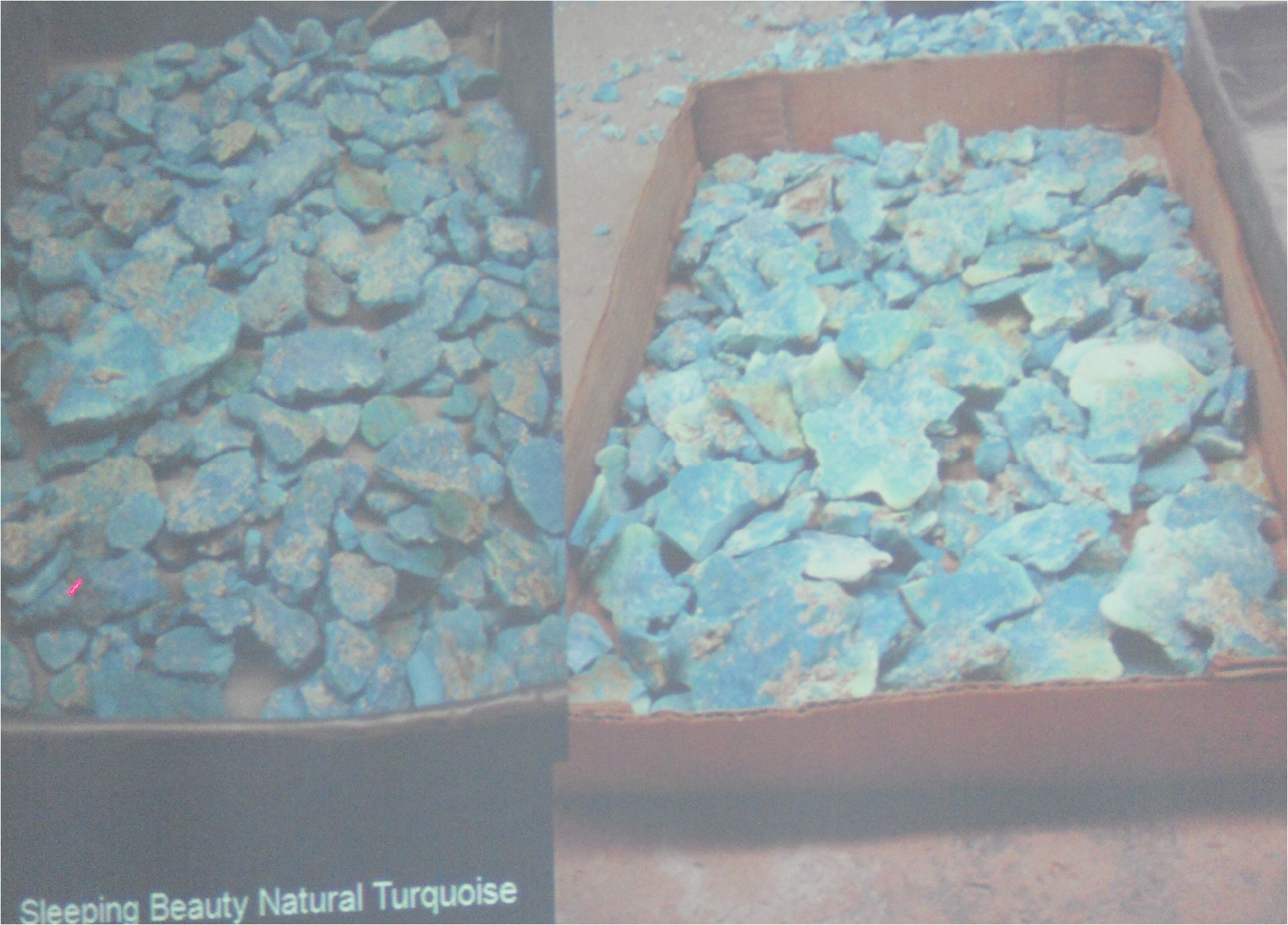
Sleeping Beauty Natural Turquoise

Sleeping Beauty Natural Turquoise

Helen started our tour at Asarco Mission Mine approximately 15 miles south of Tucson. This is an open pit copper mine that allows tours. One photograph showed 70 and 150 ton trucks that are used to haul ore to the crusher and she also showed a network of conveyor belts used to move rock from the crushers to the flotation units which allowed separation of the metals from the matrix. The metals are recovered by electrolysis and then sent to Texas for precious metal recovery. Our next stop was Tombstone, AZ to see the Good Enough and Tombstone mines. Good Enough was discovered in 1875 and started as a silver mine, Good Enough was reopened for tourists in 2007, but is not a working mine. The tombstone mine is a working mine, and it is not open to the public. However, some finds from the mine are available in the local stores.

This area is a great tourist attraction based on the history of the town. Shoot-outs at the OK Corral happen every day for tourists. Bisbee was the next stop, home of the Bisbee Queen Mine. In 1800, Bisbee was the largest city between St. Louis and San Francisco and had 20,000 inhabitants. Between 1877 and 1975 this mine produced more that 8 billion pounds of copper. The Lavender Pit in Bisbee was the source of the greatest azurite and lapis lazuli in the area. The Bisbee blue turquoise is world famous. The Morenci Mine is near the New Mexico border in Clifton. It is still a working mine employing more than 2,000 people. This mine uses 270 ton trucks to move the ore from the source in the pits to the crushers. This mine produces 840 million pounds of copper per year. The last mine in our arm-chair tour was the Ray mine near Globe and Superior. The closest town was originally Senora, but the town was torn down as the mine excavated the land where the town’s original location. Near the mine, in Miami, is an excellent museum.

Helen told us only one per cent of turquoise is natural. Ninety-nine percent of the turquoise must be treated in order to cut and polish the stone.

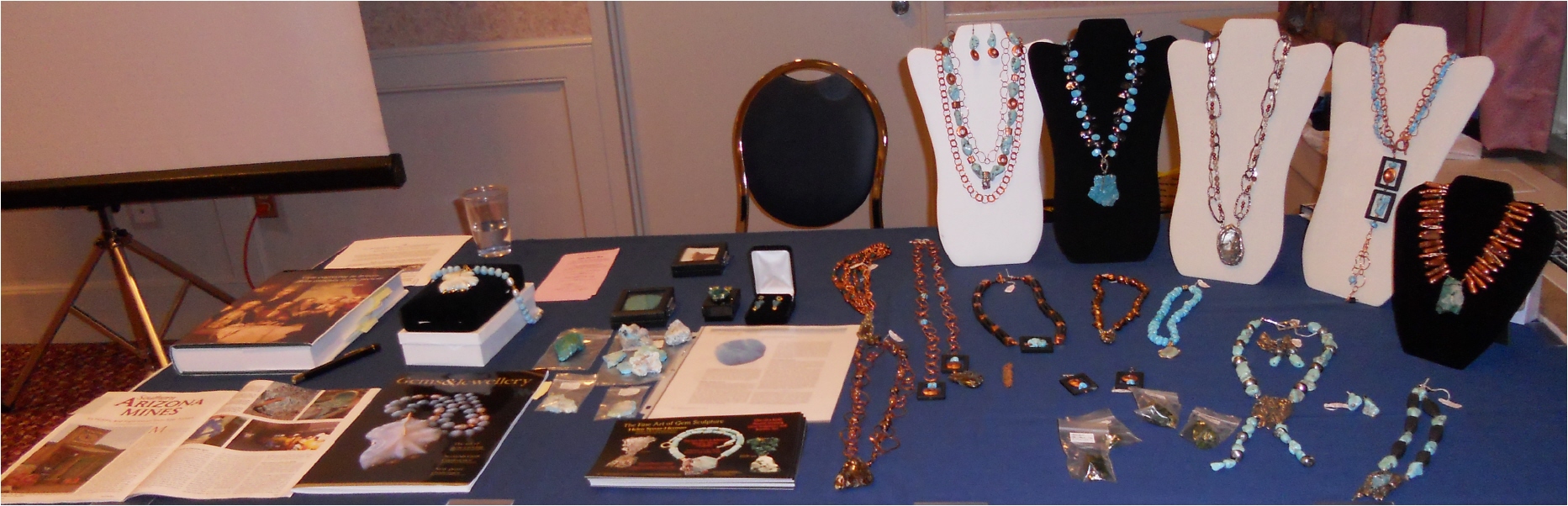
Helen's Copper Trail Jewelry

Helen's Copper Trail Jewelry

Helen ended her presentation with photographs and displays of her Copper Trail jewelry.

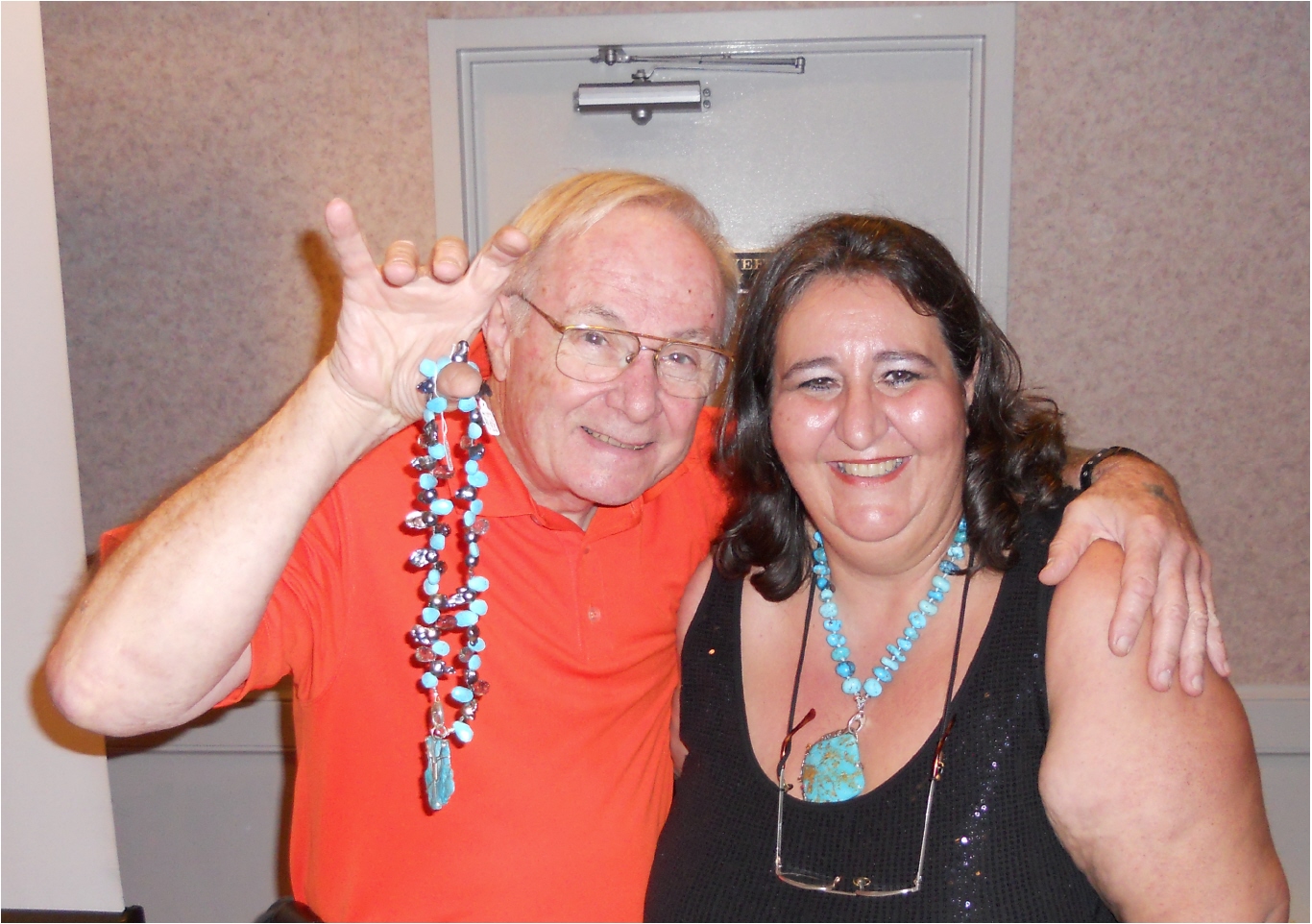
Helen & Bobby Mann

Helen & Bobby Mann

Meeting Summary by Gerry Cox

Photos by Bobby Mann

Posted in Meeting Archives | Leave a comment

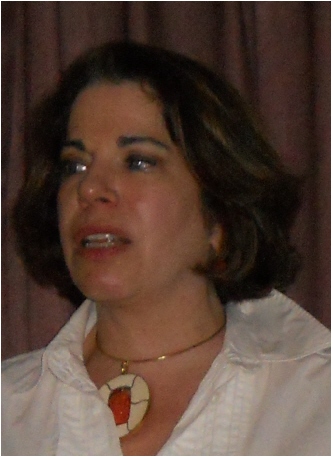
Diana Singer – Famous Women Jewelry Designers

Ms. Diana Singer

Ms. Diana Singer

Ms. Singer’s presentation explored the role of the female in the jewelry industry. An intriguing dichotomy exists in that although women typically function as the ultimate consumers of jewelry products, most jewelry designers are, and historically have been, men.

Nonetheless, the prominent contribution of the smaller subset of women designers provides an important reminder of just how relevant the female eye is, and how influential the female form can be, in a design environment.

Diana Singer

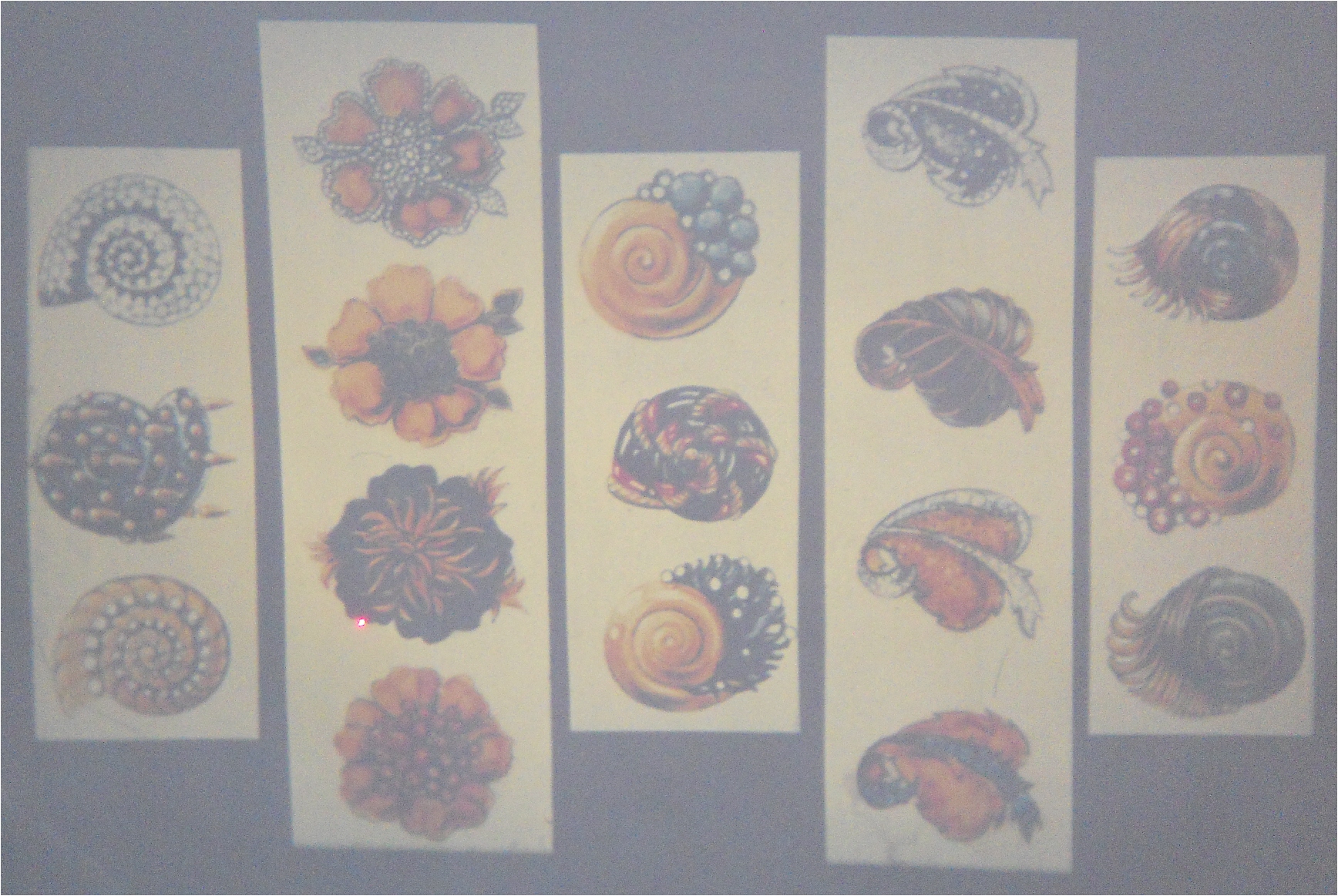
To illustrate these concepts, Ms. Singer profiled the work of noteworthy designers including Coco Chanel, Marianne Ostier, Suzanne Belperron, Jeanne Toussaint, and Marilyn Cooperman.


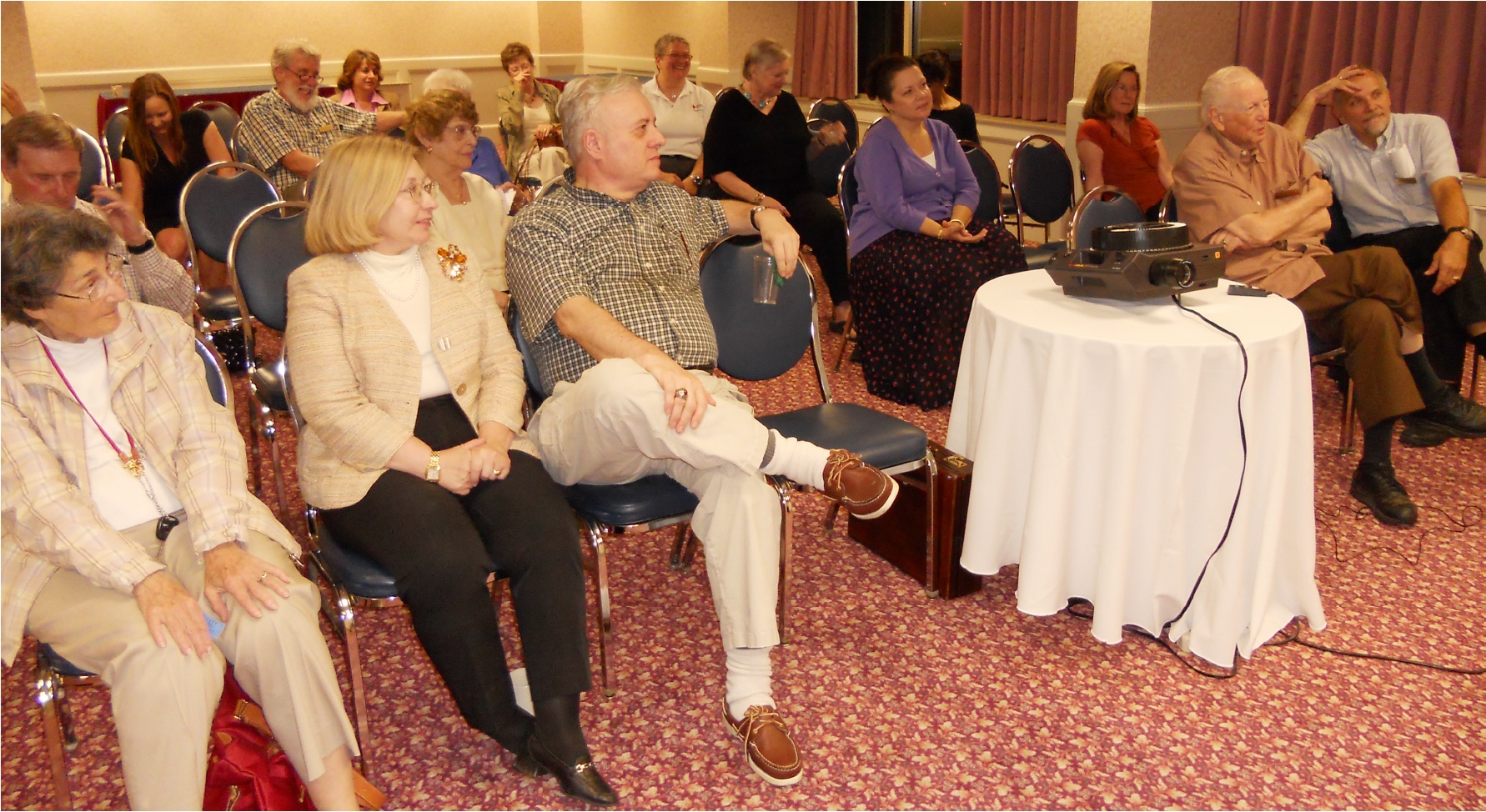
Members Gallery

Members

Meeting Summary by

Photos by Bobby Mann

Posted in Meeting Archives | 1 Comment

Jane Tukarski – Scrimshander Marine Artist

Ms. Jane Tukarski

Ms. Jane Tukarski

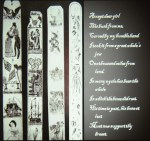
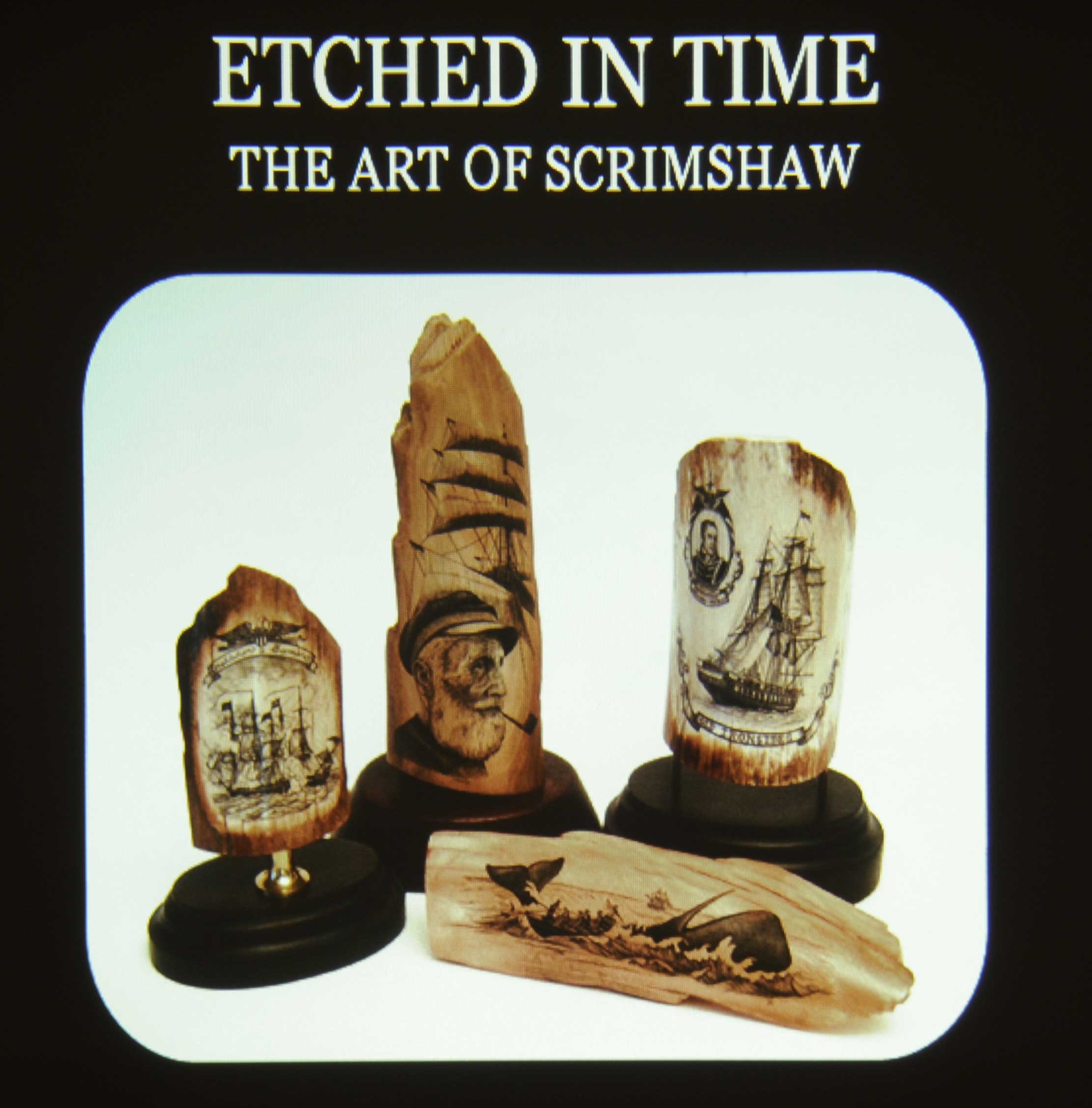
Ms. Jane Tukarski’s presentation covered the unique maritime folk art of scrimshaw, the traditional seaman’s craft of engraving designs onto whale bones, teeth, and ivory.

Her work has won multiple awards, has been featured in scrimshaw publications, and is contained in a dedicated file at the Smithsonian American Art Museum.

Scrimshaw is characteristic of American Folkart, practiced for centuries by the Inuit and other native groups along the Northwest Coast, it was adopted by the Yankee Whalemen of the early 1800’s.

Scrimshaw

Scrimshaw

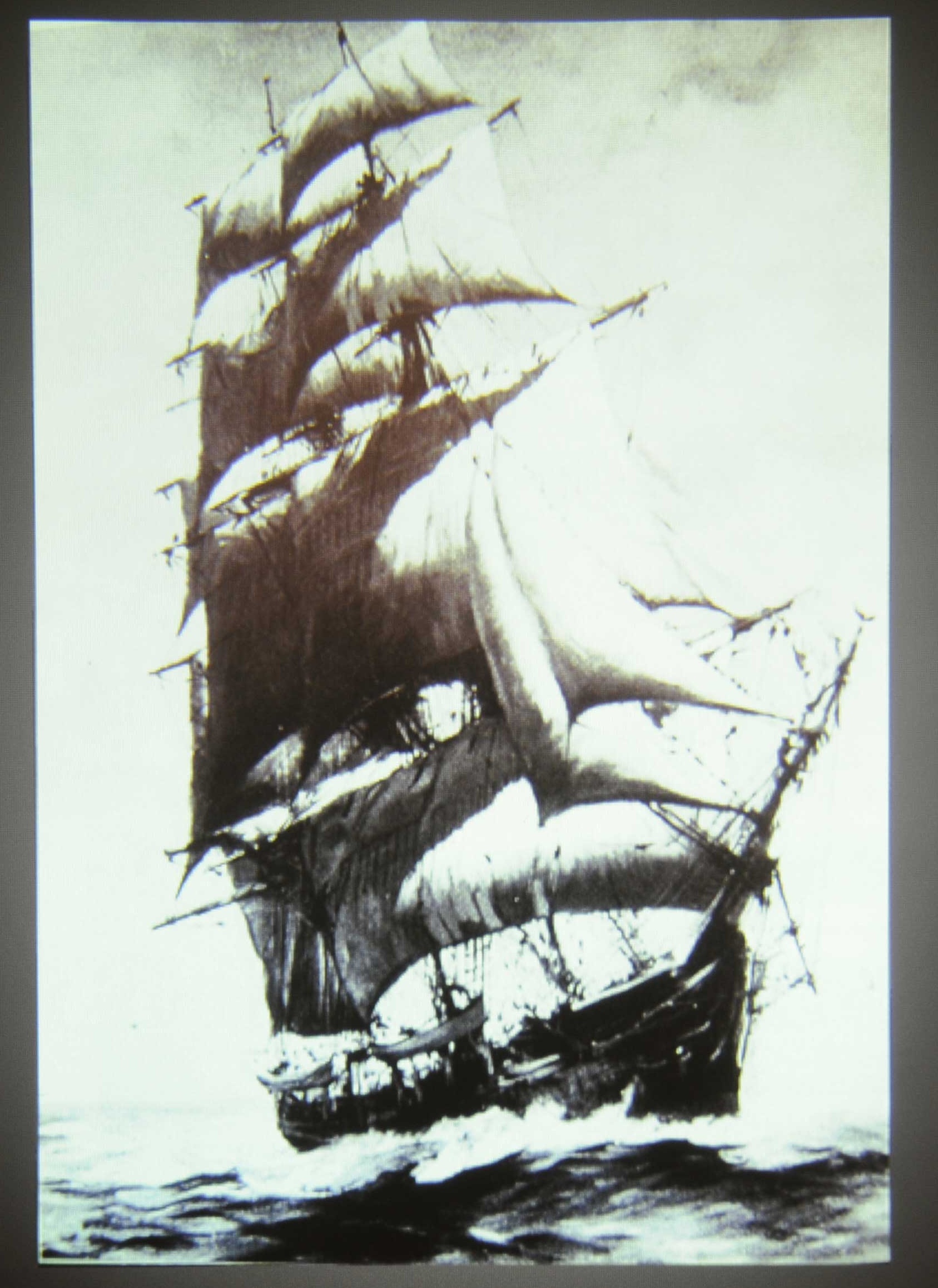
Whaling Voyages often lasted three to five-years, and quickly became monotonous, so the Whalemen turned to working with baleen, whale teeth, and jawbones, all of which were in abundant supply, and on many ships, whale teeth were part of the pay, and were often traded to shopkeepers in port for goods or services.

Whaling Ship

Whaling Ship

Common subjects included whaling scenes, ships, women, and scenes copied from magazines of the day.  The origin of the word is an obscure Dutch phrase meaning “to spend time idly” or “to waste one’s time”!

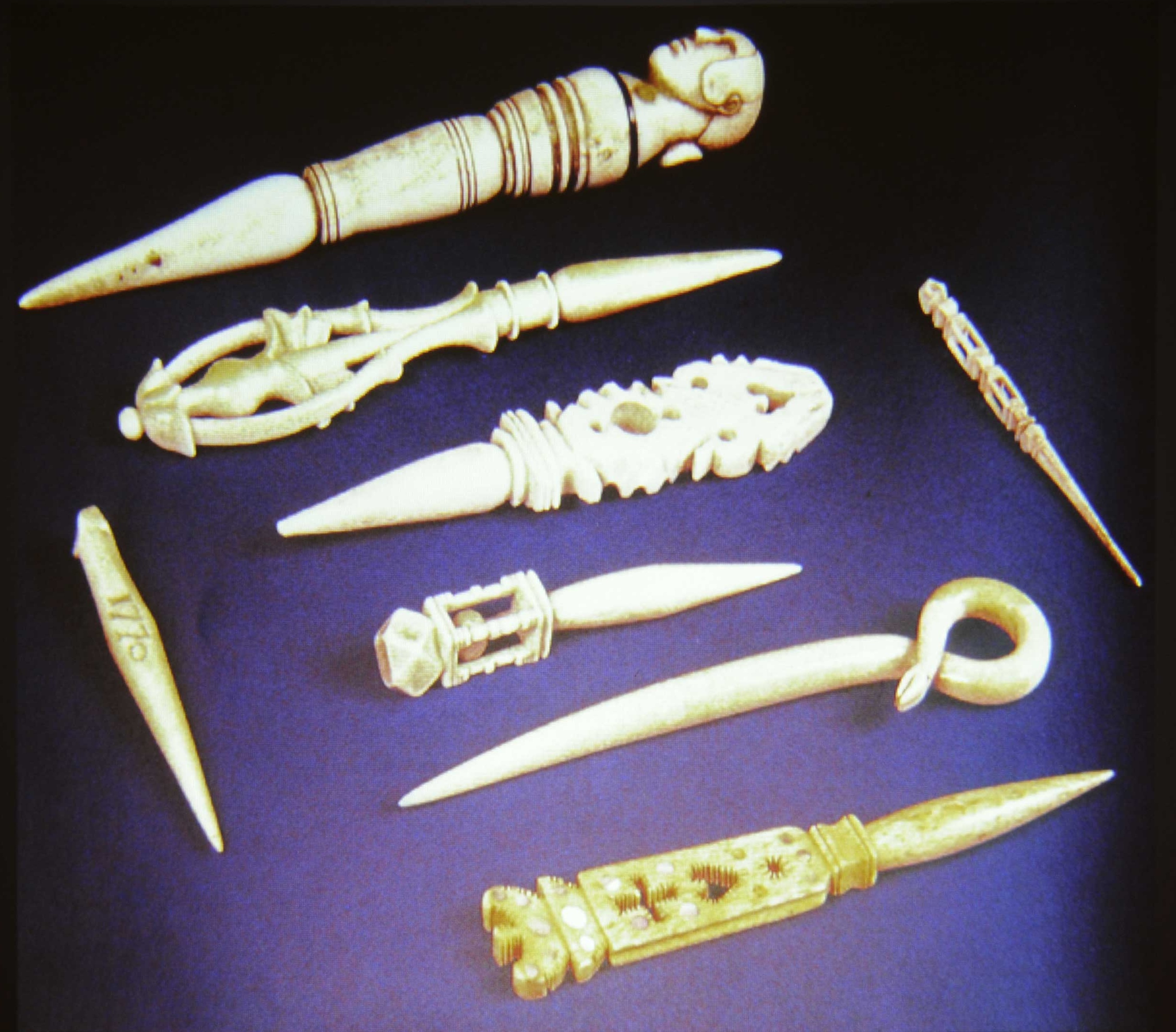
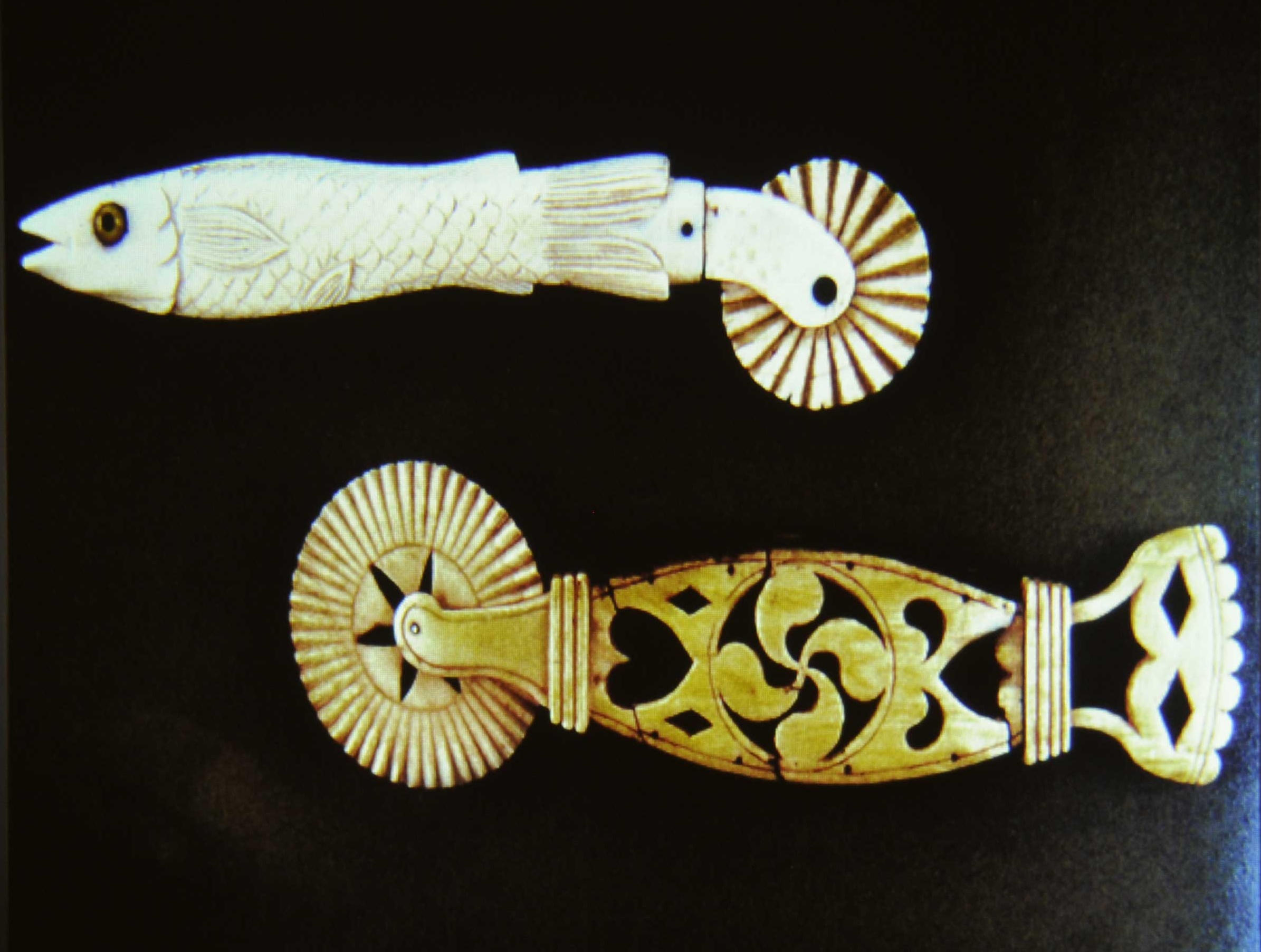
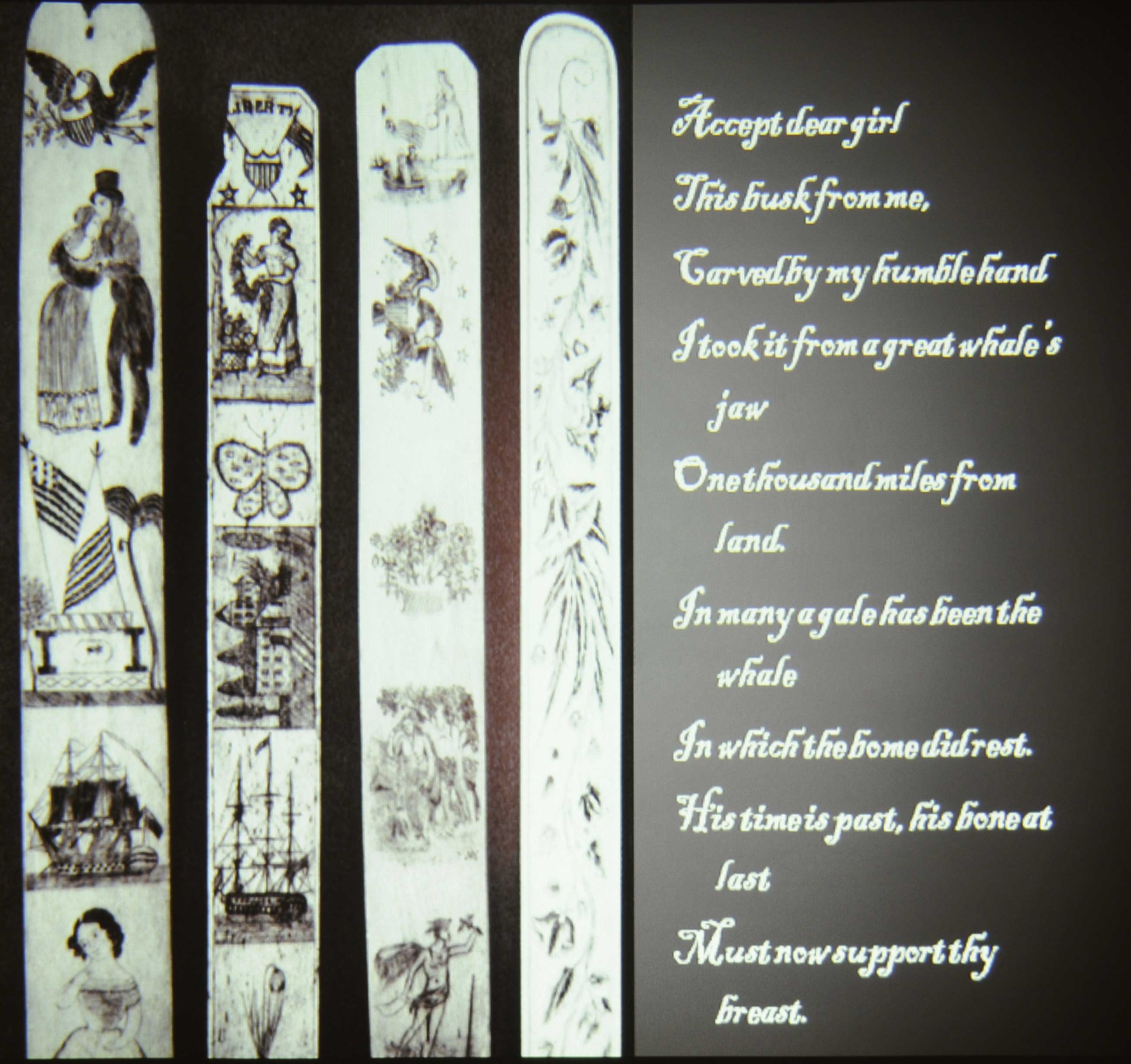
Makers of scrimshaw were called scrimshanders. They engraved images on ivory, whalebone, whale teeth, wood and shells, and carved items of bone and exotic woods. Typical works include decorated whale teeth and practical items such as napkin rings, canes, knitting needles, pie crimpers or jagging wheels (for cutting pastry), bodkins (for embroidery), swifts (yarn winders) and tools of all sorts for shipboard use.The quality of scrimshaw ranges from crude scratchings on teeth or bone to exquisite examples of fine craftsmanship with the majority falling somewhere in between, as many of the sailors of the day were mostly uneducated.
ToolsPie CrimpersBusk

Scrimshaw essentially was a leisure activity for whalers. Because the work of whaling was very dangerous at the best of times, and whalers were unable to work at night. This gave them a great deal more free time than other sailors. A lot of scrimshaw was never signed and a great many of the pieces are anonymous. Early scrimshaw was done with crude sailing needles, and the movement of the ship, as well as the skill of the artist, produced drawings of varying levels of detail and artistry. Originally, candle black, soot, tar or tobacco juice would have been used to bring the etched design into view.

Scrimshaw history parrallels the first 100 years of American History, as Whale Oil was a major commoddity equal to Petroleum Oil today.

Whale Oil was Odorless, Colorless, and smoke free, the principal use of whale oil was as an illuminant in lamps both for home and city streets, as candle wax, watch oil, lubricant for delicate high altitude instruments, glycerine (TNT), cosmetics (“imparts a rich glossy sheen”), perfume, rust-proofing compounds, detergent, and vitamins.

A large Whale could supply as much as three tons of oil. At it’s peak there were 730 Whaling Ships working from 30 U.S. Ports.

The Civil War, beginning in April, 1861, brought the New England whaling fleet to a virtual halt.  A large number of the whaling ships were captured and sunk by the Confederacy. The Civil War made a voyage more perilous even before the whaling waters were ever reached.

Whale oil’s predominant place in society was mostly eliminated with the discovery of  petroleum drilling in the late 19th century, which led to gas, petroleum-based waxes and oils replacing whale oils in most nonfood applications.

Jane's Work

Jane's Work

Because of the endangered species act, most ivory is now illegal, so Jane uses ivory from:
Extinct animals — wooly mammoth tusk, and fossil walrus tusk from Alaska.
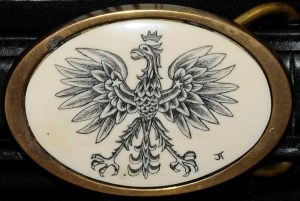
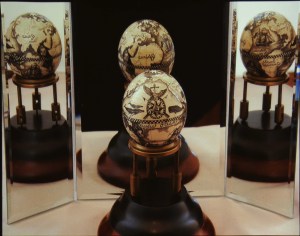
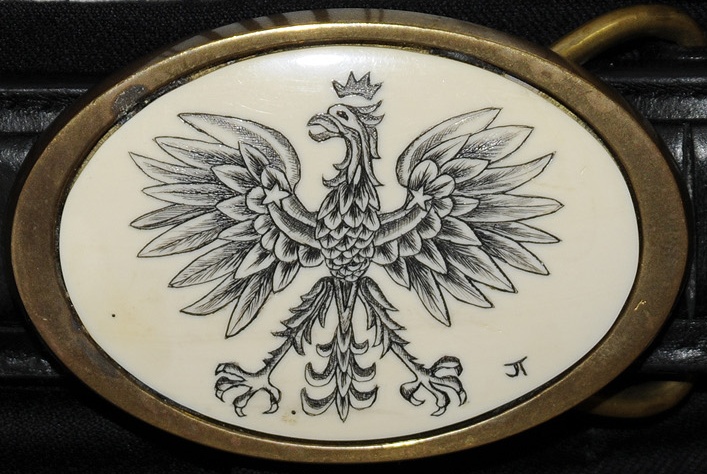
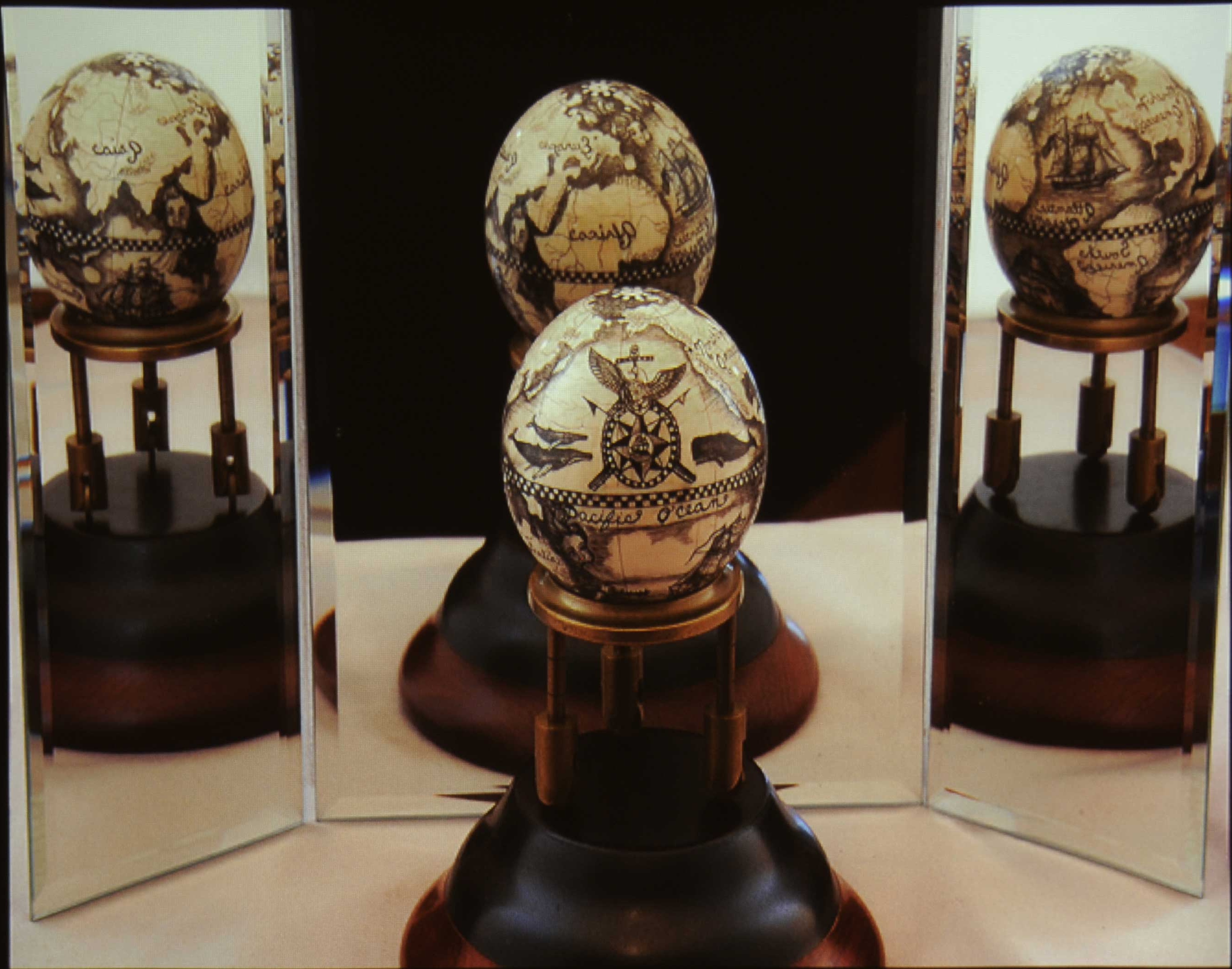
Belt BuckleMaritime Globe

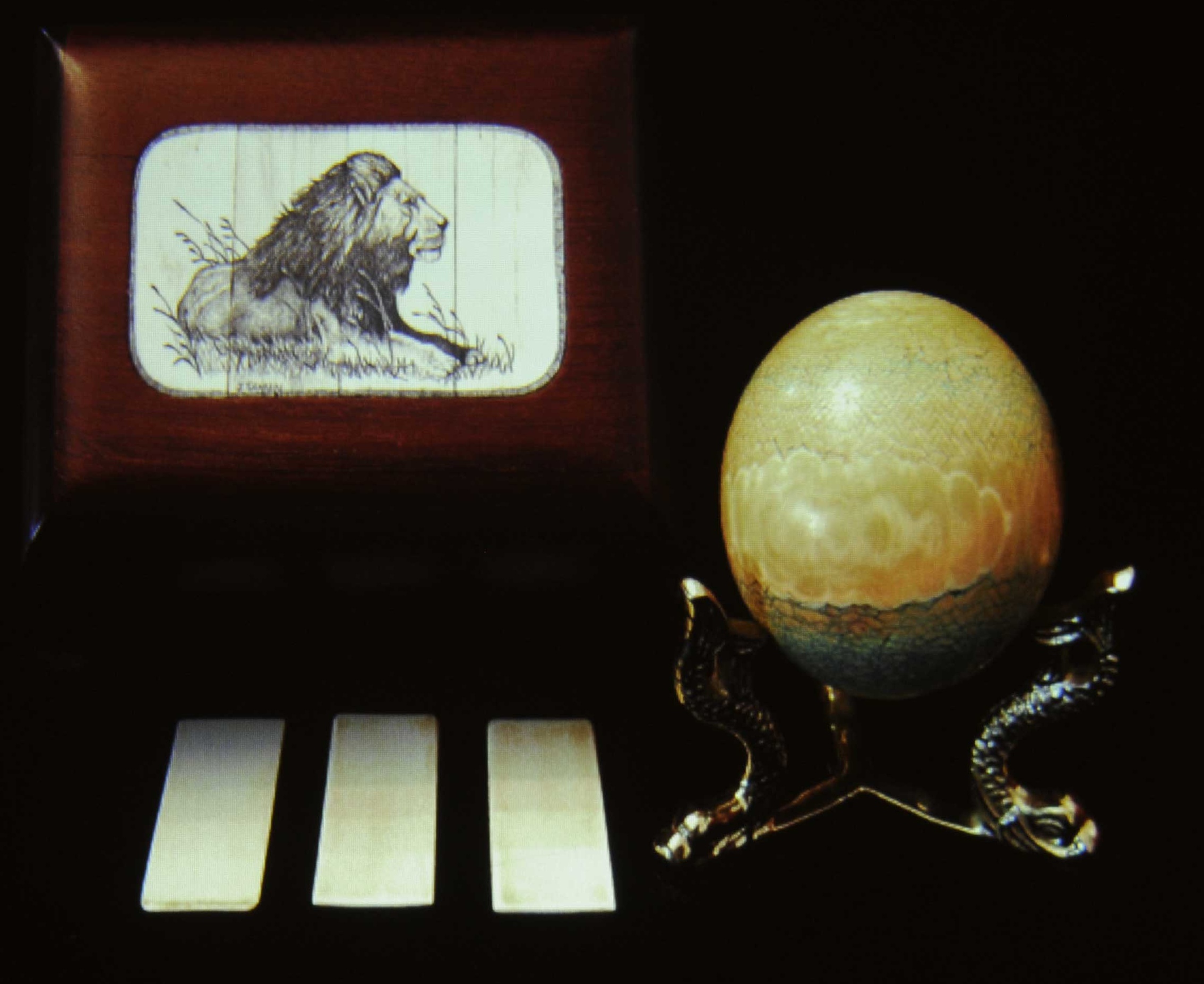
She also uses materials re-purposed from Antique Legacy Ivory, such as elephant ivory — once used for piano keys, and billiard balls, before the great age of plastics. Ostrich/Emu Eggs, and Ox bones are also used.
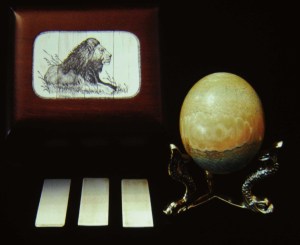
Re-purposed Ivory

Re-purposed Ivory

Jane works only with natural ivory (no plastic allowed), a scrimshander keeping alive a tradition, that like the whales from which it came, is almost extinct. Jane is also training up the next generation of scrimshanders (her daughter).
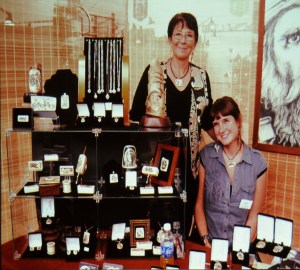
See Jane

See Jane at the Easton, MD – Waterfowl Festival

Primarily a Maritime Artist, Jane also does wildlife, landscapes, floral motifs, and portraits. Jane will also do commissioned pieces on request.
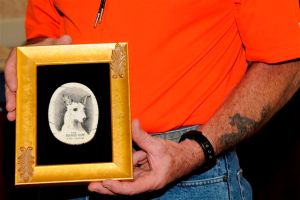
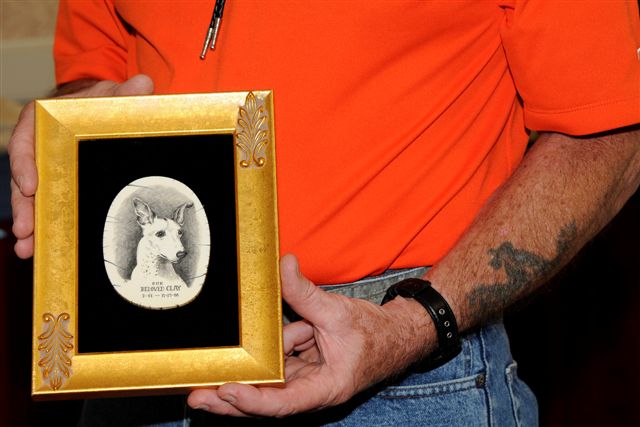
In Memory of Clay

In Memory of Clay for Bobby Mann

Bobby Mann & Jane Tukarski

Bobby Mann & Jane Tukarski

Visit Jane’s website at http://www.janetukarski.com/ for more information and to see more of Jane’s museum quality artwork.

Jane will be displaying her scrimshaw at the Easton, MD – Waterfowl Festival on November 12-14, 2010 visit www.waterfowlfestival.org for more details.

Meeting Summary by Charlie Marts

Photos of Slides & Artist Work by Melanie Marts, GG

Posted in Meeting Archives | 1 Comment

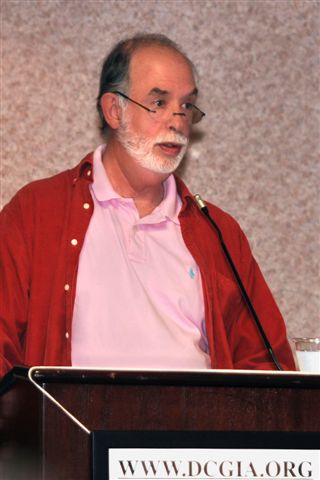
Gary Roskin Speaks to DCGIA

Gary Roskin

Mr. Gary Roskin

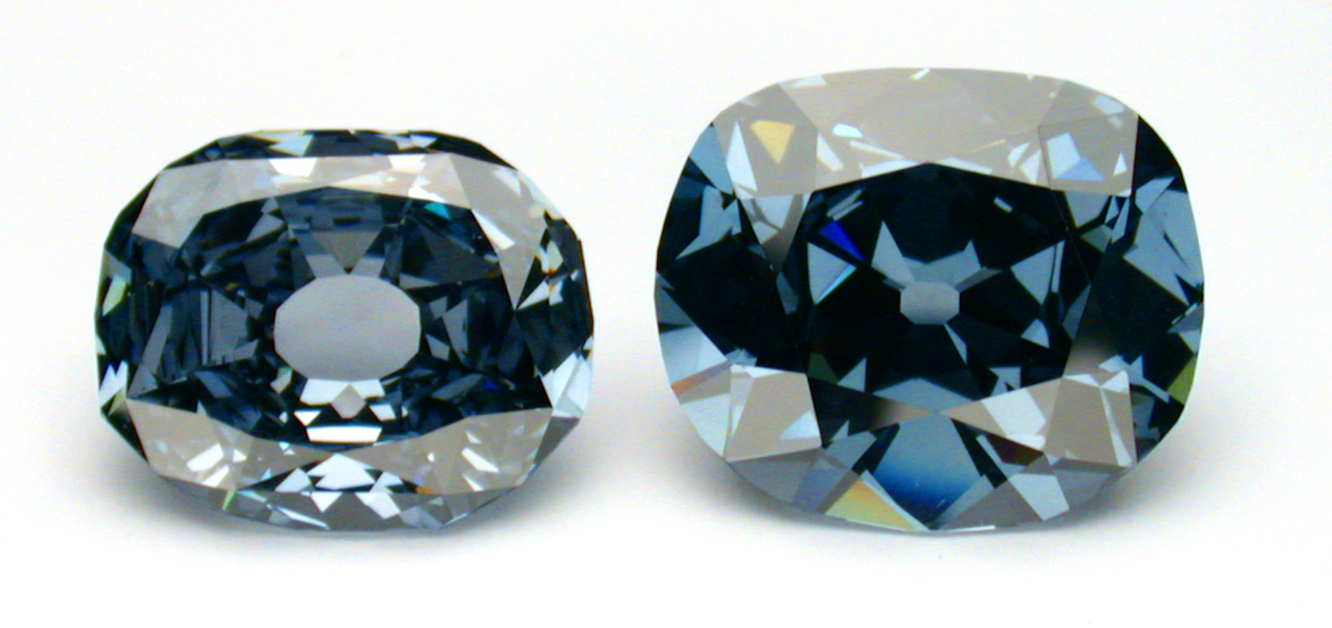
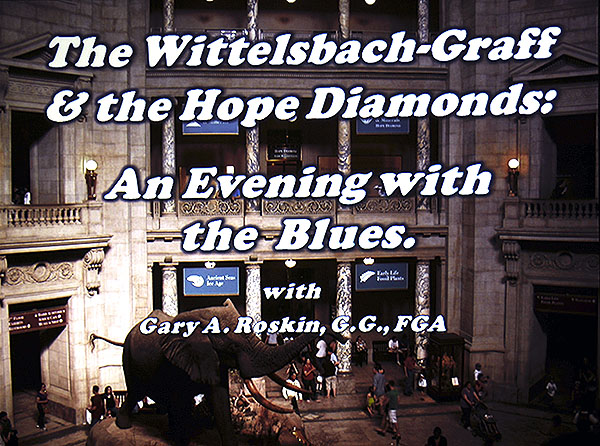
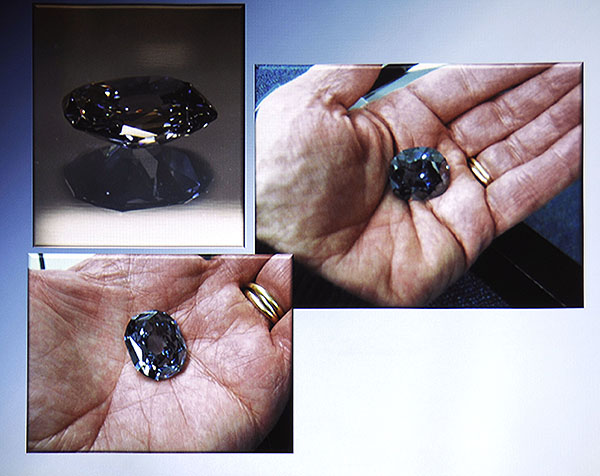
On July 7, 2010 the DCGIA Alumni Association was treated to Gary Roskin’s recounting of “an Evening with the Blues,” his experience with the world’s two, largest and most important deep blue diamonds, the 31.06 carat Wittelsbach-Graff, and the 45.02 carat Hope diamonds, both rare and storied stones.

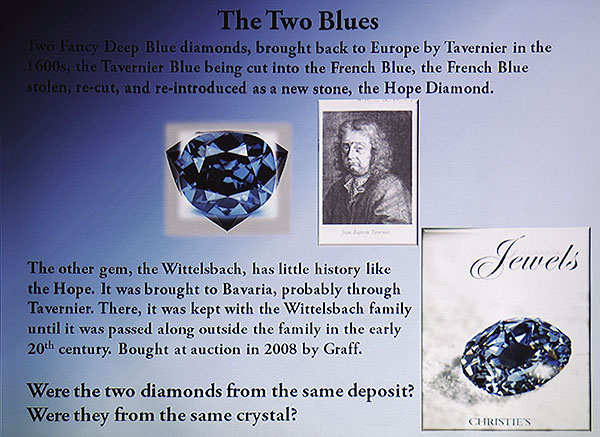
Gary, owner of the online magazine, the Roskin Gem News Report http://www.roskingemnews.com is both a GG and an FGA and had the privilege and honour of being one of just 10 people invited to spend an evening in the presence of these two stones. The purpose of the evening was to compare the two deep blue diamonds to determine if perhaps they had at one point in time come from the same crystal. Ever since their discovery and travels to Europe by Jeanne Baptist Tavernier in the late 1600s, gemologists have been waiting for an opportunity to test these two diamonds together, and Gary was there to document the evening.

An evening with the blues

An evening with the blues

The event occurred on Thursday evening, January 26, 2010, just two days before the Wittelsbach-Graff was to go on display with the Hope Diamond in the Harry Winston Gallery at the Smithsonian’s Museum of Natural History. Having the world’s second largest deep blue diamond coming to the Smithsonian meant that maybe, if the Wittelsbach-Graff arrived early enough, there just might be an opportunity to compare the two great diamonds. But the timing had to be just right, and everyone involved had to be ready at a moment’s notice. Gemologists from GIA and mineralogists working with the Smithsonian were ready.

Hatleberg and King judging color

Hatleberg and King judging color

On Wednesday January 25th, Gary received an early afternoon phone call from Jeff Post, curator of gems and minerals, and was told that if he could be in D.C. by late afternoon the following day, he would be able to report on “the evening of discovery.” Needless to say, Gary was on the southbound Amtrak the next day!

The Smithsonian is not just a museum; it is a top-level research facility and so it was only natural that they would want to test the two diamonds. The Hope, in celebrating its 50th anniversary at the gem hall, had been on display loose, out of its Cartier necklace. The Wittelsbach-Graff arrived also loose to be displayed until Aug. 1. It was the perfect time to examine these two stones, but the window of opportunity was only a few hours.

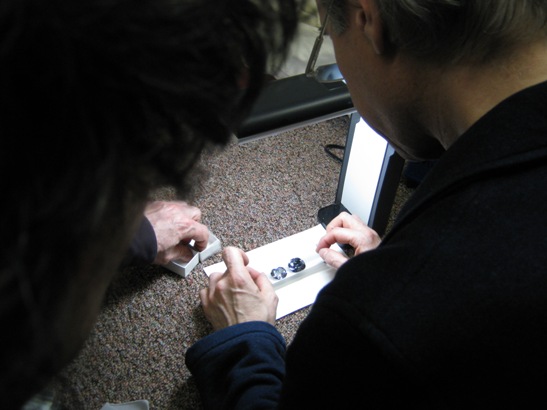
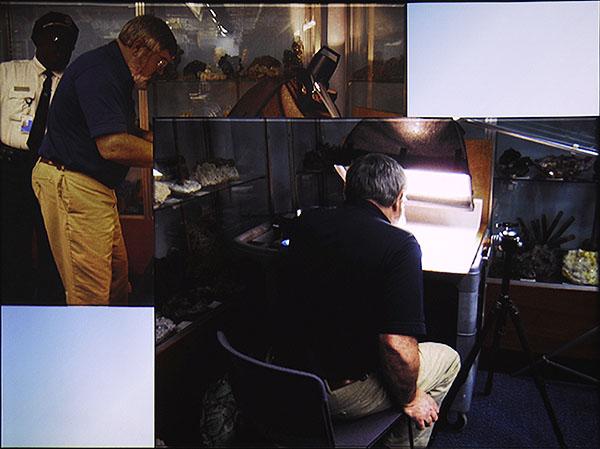
The testing of these two stones took place in the “blue room,” where valuable gems and minerals are stored when not on display. Along with Gary and Jeff were John King, Wuyi Wang, and Robert Weldon of GIA; Chip Clark, photographer for the Smithsonian, Henri Barguirdjian, CEO of Graff; Eloise Gaillou, post doc with the Smithsonian, Jim Butler from the US Naval Research Lab, and John Hatleberg, gem artist. John was there on behalf of Graff to create a replica of the Wittelsbach-Graff and specifically to compare the colour of the W-B to the Hope diamond. John has reproduced many famous stones, including the Hope!

The Wittelsbach Blue was a 35.56 ct. blue diamond purchased in 1664 by King Phillip IV of Spain for his teenage daughter, Margarita Teresa who married Leopold I of Austria. The stone stayed with the family until Leopold’s granddaughter married Charles of Bavaria in 1722. Bavarian royalty took on the last name of Wittelsbach, and the diamond did so as well. The stone eventually “disappeared” in 1931 after it apparently failed to sell at an auction. It resurfaced in 1958 at the World Exhibition and briefly in 1962 when, ironically, a cutter refused to recut it after recognizing it’s historic significance. Fast-forward to 2008, when Laurence Graff buys the stone at auction for a cool $23.4 million and has it recut to a 31.06 cushion, repairing years of damage and improving the appearance. The merits of recutting or lack thereof will be debated for years. However, according to Gary, many in the room that evening noted that the recut version is a vast improvement over the original.

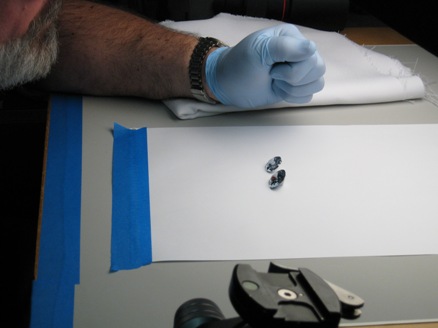
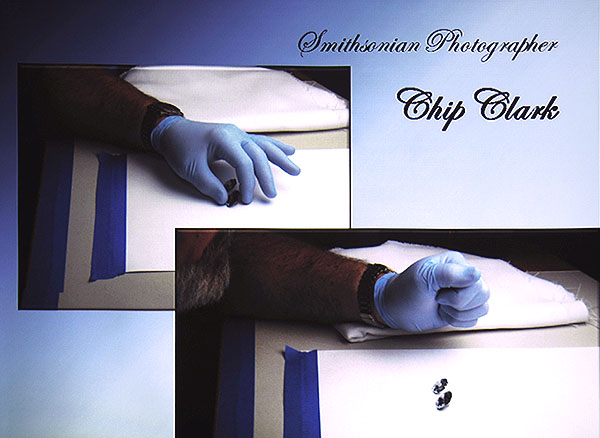
Much of the early part of the evening with the two stones was spent photographing them – both the glamour as well as the phosphorescence shot. Chip Clark, who sadly passed away in June, was a master photographer, and captured the two diamonds perfectly. Even though the stones are both labeled fancy deep blue by GIA, with the Wittelsbach having such a large window – created by the extremely large culet – Chip had to finagle the lighting in order to get the two stones to face up equally. The final lighting combination happened by accident, which we all saw on Gary’s video.

Chip Clark lining up the two diamonds

Chip Clark lining up the two diamonds

The gem testing included infrared and phosphorescent spectroscopy, along with the use of a polarizing microscope to examine and compare internal growth patterns. Initial testing, including a similar phosphorescence, gave some hope that the two stones might be “brothers”. Even though the Wittelsbach-Graff phosphoresces longer than the Hope, the two colors were so similar, they certainly could have been related. Regardless of the initial similarities, as the night wore on, it became apparent – especially from the internal growth patterns – that alas, they were not from the same crystal, thus giving each stone its own birthright.

Many thanks to Gary for sharing his pictures and information!

Submitted by Sherlene Y. Bradbury, G.G.

Edited and approved by Gary Roskin, G.G., FGA

Photo of Gary Roskin by Melanie Marts, G.G.

Posted in Meeting Archives | Leave a comment

An Evening with The Blues

Gary Roskin

Mr. Gary Roskin

Mr. Gary A. Roskin, a gemologist, author, journalist, and educator, is a recognized authority on the art and science of diamond  grading. Gary provides a wealth of knowledge as the creator and producer of the gemological information website http://www.roskingemnews.com and related e-newsletter, the Roskin Gem News Report.

Mr. Roskin’s presentation focused on the complete experience of being in the room at the Smithsonian Institution National Museum of Natural History the night that the two blue diamonds, worth untold millions, were examined.

Evening with the Blues

Evening with the Blues

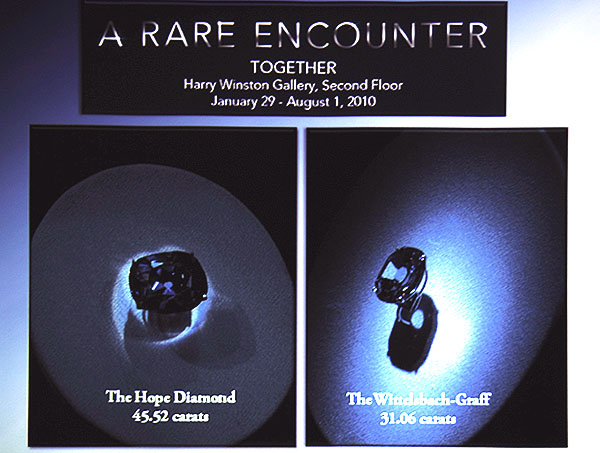
The 31.06 carat Wittelsbach-Graff Diamond displays the same rare blue color as the Museum’s 45.52 carat Hope Diamond.

A Rare Encounter

A Rare Encounter

The Two Blues

The Two Blues

Smithsonian scientists and colleagues analyzed the two gems and explored the possibilities while the Wittelsbach-Graff was on loan to the Smithsonian this year.

Chip Clark

Chip Clark

Chip Clark 2

Chip Clark 2

The six-hour investigation of the HOPE and WITTLESBACH-GRAF diamonds, encompassed excitement, boredom, amazement, and sheer fun, by those involved.

The Hope Diamond

The Hope Diamond

DCGIA members were able to re-live the night through Mr. Roskin’s vivid descriptions, images, and video.

Questions were answered:
Did both originate in India?
Did they come from the same mine centuries ago—perhaps from the same rough stone?
Was the Hope diamond a piece of the original French Blue Diamond?
Was Henry Philip Hope a jewel thief?
Was the Wittlesbach-Graf diamond a piece of the original French Blue Diamond and sister to the Hope Diamond?
Was the French Blue really stolen, or in a conspiracy of governments, sold by Louis XVI?

You can visit http://www.roskingemnews.com to find out some of these answers, in his Did you Know portal.

Roskin Gem News Report

Roskin Gem News Report

You can visit the Hope Diamond every day except December 25th, from 10AM to 5:30PM, located in the Harry Winston Gallery of Gems and Minerals, at the Smithsonian’s Natural History Museum on the Mall in Washington, D.C.

Mr. Gary Roskin & Brenda Forman

Mr. Gary Roskin & Brenda Forman

Meeting Summary by Charlie Marts

Photos of slides and people by Melanie Marts, GG

Posted in Meeting Archives | Leave a comment

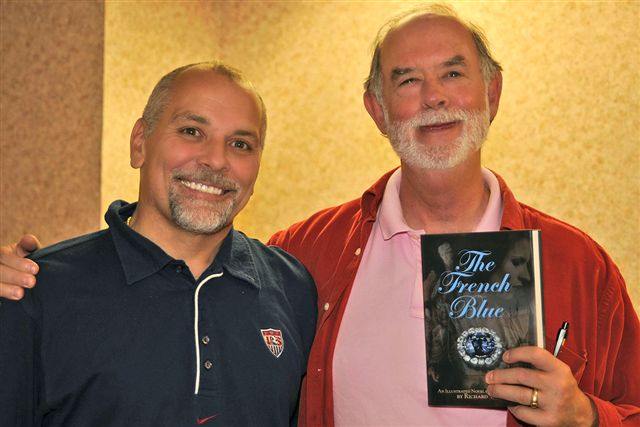
The French Blue

Richard Wise

Richard Wise

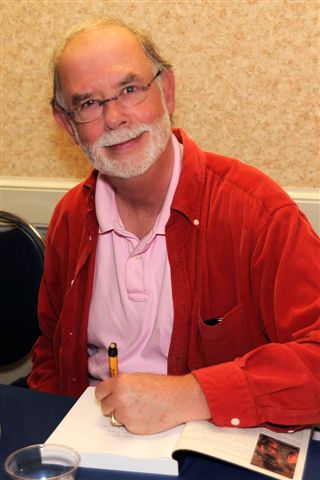
On June 7, 2010, the DC Chapter of the GIA Alumni Association had the opportunity to hear from Mr. Richard Wise. Gemologist and historian Richard W. Wise discussed his theories of when and where Tavernier acquired the Blue Diamond and it’s history down to the Hope Diamond. The story of the French Blue begins when it was unearthed in the Kollur mine at Golconda in India. This diamond was acquired by a French jeweler and gem merchant, Jean-Baptiste Tavernier while he was in India.

In 1668, when he returned to France, the stone was sold to Louis XIV. At that point, the gem weighed 116 carats and was called the Tavernier Blue.

Tavernier sold the 116 carat blue diamond to King Louis XIV of France for 147 kilograms of pure gold. The diamond was re-cut down to 68 carats by King Lois XIV and became the French Blue, a royal crown jewel. While the novel ends there, Richard discussed the French Blue being stolen in 1792 and re-emerging as a 45 Carat Hope Diamond.

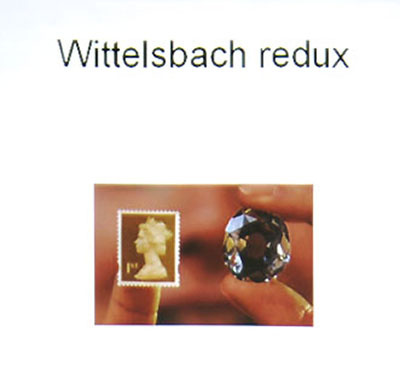
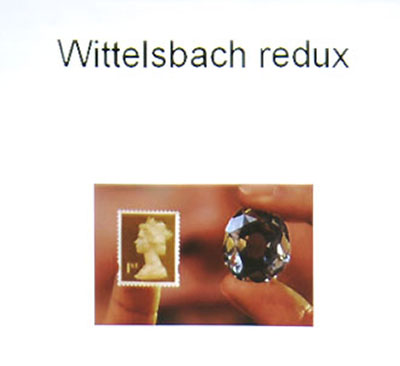
Wittelsbach Diamond

Wittelsbach Diamond

Richard also discussed Blue-white Diamonds that glow blue without florescence. GIA’s diamond grading system.

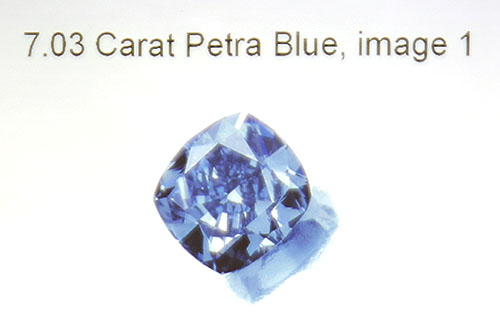
Petra Blue Diamond

Petra Blue Diamond

Type 2A Colorless grade and the grey shade seen in the Hope, Wittelsbach, and other blue diamonds. GIA Hue space and other topics of interest.

Bottom Line for Diamonds? If you like it, Buy It!

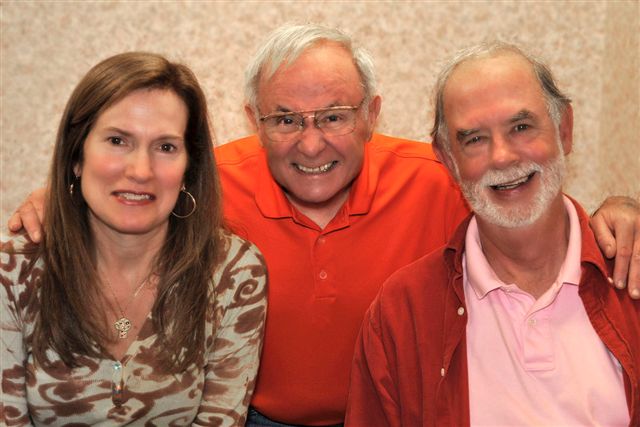
Tony - 1stVP & Richard

Tony - 1stVP & Richard

Richard Wise - Author

Richard Wise - Author

Bottom Line for the Book? Just Buy It!!

Thanks

Thanks !

You will Like It!

Learn more by visiting:

The French Blue
Richard W Wise

Meeting Summary by Charlie Marts

Photos by Melanie Marts

Posted in Meeting Archives | Leave a comment

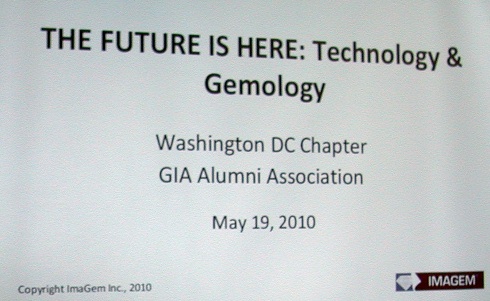
Ms. Suzanna Stull – The Future is Here: Technology and Gemology

Ms. Stull

Ms. Suzanna Stull

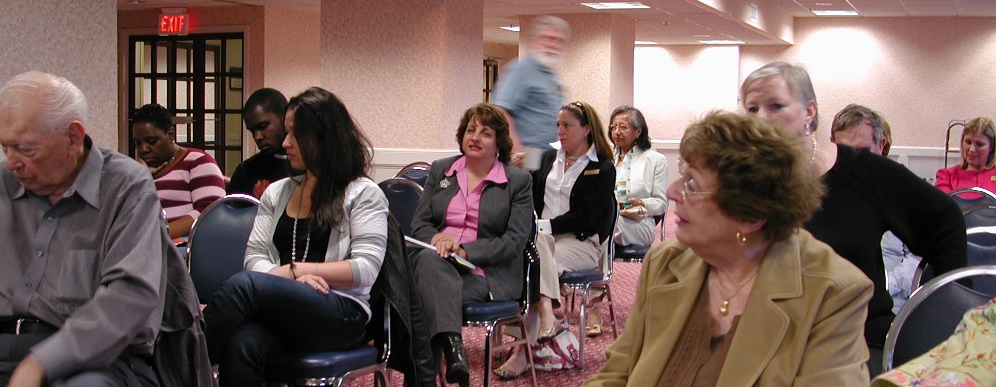
On May 19, 2010, the DC Chapter of the GIA Alumni Association had the opportunity to hear from Ms. Suzanna Stull, Director of International Sales for ImaGem Inc., in Philadelphia, Pennsylvania.  Ms. Stull’s presentation was entitled “The Future is Here: Technology and Gemology” and focused on recent advancements in automated technologies for identifying and grading gemstones, particularly diamonds.

Ms. Stull commenced her presentation with historical background regarding ImaGem’s founding and technological milestones.  The company was begun by Dr. Lalit Aggarwal in 1998 to commercialize for the analyzing of gems powerful statistical modeling techniques developed by Dr. Aggarwal and subsequently patented.

12


Ms. Stull then chronicled briefly how ImaGem had employed those methodologies over the succeeding years to introduce three principal pieces of automated equipment addressing diamonds and a recent addition having application for colored stones.

Ms. Stull next profiled in greater detail each of the three primary machines produced by ImaGem for diamonds.  The VeriGem unit measures light behavior.  The Grader unit grades diamonds for color and clarity and also measures light behavior.  The Clarity unit maps inclusions and grades clarity.  A further important feature of these technologies is the manner in which they enable rapid fingerprinting and verification of the stones assessed.   The units are available to the industry and may be customized to the standards of each client.
35


Lastly, Ms. Stull highlighted the recent Viewer, an example of which was available for demonstration after the meeting.  This unit has found its key use to be in visually identifying the composite rubies now prevalent in the marketplace.

6The DCGIA Chapter thanks Ms. Stull for this chance to learn about current developments impacting the trade.

You can reach Suzanna at:
Suzanna Stull, GG, GP, AJP (GIA)
Director of International Sales ImaGem Inc.
Telephone: +1.215.477.9920 x218
ImaGem Inc. Website
Suzanna Stull’s E-Mail

Summary prepared by Andrea Blake, G.G.

Posted in Meeting Archives | Leave a comment