Richard Wise – The Four C’s of Connoisseurship In Colored Stones

Richard W Wise

Richard W Wise

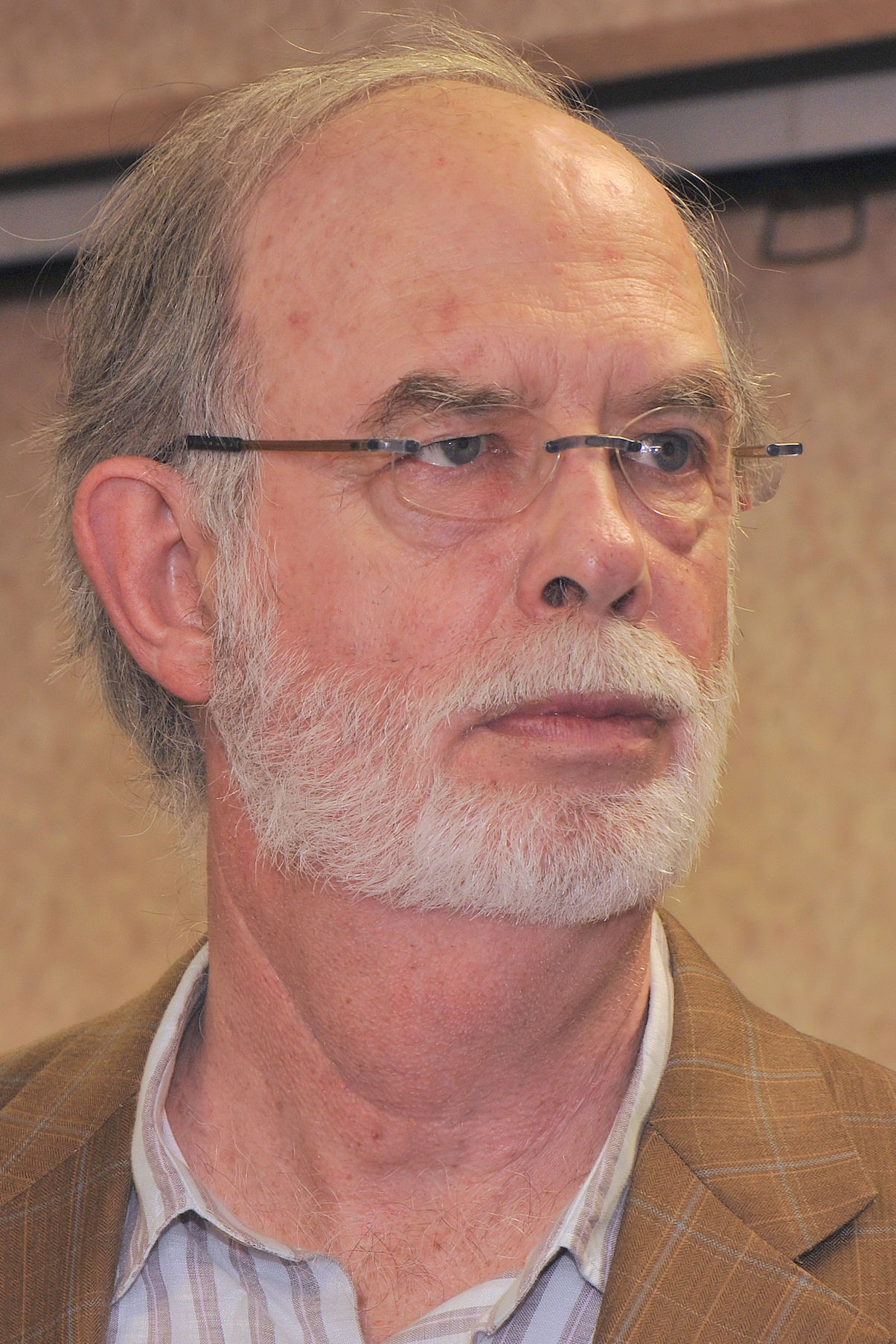
On Tuesday June 9th, 2009, we were treated to a Power Point Presentation “The Four C’s of Connoisseurship In Colored Stones” by Mr. Richard Wise a Graduate Gemologist (GIA) and President of R.W. Wise, Goldsmiths Inc., in Lenox, Massachusetts.

Mr. Wise explored the concept of connoisseurship as it pertains to colored gemstones, drawing on his extensive background and experience in wide ranging aspects of the industry. He went into detail explaining how the factors of color, cut, clarity and crystal can provide a framework for effective evaluation of quality in colored gemstones.

Mr. Wise explained his proposed change from the traditional four C’s color, cut, clarity and carat weight. He proposes to omit carat weight and substitute, or rather reintroduce a neglected, almost forgotten, but necessary criterion, crystal.

Beauty of a gemstone depends on a balance of Color, clarity, cut and crystal. None of these criteria is sufficient in itself to make a beautiful gem, all four are necessary conditions.

The four C’s, color, clarity, cut and crystal were each discussed in detail by Mr. Wise.

Color: as it is applied to connoisseurship in gemstones requires further definition. Color is divided into three components: hue, saturation and tone.

Cut: is most quantifiable, and the only one which depends completely on the ingenuity of man.

Clarity: inclusions or flaws, inclusions should be regarded as adding to desirability, for they add identifying characteristics. Inclusions should only be called flaws when their presence materially affects the beauty and/or the durability of a gemstone.

Crystal: the degree of transparency, if a stone has good crystal and is cut well it will glow.

Mr. Wise’s 275 page book, “Secrets Of The Gem Trade, The Connoisseur’s Guide To Precious Gemstones” was available at the meeting and is also available on his website at  http://www.rwwise.com.
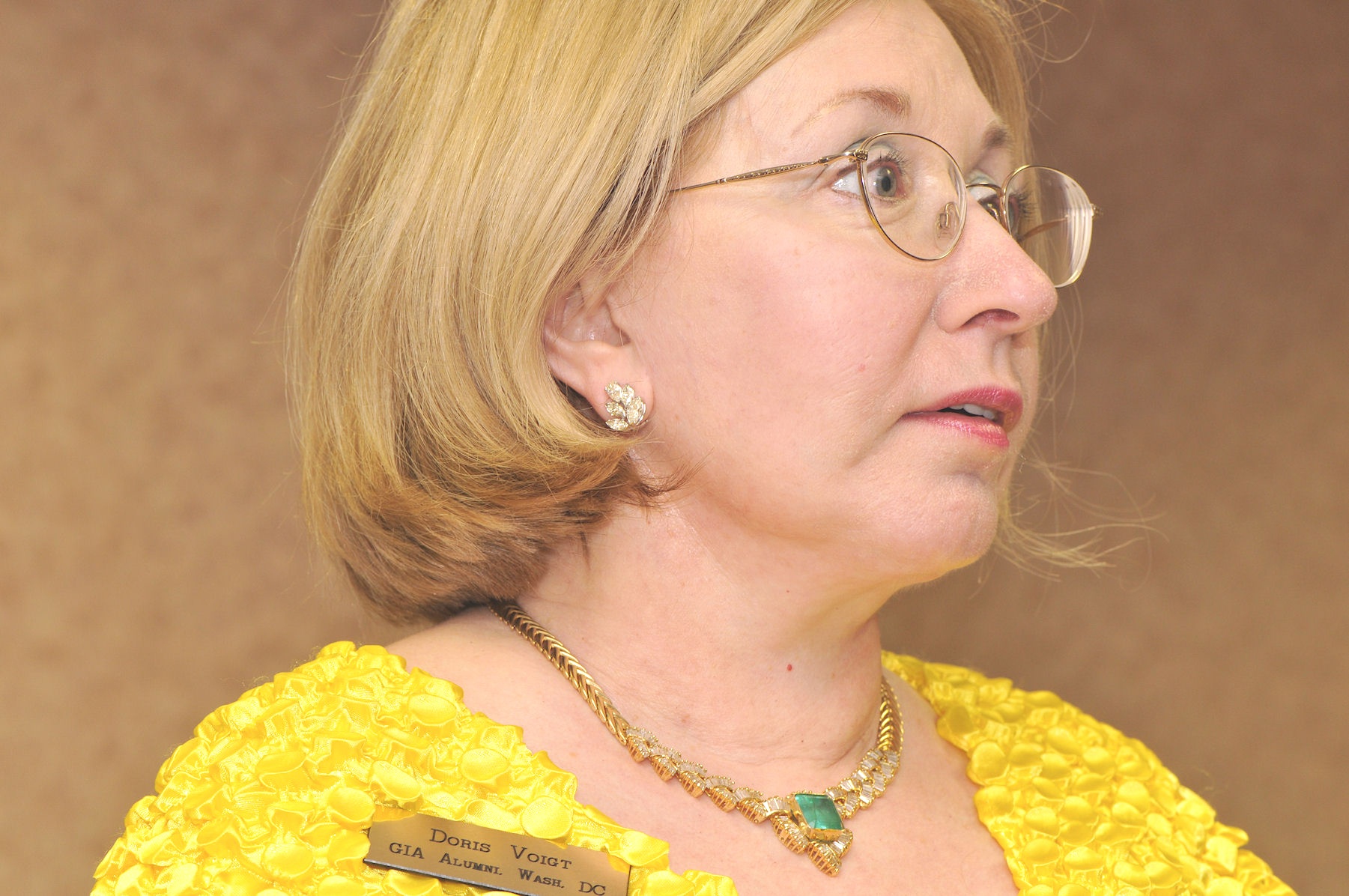
VP - Doris Voigt

VP - Doris Voigt

Richard Wise & Courtland Lee

Richard Wise & Courtland Lee


With the help of Mr. Wise’s book I have given you an overview of his informative and powerful presentation to the DCGIA Chapter.

Submitted by Bobby Mann, GG

Photos by Melanie Marts, GG
Posted in Meeting Archives | Leave a comment

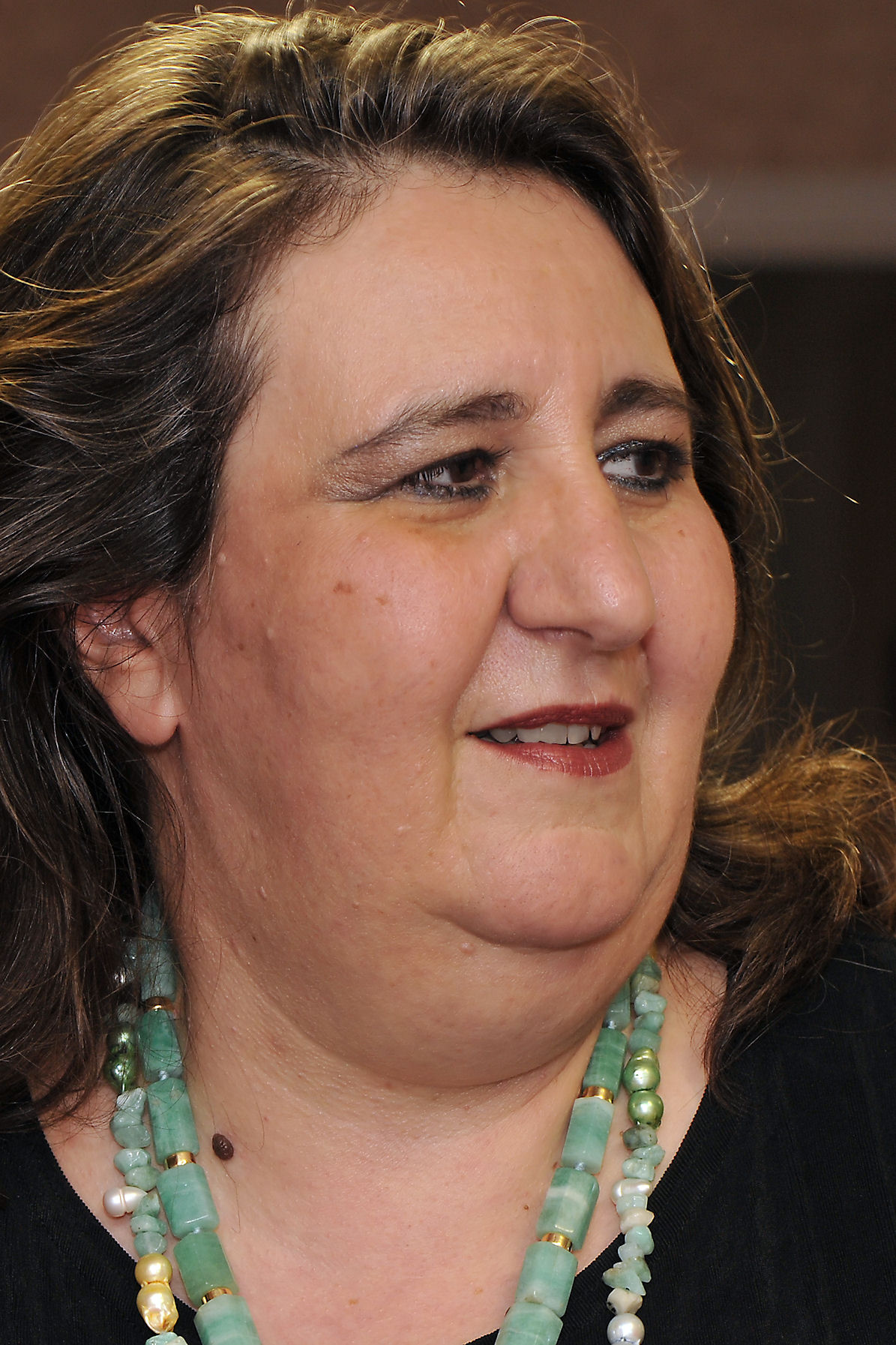
Artist Helen Serras-Herman

Helen Serras-Herman

Helen Serras-Herman

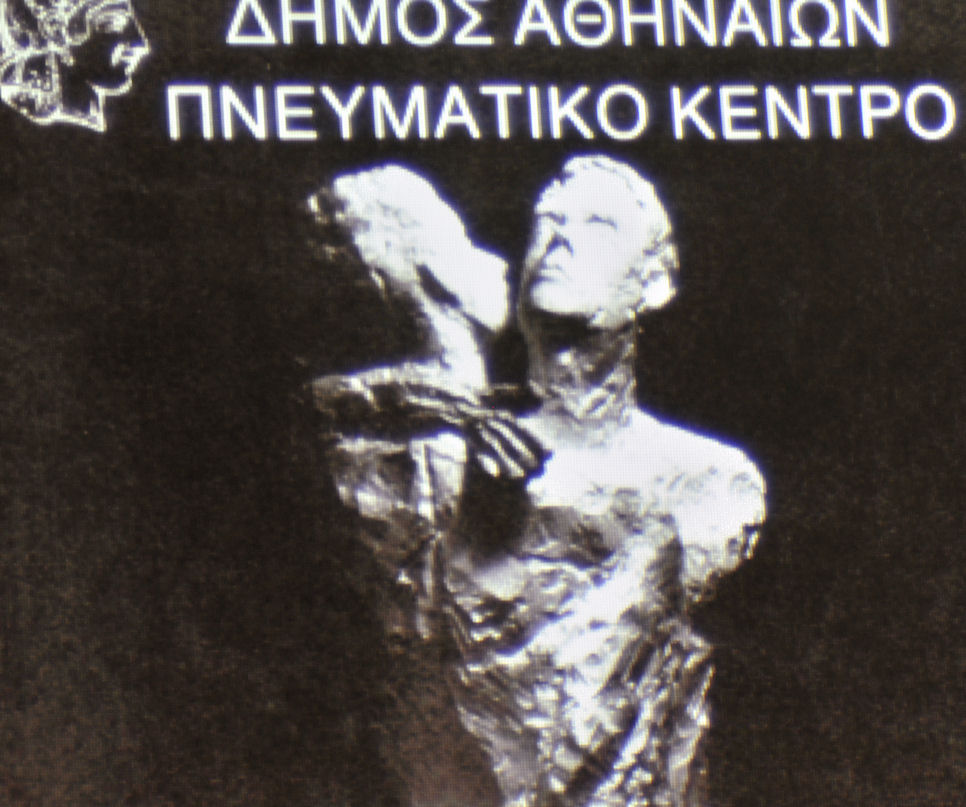
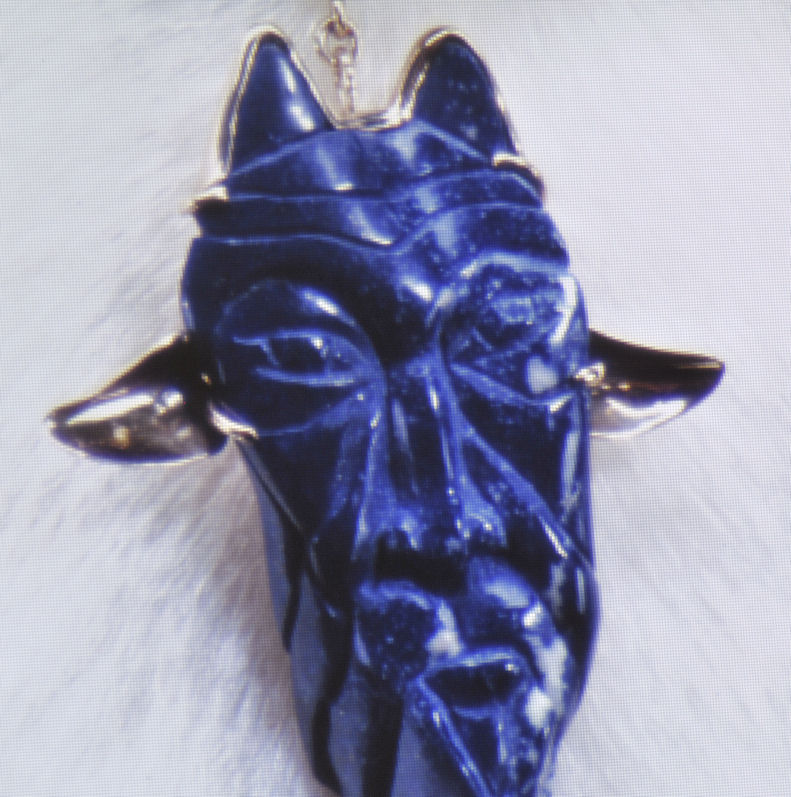
DCGIA was privileged to hear a power point presentation by Helen Serras-Herman about her evolutionary journey as an artist.

Part one consisted of family background and influence. Born to Greek parents in New York City, they moved back to Athens where she finished school.

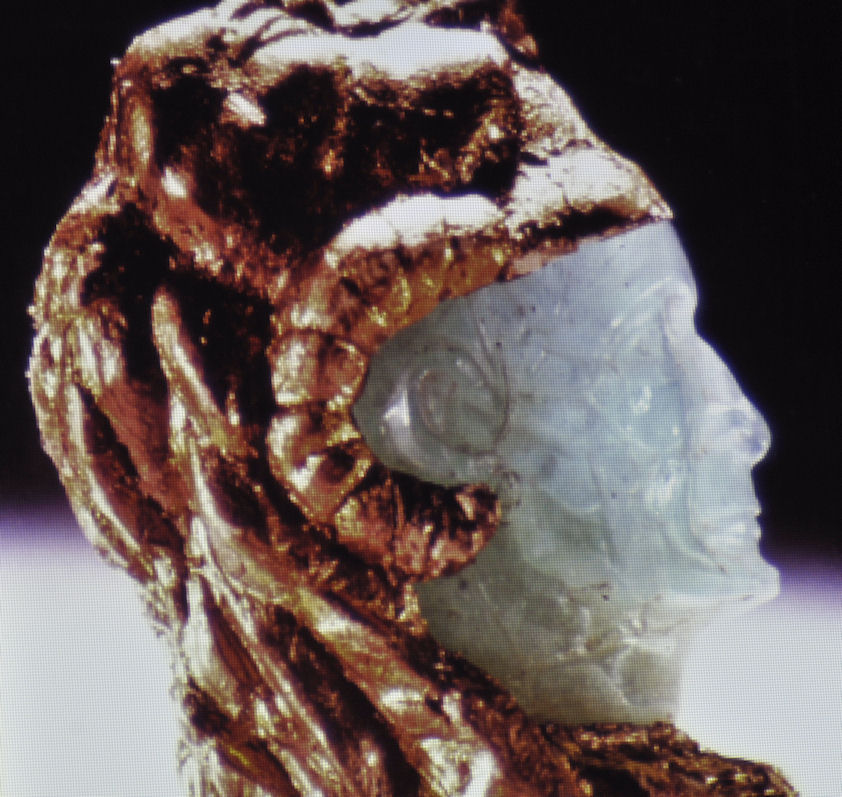
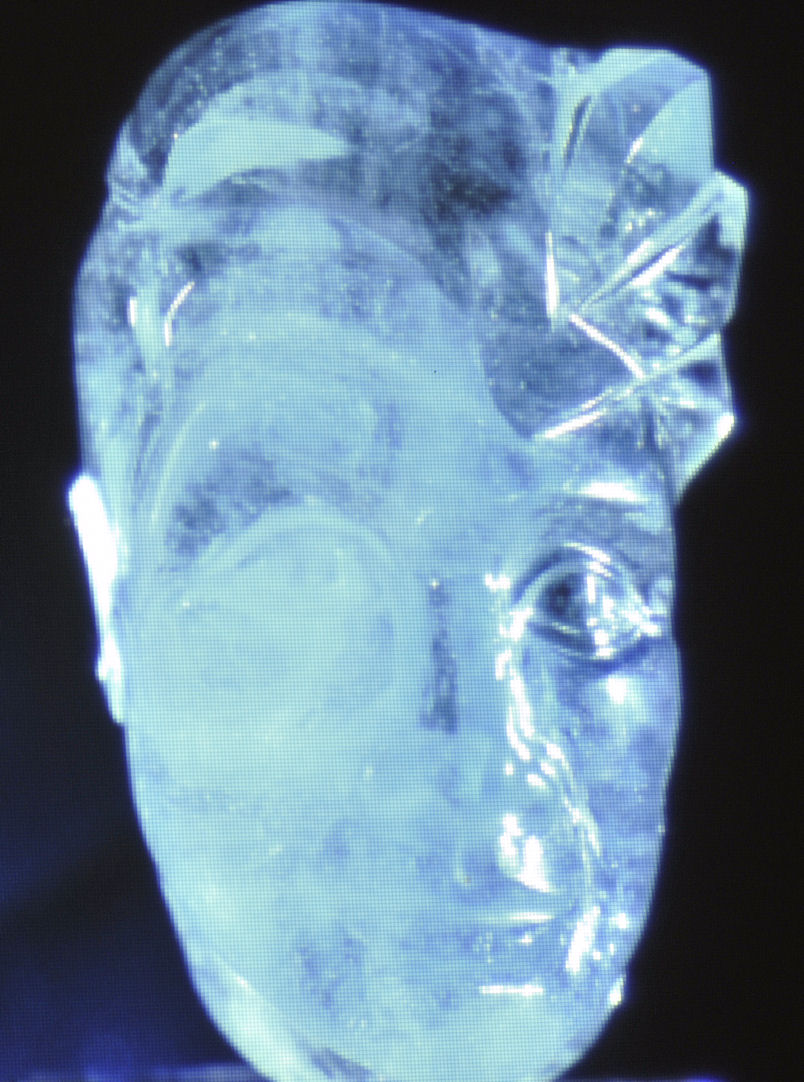
She studied sculpture in Berlin. In 1983 she studied glyptography, gemology and became an FGA graduate.

She traveled a great deal and these travels inspired her imaginative designs in gem carving.

pic2pic3


pic4pic4


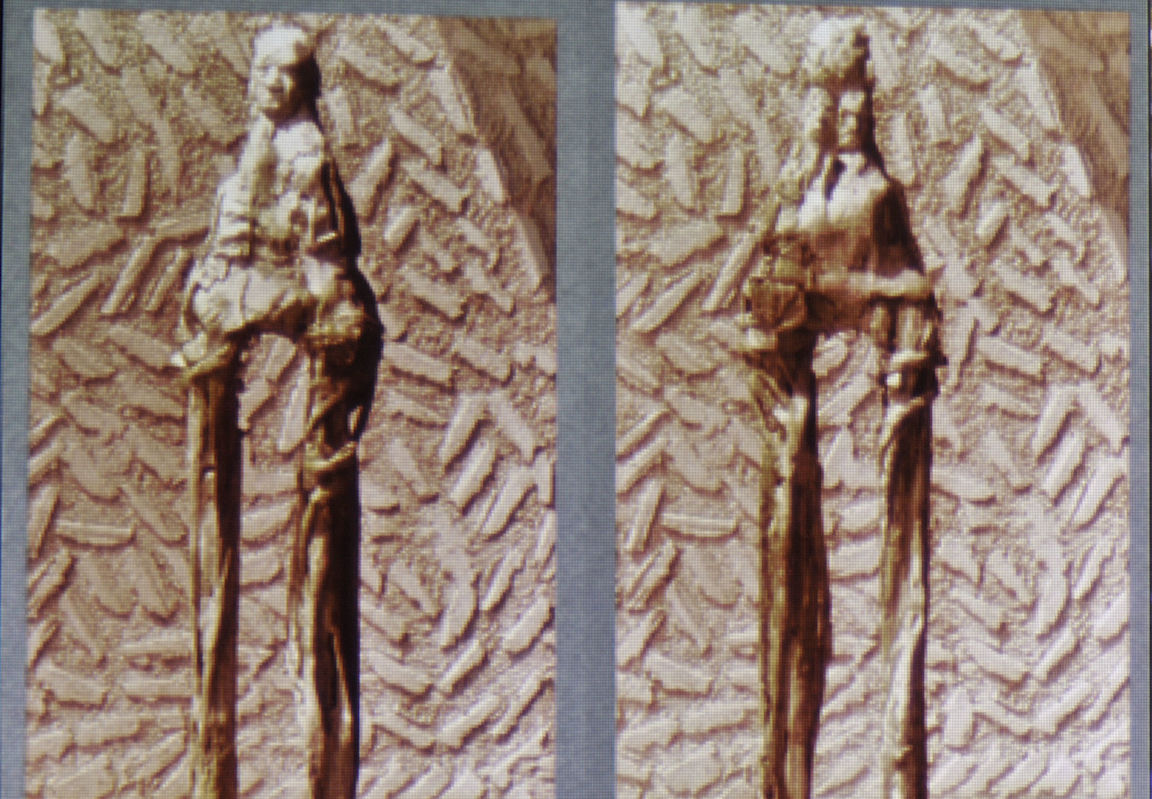
She moved to the Washington DC area and after many years sculpting in her studio in Annapolis, she and her husband moved to southern Arizona. Helen’s inspirations came from many sources; Greek mythology, Native American history, monster themes and the world of nature. Her talents were recognized and her fame recorded.


pic6pic7


pic8pic8


Part two was a lyrical summary of the many pieces she has produced, the influences that initiated them and the fantastic repertoire inspired by gemstones.
pic8pic14


Part three showed Helen’s workshop and the overwhelming number of tools required to produce her exquisite works. I t was also a tribute to her artistic skills and patience in these productions.
pic16pic17


In summary Helen is a fantastic artist with fabulous skills, wondrous imagination and unbelievable talent.
pic18


pic19

Andy & Helen & Bobby

Meeting Minutes provided by Lisa Carp
Photos by Melanie Marts

Posted in Meeting Archives | Leave a comment

Abbey Kent Flythe

Abbey Kent Flythe

Abbey Kent Flythe

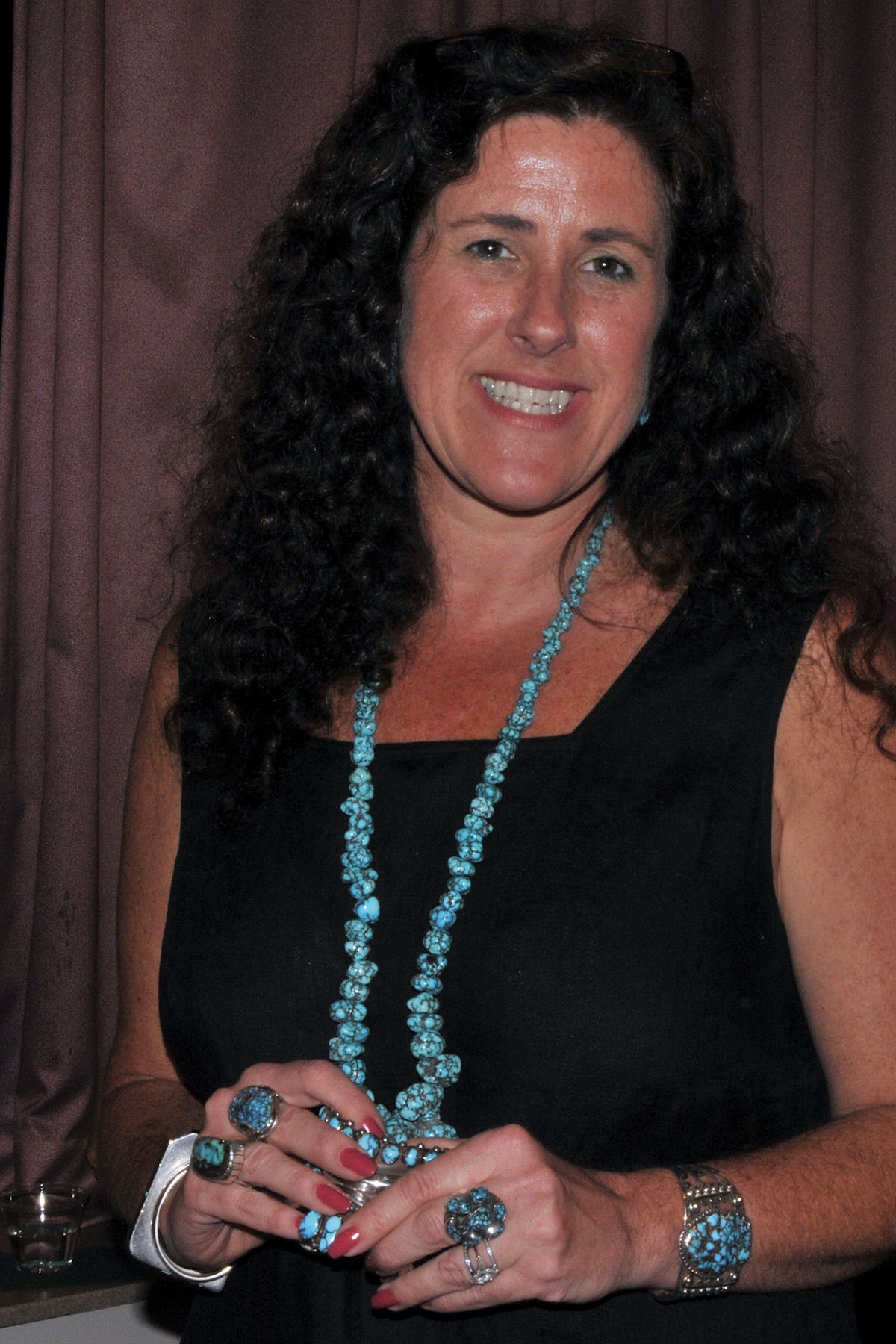
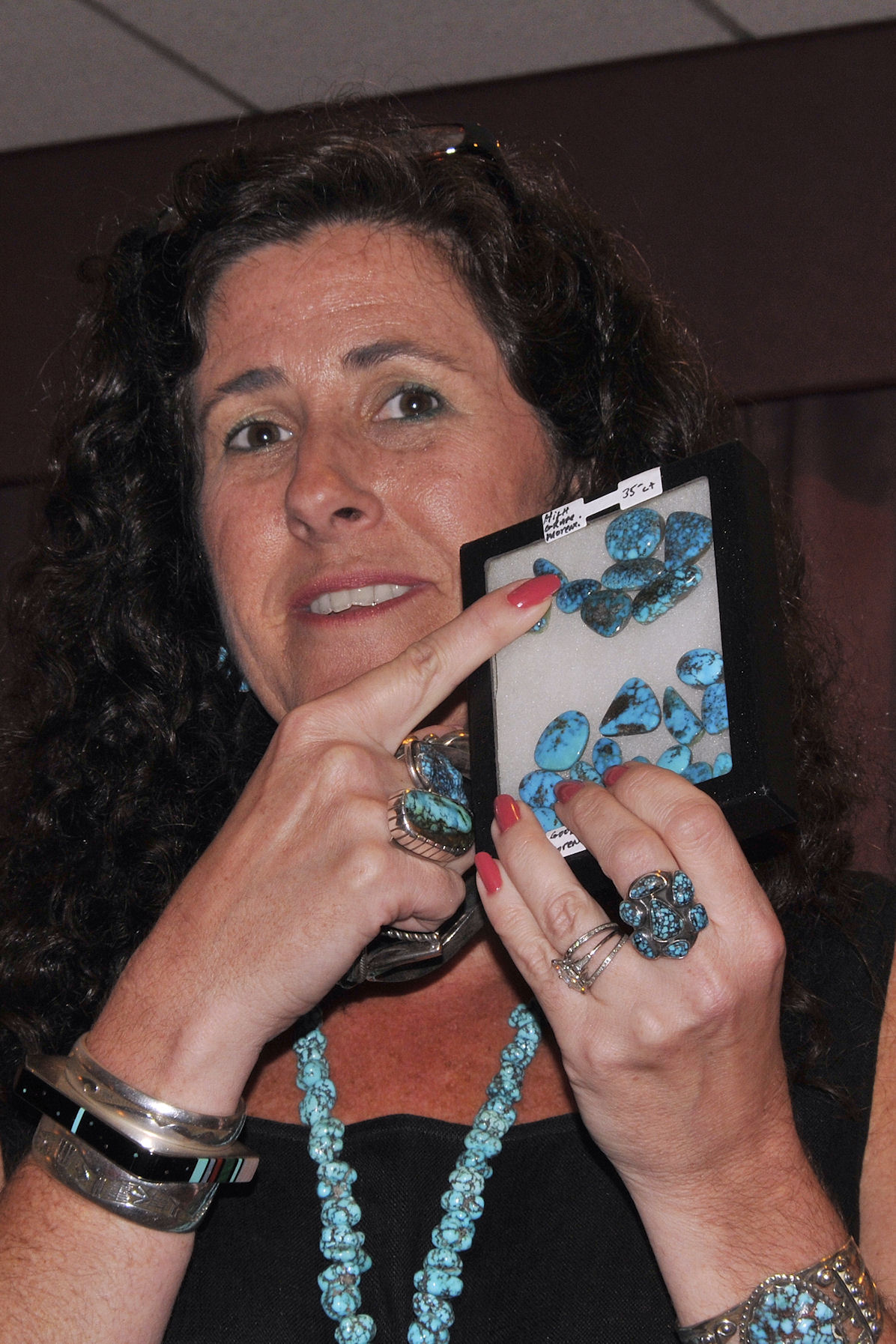
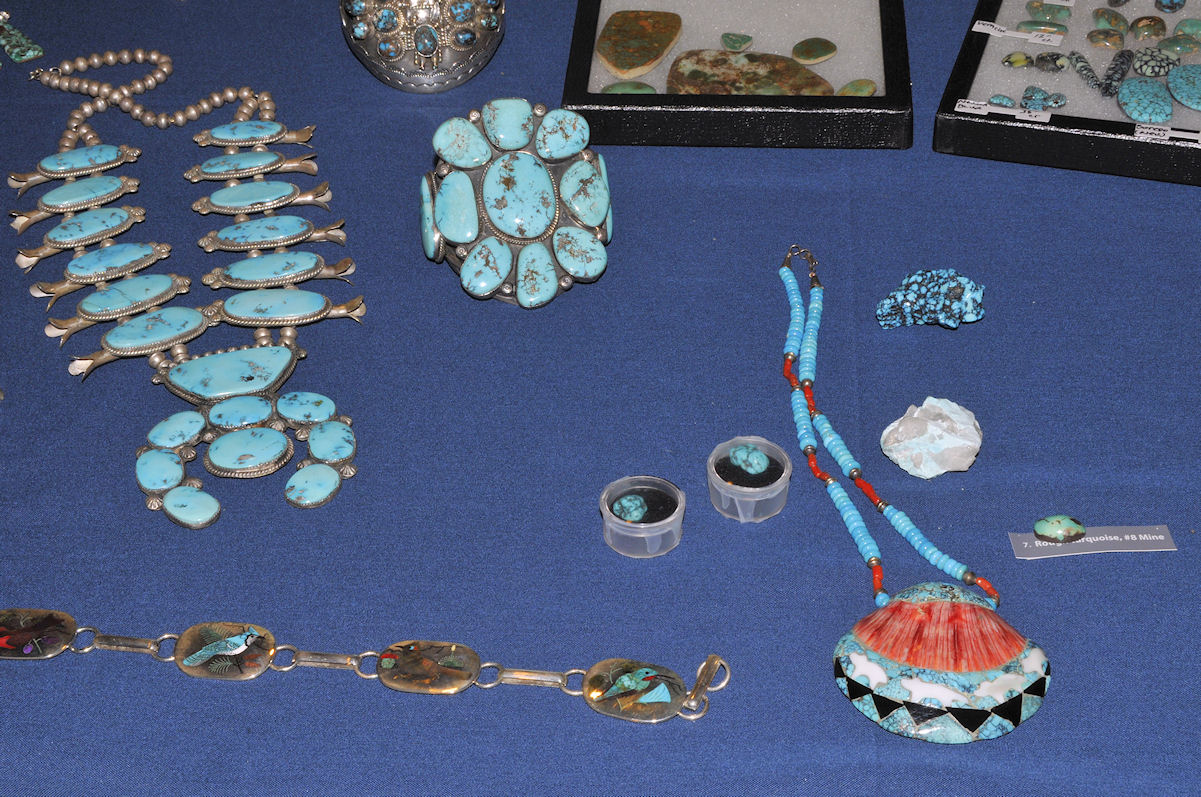
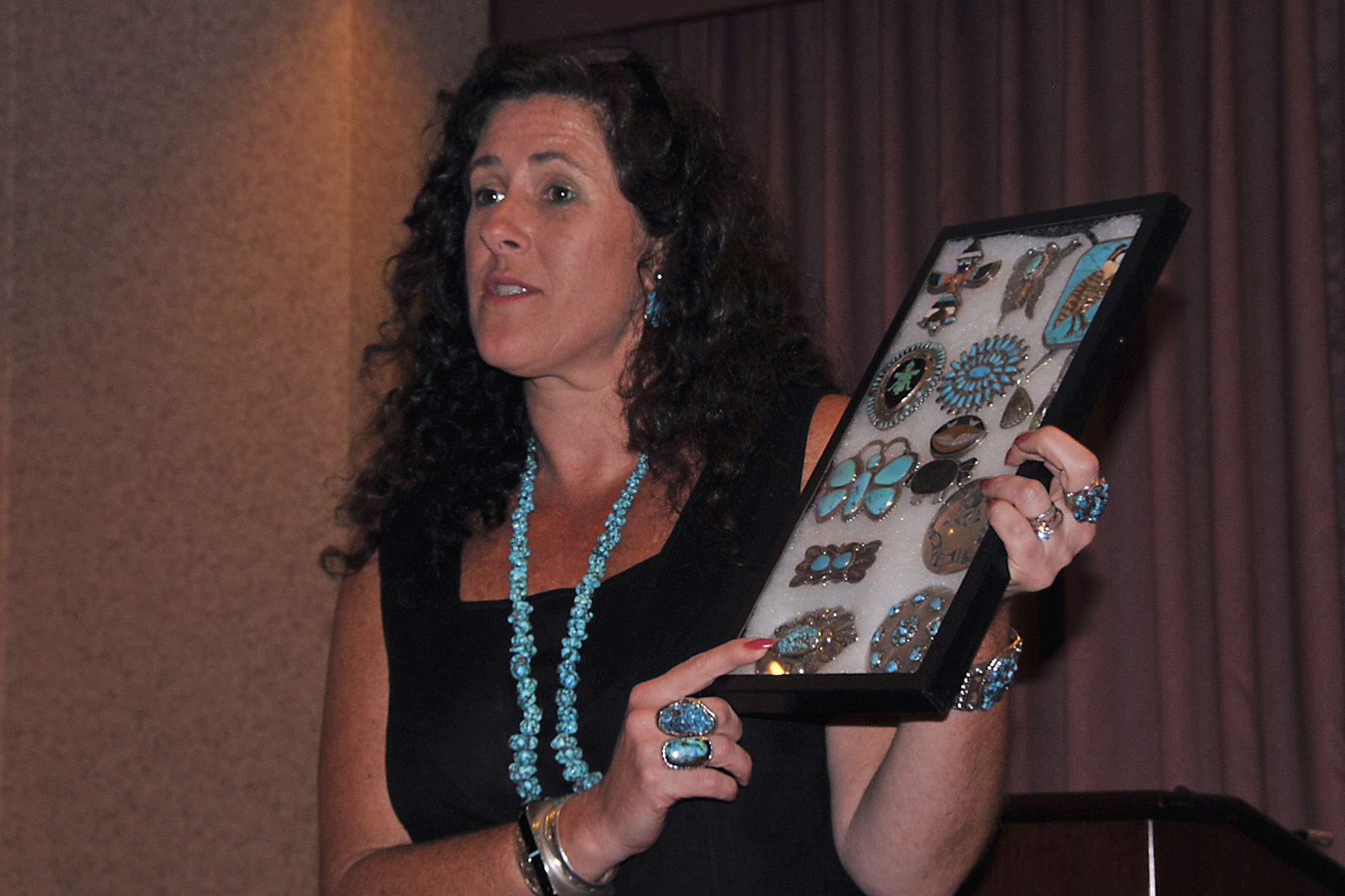
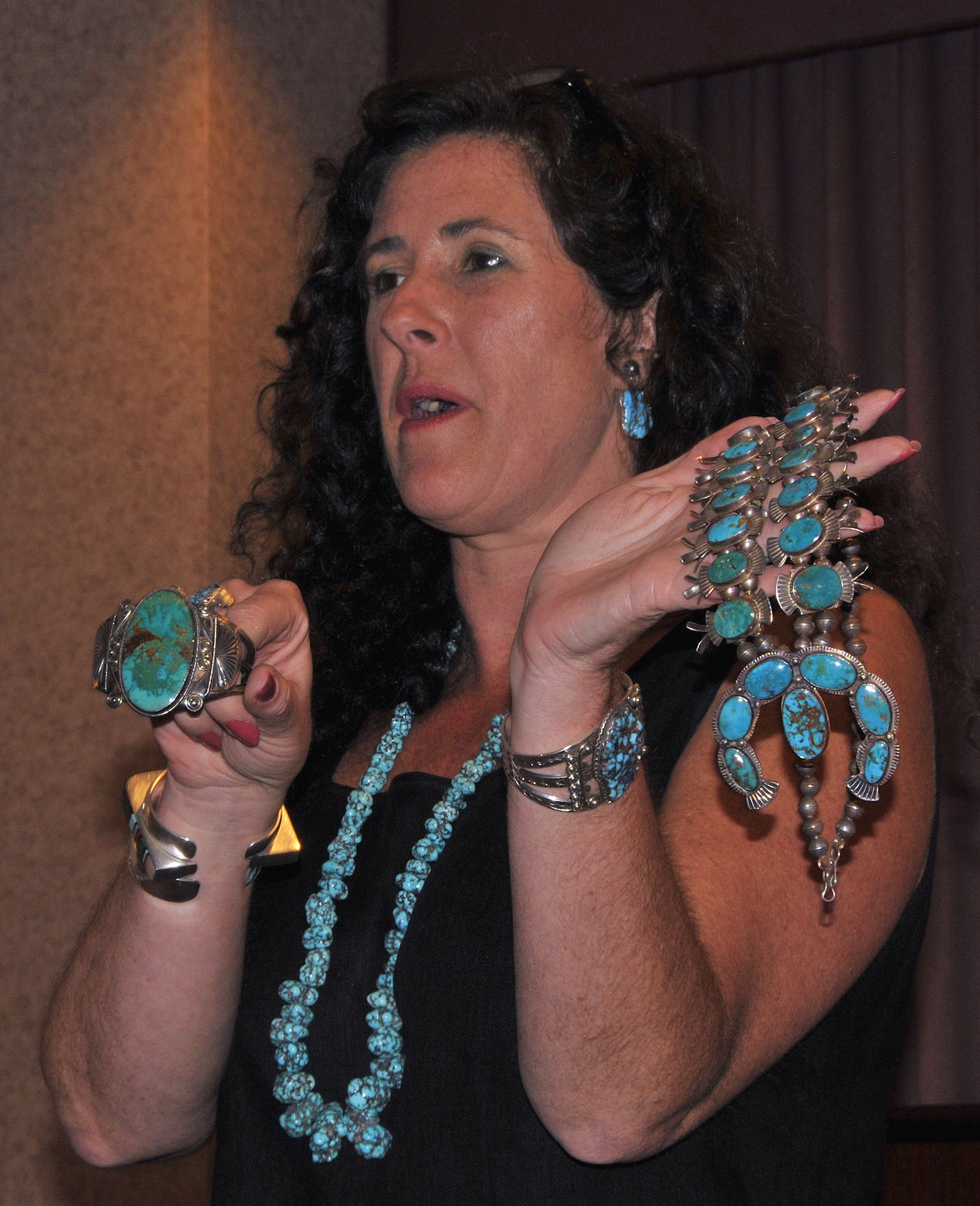
In April, Abbey Kent Flythe shared her extensive knowledge and enthusiasm about turquoise and Indian Jewelry. She grew up in Lancaster, Pennsylvania, and has been an enthusiast since age 7 when she saw her first piece of turquoise jewelry.

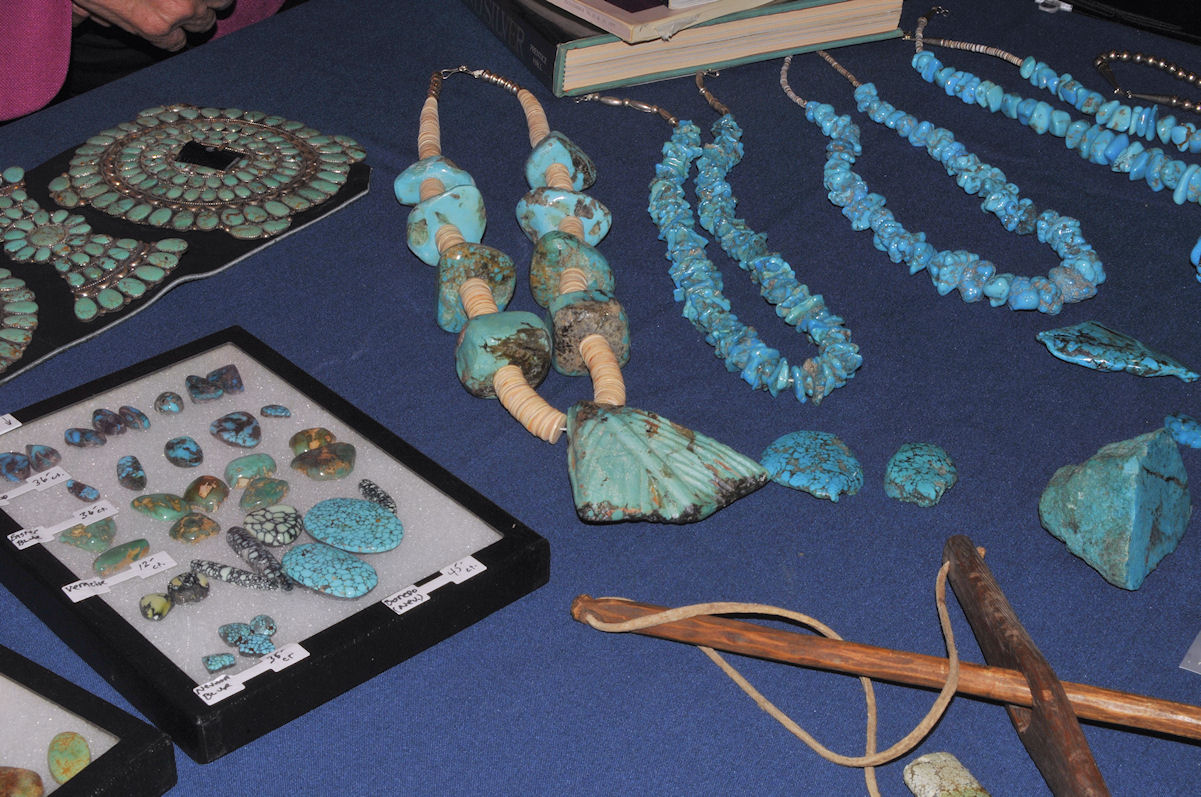
Later, she worked at the US Department of Interior’s Indian Craft Shop for nine years and has been in business for herself for the last 13 years. Abbey discussed the different characteristics of turquoise from its various mining sources and its use in jewelry by American Indian cultures.

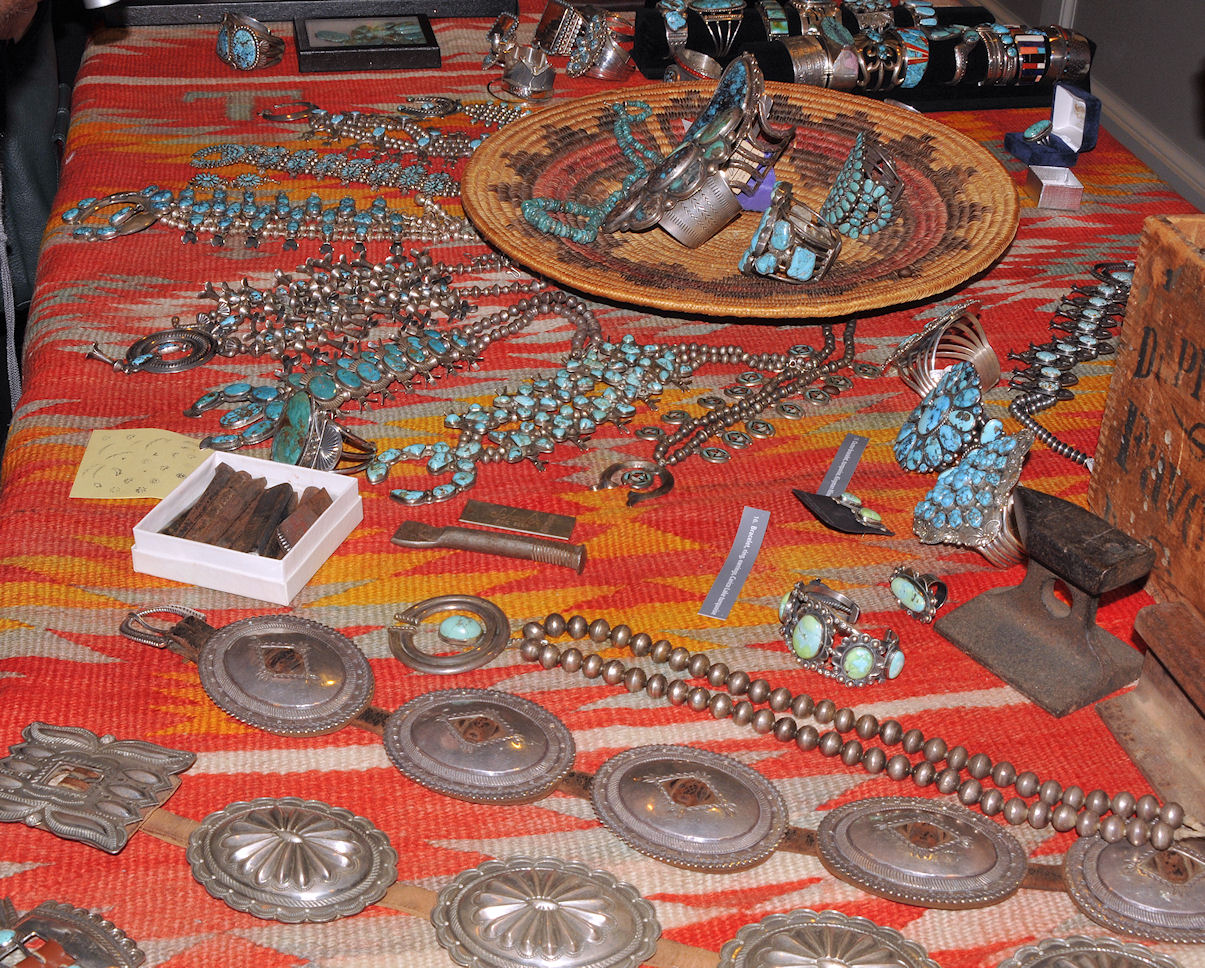
She brought samples of both old and new Indian jewelry artists.
pic2pic3


Most turquoise comes from Persia, Tibet, China and the American southwest. Persian turquoise is the standard. Turquoise has been mined since prehistoric times. In the American southwest, the Cerrillos mine in New Mexico has been in operation since the time of Christ. During the prehistoric period, Native Americans set turquoise in mosaic on shell with resin. Beads were very important. Both men and women wore beads in ceremonial dress. Today the Zunis believe that both men and women “don’t go to Zuni heaven if they do not have ears pierced.” Wearing every piece of turquoise jewelry one owns is called “walking in beauty.”

pic4pic5


Originally silver coins were melted down for use in silversmithing, then traders moved in and brought silver ore. Fred Harvey started the “railroad jewelry” which was developed from the 1900’s through the 1930s and 1940’s. He gave the Indians cards with symbols to use on their jewelry such as crossed arrows and dogs. CG Wallace jewelry was prevalent in the 1920’s to the 1960’s. Traditionally the Navajo design around the stone and the Zuni were more into lapidary carved stones and the Hopi developed the overlay method using 15th and 16th century pottery designs on jewelry.

pic6pic7


Abbey indicated that the Indian jewelry market is very interesting and you have to be very careful and like the gem market you have to know your dealer. She also suggested the following reading list:

  1. Turquoise Unearthed, by Joe Dan and Joe P. Lowry.

  2. C.G. Wallace Collection of American Indian Art, Sotheby Park Bernet, Inc.

  3. Skystone and Silver, The Collectors Book of Southwest Indian Jewelry, by Carl Rosneck and Joseph Stacey.

  4. The Navajo and Pueblo Silversmiths, by John Adair, 1945.

  5. Arizona Highways, Turquoise Blue Book, Indian Jewelry Digest.

  6. Turquoise, The Gem of the Centuries, by Oscar T. Branson.

  7. Indian Silver Jewelry of the Southwest 1868-1930, by Larry Frank.

  8. Ray Manley’s Portraits and Turquoise of Southwest Indians, by Clara Lee Tanner.

Posted in Meeting Archives | 3 Comments

What Makes “Good” Good?

Ms. Diana Singer

Ms. Diana Singer

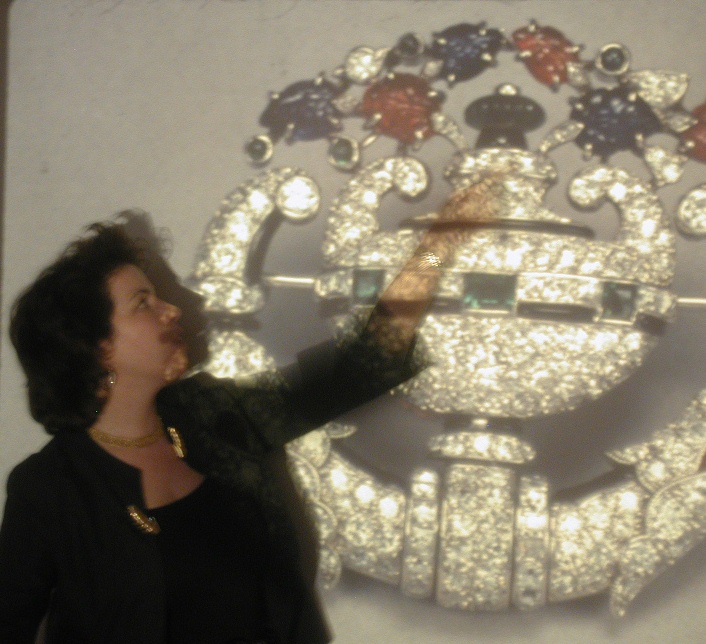
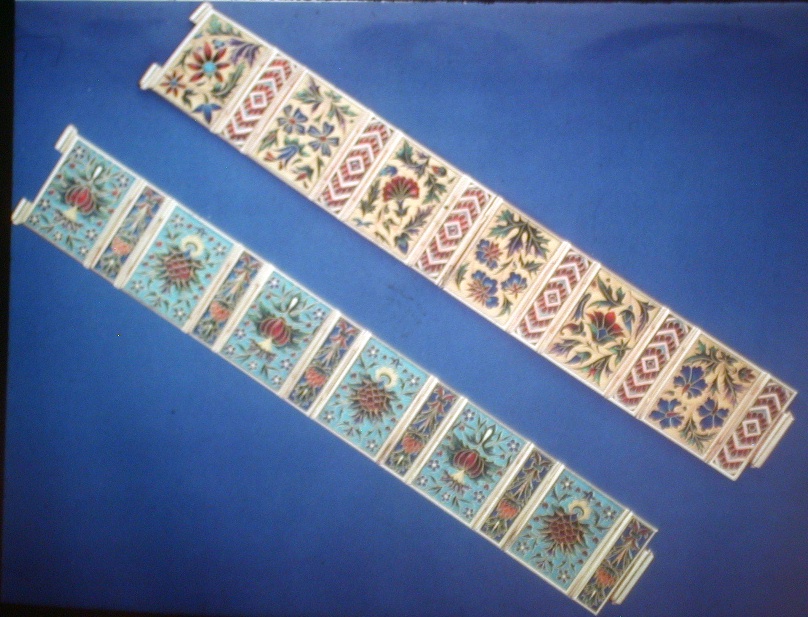
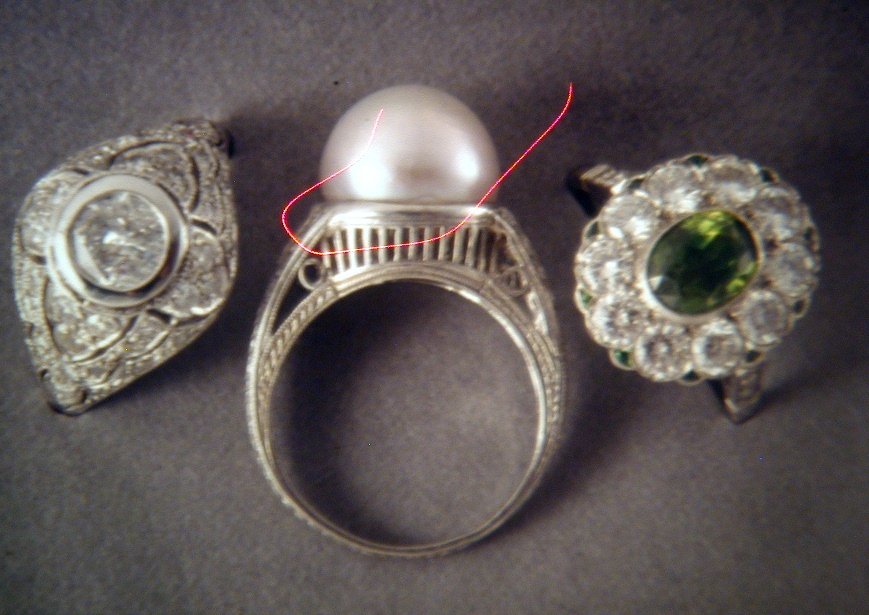
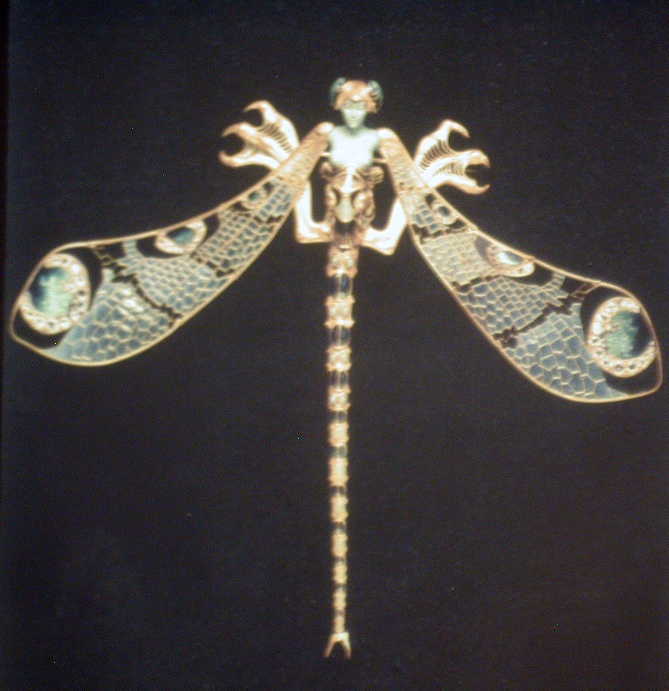
Ms. Diana Singer stimulated the DCGIA chapter on Tuesday evening, March 10, 2009, with her presentation “What Makes ‘Good’ Good?”-posing and answering the question what makes excellent jewelry.

For Ms. Singer, the question revolves about how an experienced jeweler knows “the good” when seen. Ms. Singer, a third-generation estate jewelry dealer, has over 30 years experience in the industry.

She has lectured extensively and taught courses in jewelry appraisal and history, her particular areas of expertise. She is a member of the New York Chapter of the Society of Jewelry Historians and a founder of the Women’s Jewelry Association, winning that association’s 1988 Retailer of the Year Award.
pic2pic3


Ms. Singer broke her lecture into three parts: stones, workmanship, and design. Paraphrasing Mr. Justice Potter Stewart’s famous quote on pornography, Ms. Singer began her presentation by telling us that she may not be able to define excellence in jewelry, but she knows it when she sees it. Her caveat may, however, have been too modest, for she proceeded to well define and illustrate with her slides those qualities that make up excellent jewelry.

She devoted a few minutes to stones (knowing that the audience already had a grasp of what makes a good gemstone), devoting most of her time to workmanship and design. She defined unfamiliar terms and illustrated them with her slides, just as she did with the points she made regarding the esthetics and philosophy of well-designed jewelry. She well defined what makes good jewelry and illustrated her words with slides.
pic4pic5


pic6pic7


Her remarks on color and how it contributes to the success or failure of a piece and her comments on how humans view objects showed her understanding of optical scientific theory. She also noted that over the last 30-40 years many techniques done by hand then had been converted to machine craft so that there is less of the personal in pieces made today.
pic9pic10


She introduced mathematical ideas, noting that the “golden rectangle” (rectangular shapes in the ratio of 1:1.61) is the most pleasing to the human eye, a principle known from ancient times to the present. She also showed that the famous Fibonacci sequence (1,1, 2, 3, 5, 8, 13, 21, 34, . . .) has significance in jewelry because the curve swept out by graphing the sequence is so often used in making pieces.

She finished the lecture showing some slides and commenting on what qualities made the pieces pictured excellent, mediocre, or bad, usually noting that a combination of workmanship and design accounted for the quality of the piece, for usually the stones were excellent quality.

Ms. Singer’s presentation was given with grace and humor, much animation on the part of the speaker and the audience greatly appreciated what she had to say.

Meeting Summary by Tim Morgan

Photos by Bobby Mann

Posted in Meeting Archives | Leave a comment

Tucson Gem Show Report

Each year a considerable number of the world’s biggest and best gem and mineral dealers converge on Tucson, Arizona, for what has become one of the largest gem events anywhere.

As Tucson developed into a “must-view” event, the Chapter realized that our colleagues represented a cross-section of the trade and could bring back their Tucson experiences and details to benefit others who did not attend or who concentrated on different segments of the industry during their sojourn.

Hence, DC GIA decided to devote each February meeting to a “Tucson Report” where Chapter associates who attended could exhibit items they purchased for “show and tell” and could discuss prices, new trends, and impressions with everyone at the meeting.

Lois Berger

Lois Berger

The Tucson Report beginning with Lois Berger, G.G. NAJA, and her always-excellent talk on pearls. Lois does a “Walk Around” each year and graciously opens it to anyone wishing to learn more. She gave a glimpse of what’s new, such as the Lagniappe [lan yap] “pearls” from American Pearl Co. These are extra pearls that from during the culturing process. They may or may not be marketed. She also provided photos and pricing of various strands of freshwater and salt water cultured pearls, along with South Sea and Tahitian cultured pearls. As an added bonus, she brought samples that she acquired on this trip.

Lois H. Berger – presentation

You can see her presentation by clicking the link above of Lois’ power point presentation with pictures.

Michael Gibson

Michael Gibson

Michael Gibson, Geologist and FGA followed with his reasons for why he’s been attending the show for 15 years. Michael broke it down to these: Education, Buying and Selling, Seeing the Usual, Seeing the Unusual, Eye Candy, Trade Camaraderie, Seeing Friends and Finding “Your” Kind of Fun. One of the highlights of Michael’s experience this year was a conference topic on light sources. He provided each of us with a CD entitled “Lighting and Its Effect on Color-Grading Colorless Diamonds” by Stan Hogrebe, CEO of Dazor, which you can view from the AGA website link below.

Tucson 2009AGA Offerings


Eye Candy
Eye CandyAGTA Cutting Edge Awards can be seen at AGTA Awards
AGA Conference Task Force on Lighting & Color-Grading can be seen at AGA Web Site

Kusam Malhotra

Kusam Malhotra

Kusam Malhotra of K&K International focused mostly on pricing of natural, unheated sapphires. She gave examples of blue, yellow and colorless, each with significant price increases over last year. Additionally, Kusam talked about cuprian tourmaline. Since there is only a 3% difference in the amount of copper in the Mozambique material, CIBJO ruled that it too, could be called Paraiba.

Expect to see an increase in price for this material. She saw an increase in production of black spinel as an alternative to black diamonds and an abundance of light-colored Kunzite. She concluded by commenting that the European designers are seeking large, vibrant colored stones.

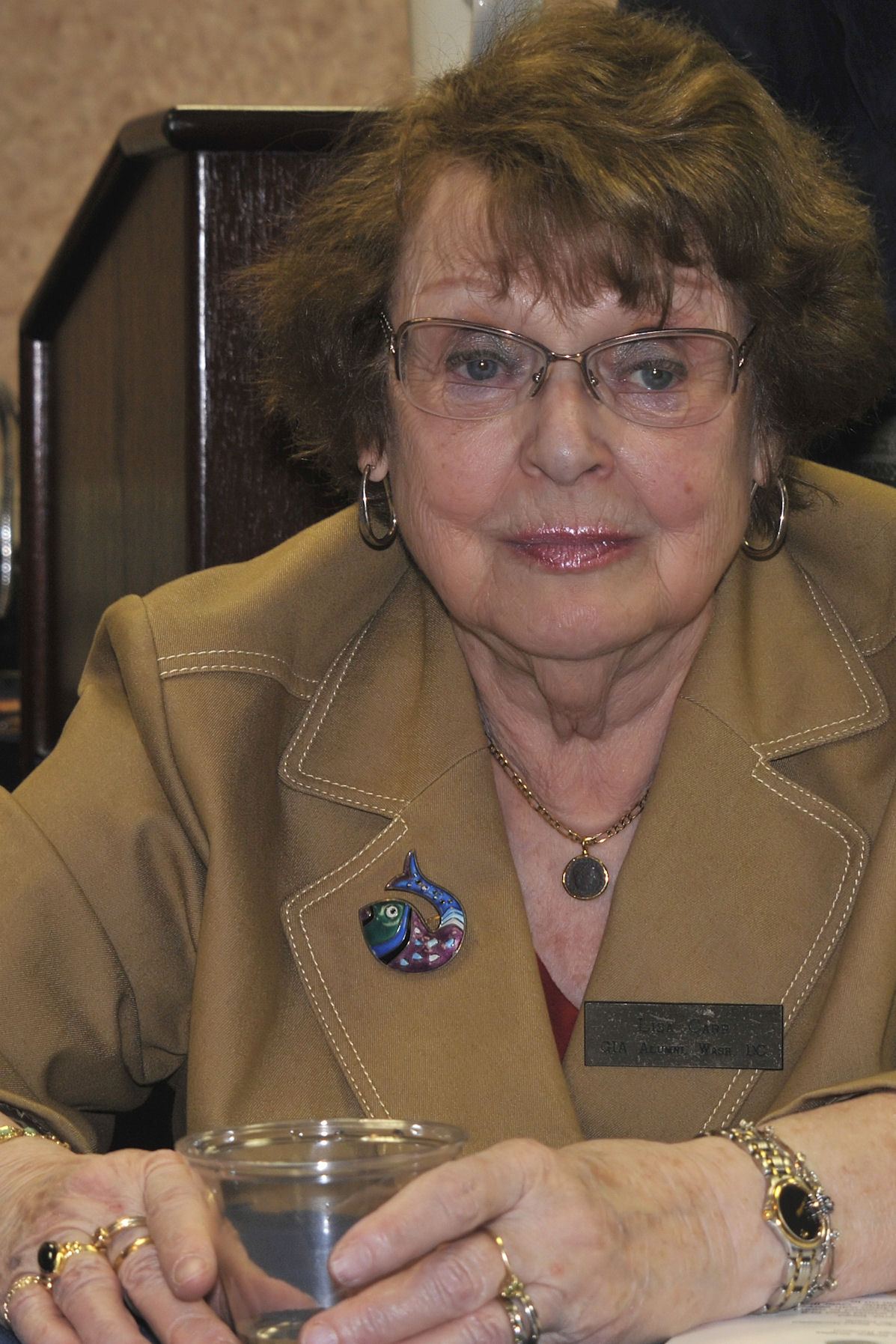
Lisa Carp

Lisa Carp

Lisa Carp, Educator, provided several examples of her favorite purchases.

Hap Williams

Hap Williams

Hap Williams who gave a general overview of Tucson and how it differed from other years. One of the most telling signs of the present economy was that the normal 30 flights per day had been reduced to 15 per day.

He shared that there was ample parking at all of the shows and the restaurants were easily accessible.

Tim Morgan

Tim Morgan

The evening concluded with Tim Morgan’s “Show and Tell” of examples he purchased to make future men’s jewelry. These included brown tourmaline, treated turquoise, boulder opal, amber, jet (all beads) pieces of meteorite and various fossils.

The Meeting time ran out before Courtland Lee and Bobby Mann could present a discussion, but both had show and tell items displayed at the meeting.

Visit the Photos Page to see some of the show and tell items displayed at the meeting.

Submitted by Sherlene Y. Bradbury, G.G. with Photos by Melanie Marts, G.G.

Posted in Meeting Archives | Leave a comment

Statistical Analysis of Diamond and Gem Prices

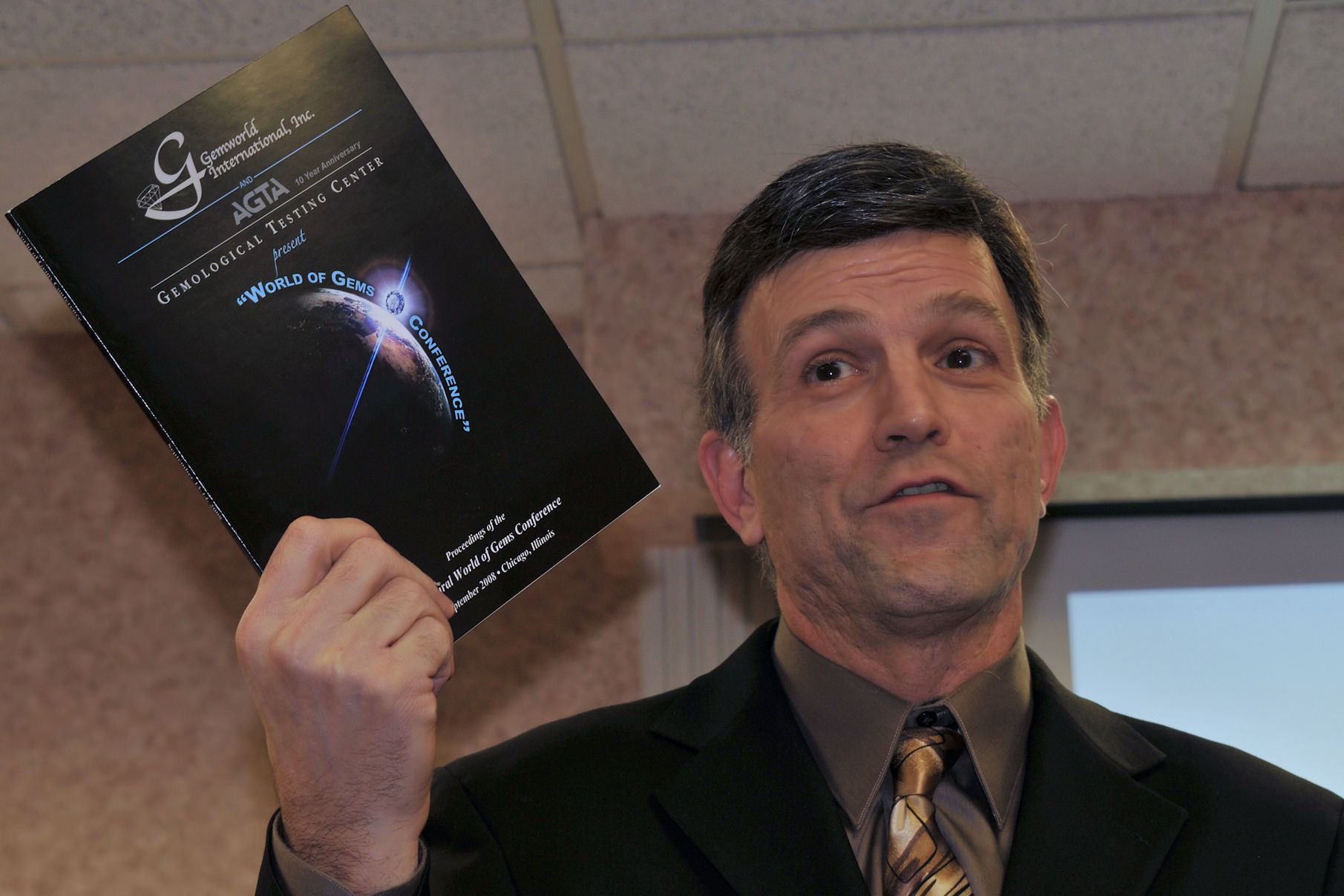
Richard Drucker

Richard Drucker

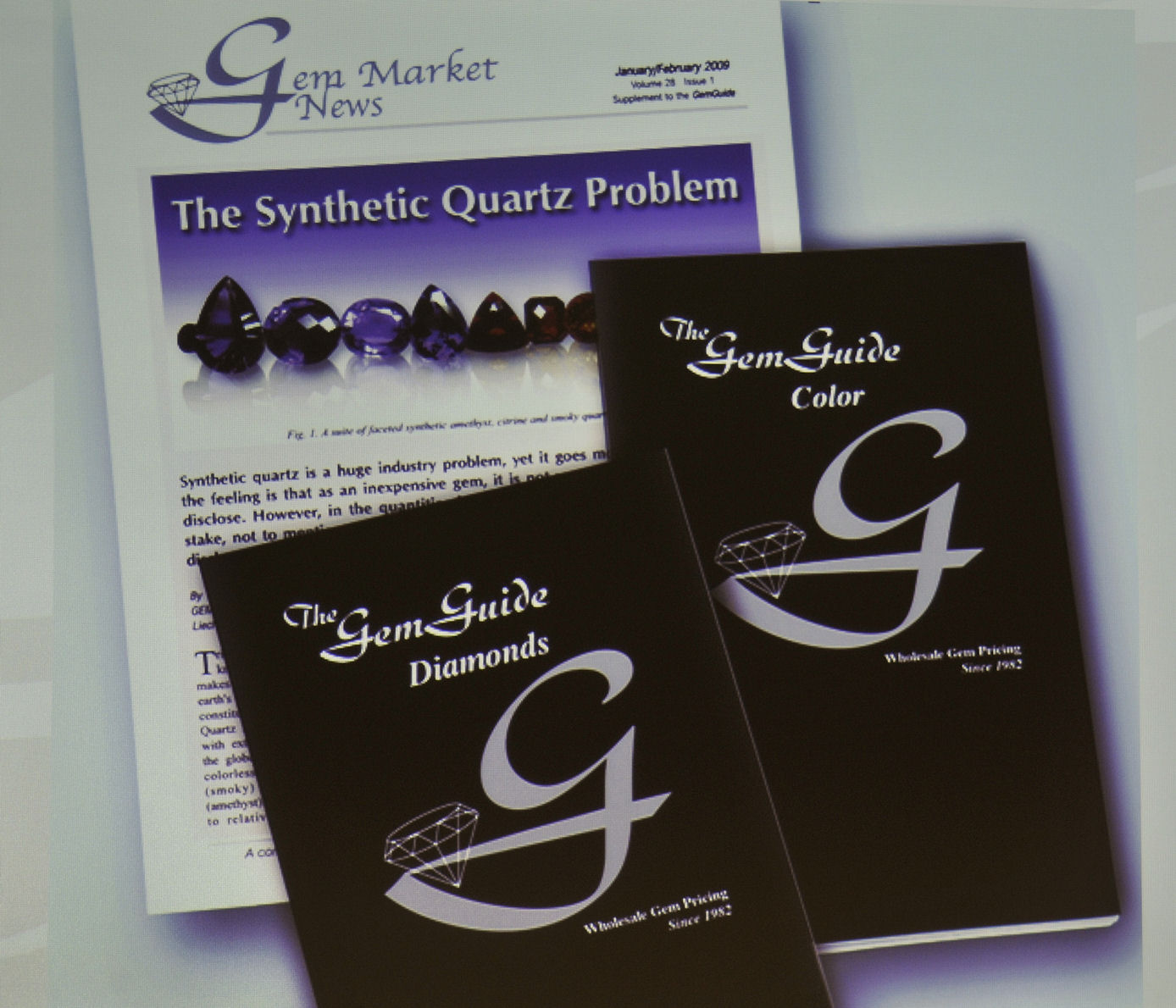
On January 22, 2009, founder and president of Gemworld International, Richard Drucker treated us to some insider information by on how The GemGuide staff prepares for and reports on pricing. The GemGuide is a pricing grid for diamonds and the most common coloured stones used in the jewelry industry.

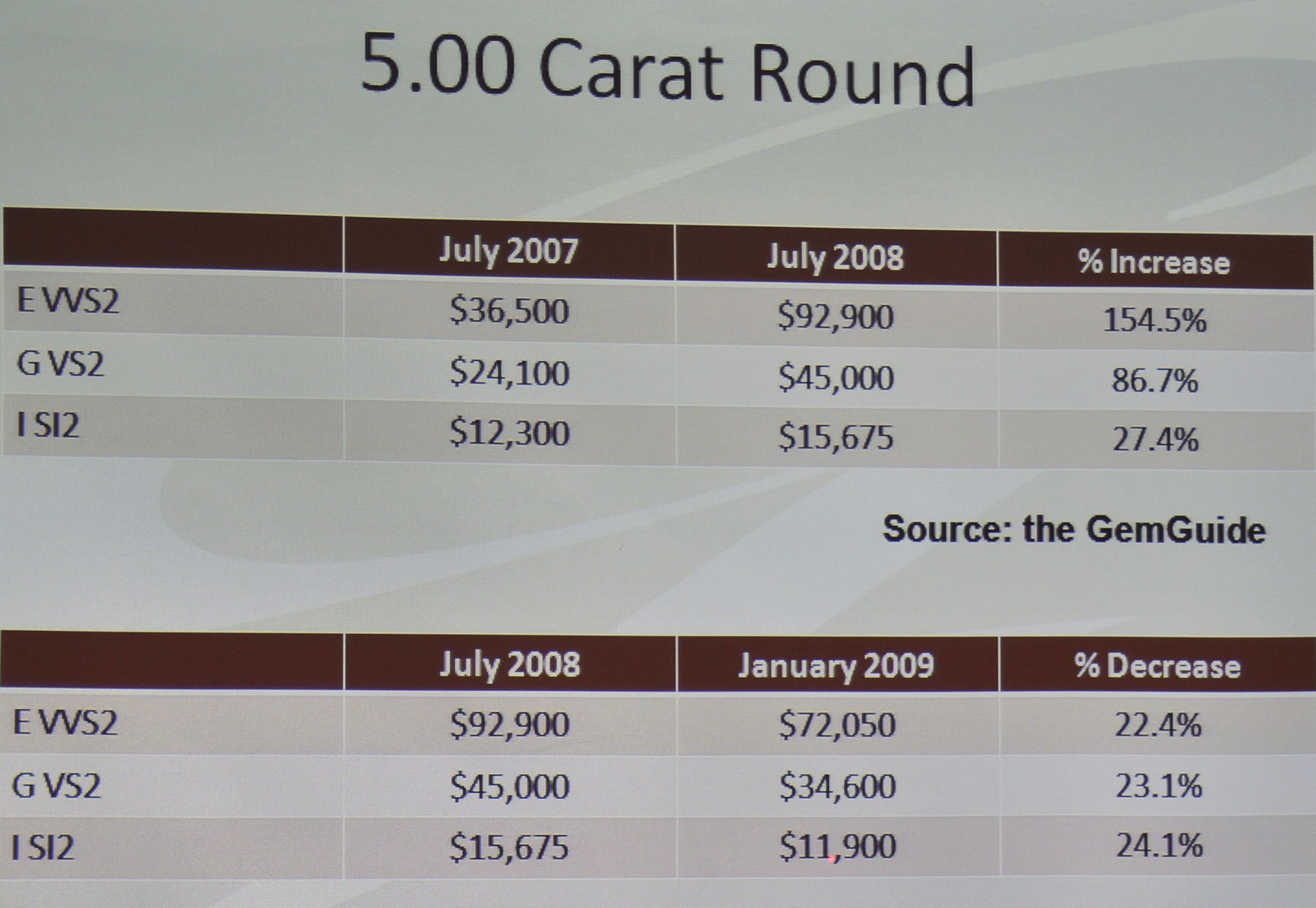
Richard began by talking about the well-known Rap Sheet and how it went through a major revision of pricing in 2008 into 2009. Pricing for larger, better quality goods jumped considerably in the summer of 2008 and then started to drop by the end of the year. The increase was due in part to speculation. One reason for the decrease was that there was a site reduction in rough and for the first time ever, a non-delivery of rough in Dec. 2008. Site holders, who are required to accept their “boxes” without questioning, were asking to hold back on some of the goods due to a worldwide downturn in business.
pic2 The next few topics were in the realm of coloured stones.

pic3pic4


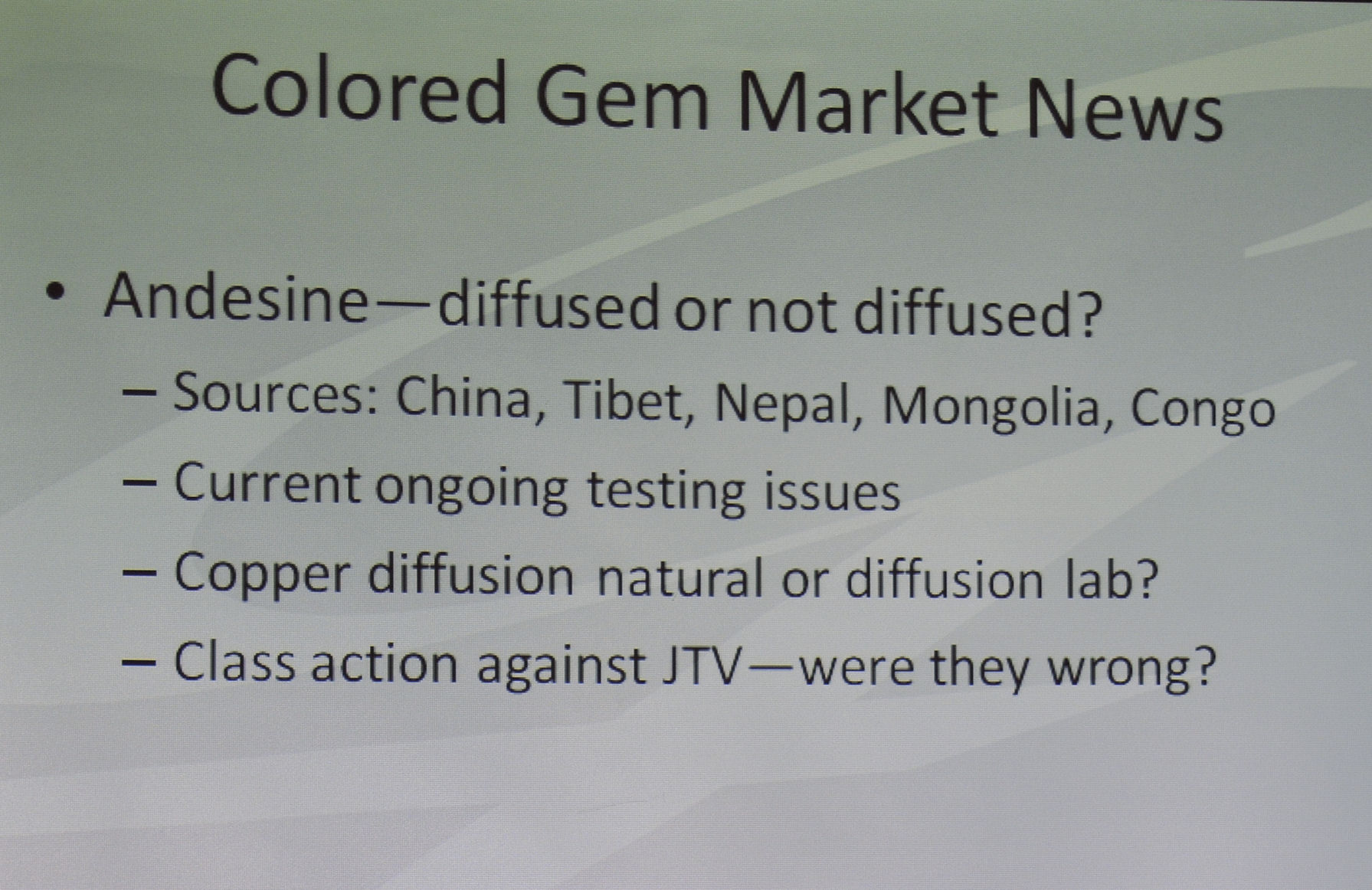
Andesine: There was a class-action lawsuit against a jewelry television company for selling andesine as natural when much may be diffused. The problem here is in detection and labs are currently doing more research. For now, they can only state that the majority of andesine has been treated in some way.

Paraiba: Should all copper-bearing tourmalines be called Paraiba without regard to country of origin? The Laboratory Manual Harmonization Committee, a group of international laboratories that meet during the year, has determined that any origin of copper bearing tourmaline can be labeled as Paraiba. They do recommend however, the addition of comments to disclose that the gem may be from other geographic locations. Gem dealer David Sherman attempted to file a lawsuit against various labs and trade associations for lost income due to this broad-use term, but the case was dismissed.

Synthetic Spinel: Where once this was the most easily identified synthetic out there, it has become increasingly difficult. The refractive index, spectrum and specific gravity of the new generation are the same as the natural. It all lies in the inclusions.

pic5pic6


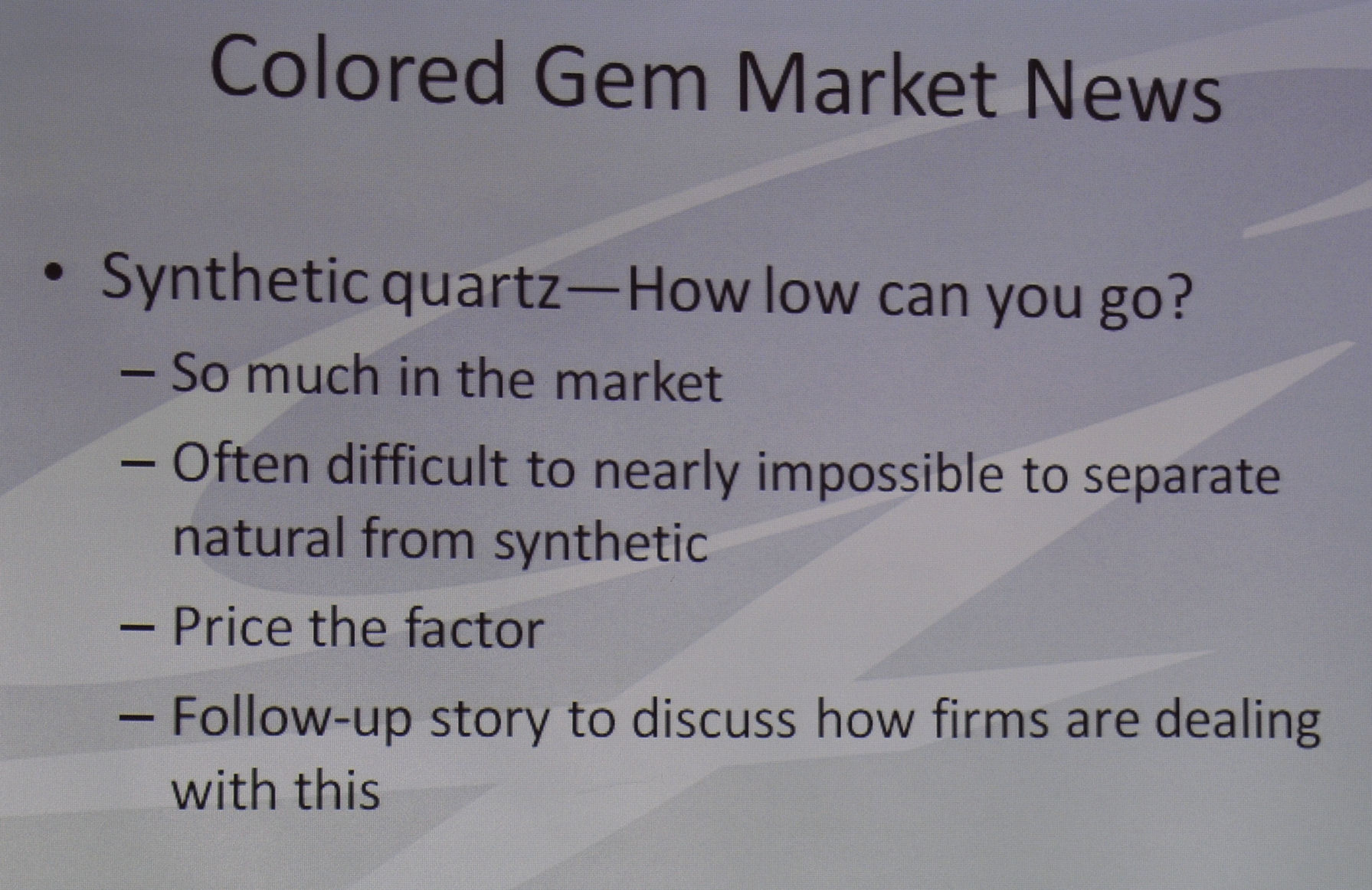
Synthetic quartz: Major concern as so much is being produced and mixed with natural goods that the cost of separating outweighs the cost of the goods! One short-term solution is to pay for batch testing.

Synthetic tourmaline: Is it or isn’t it out there? Traditionally, the chemical make up of the stone is so complicated that it isn’t commercially viable on a large scale. While it is highly unlikely that synthetic tourmaline exists commercially, we must continue to be diligent in examining such stones.

Burmese Ban: The current guidelines are that it is ok to bring rubies and jade out of the country for “personal use” and it is ok to sell existing inventory. The ban does not affect other stones from the region such as pink sapphires.

pic7pic8


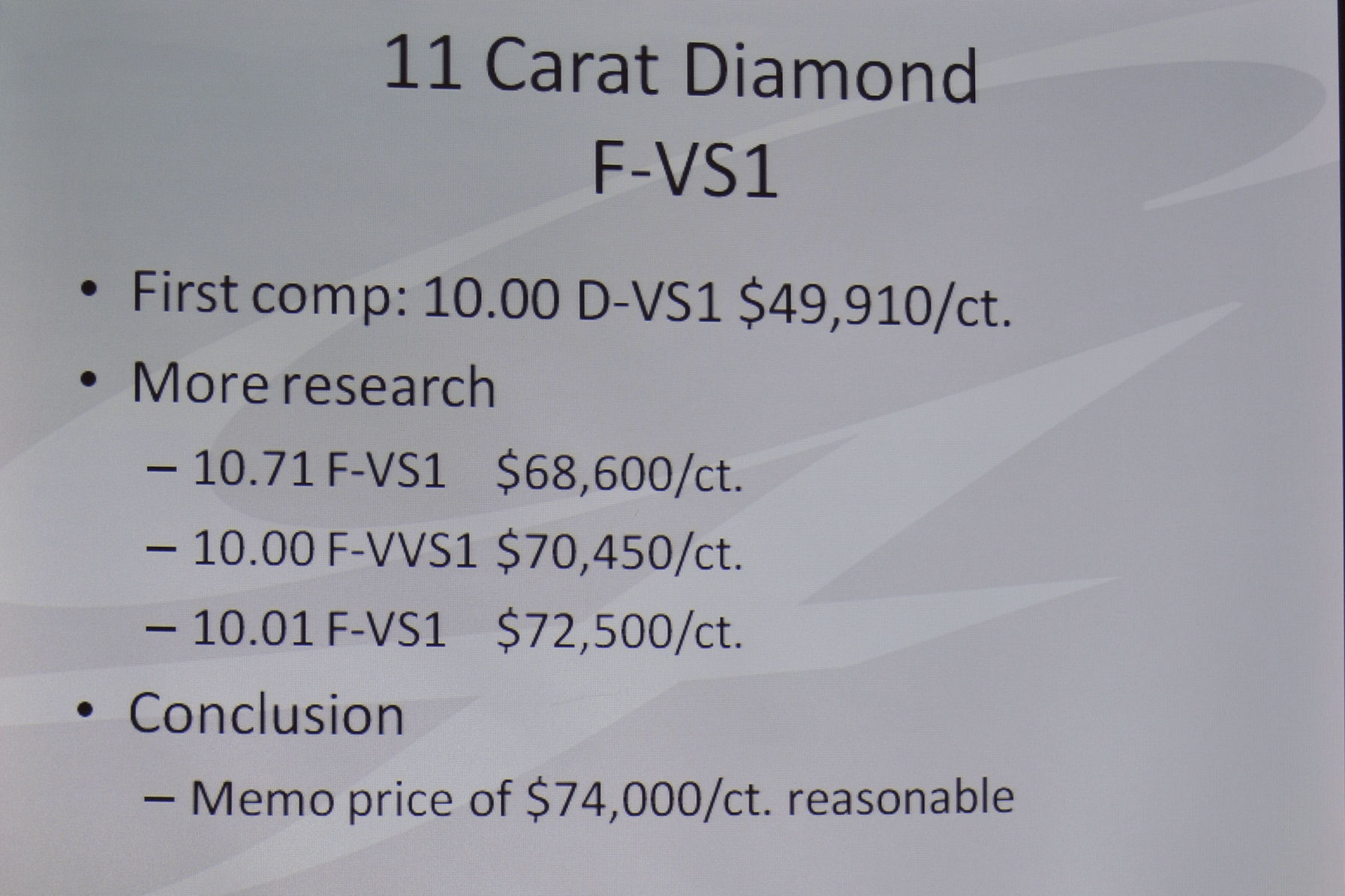
Richard then turned explaining how the pricing is determined for diamonds. His research team, of whom two are DC Chapter members (Martin Fuller and Lois Berger) report on pricing in their designated areas of expertise. For diamonds, they contact a network of advisor-dealers, Polygon, Rapnet, Idex Online, auction houses and various Internet sites.

The factors that determine pricing are the labs, cutting proportions, type of seller, repeatability and treatments. He used an example in comparing a 1.00-1.05 ct. round, G VS2 using most of the above sources, The GemGuide’s pricing grid is an average of all the sources for “very good” makes. There are discounts and premiums suggested for off-made and ideal goods. The lab report that comes with the stone is definitely a factor in determining that average. A stone with a report from GIA or AGS is priced higher than a stone with the same grade from IGI, HRD, EGL US and EGL Israel.

pic9pic10


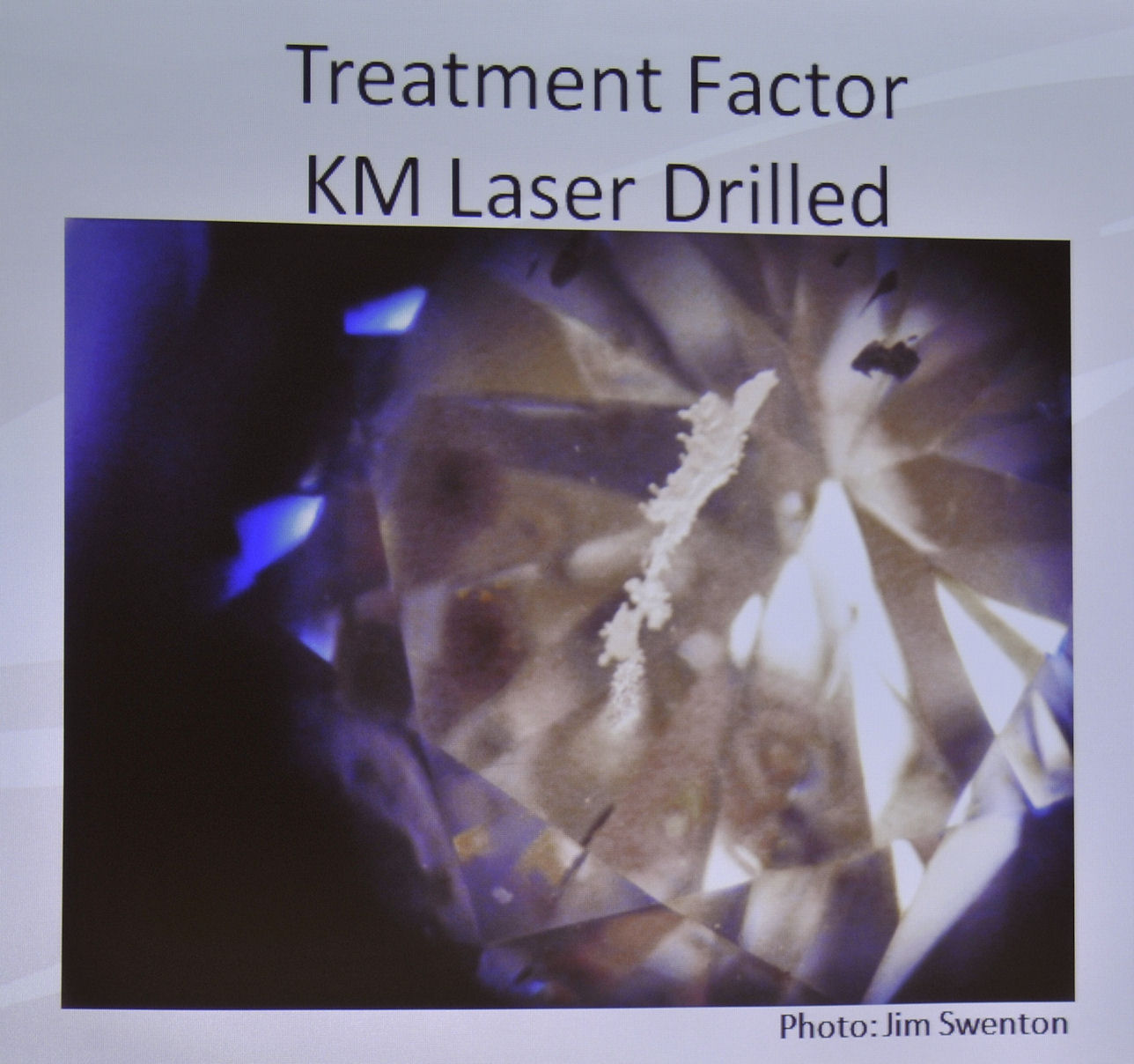
Pricing for diamond treatments must take into consideration the price of the stone in original condition with the added cost of the treatment. The reason that diamond treatments are considered to have a negative impact on value is because we grade the diamonds after treatment and deduct some factor since the grades often improve.

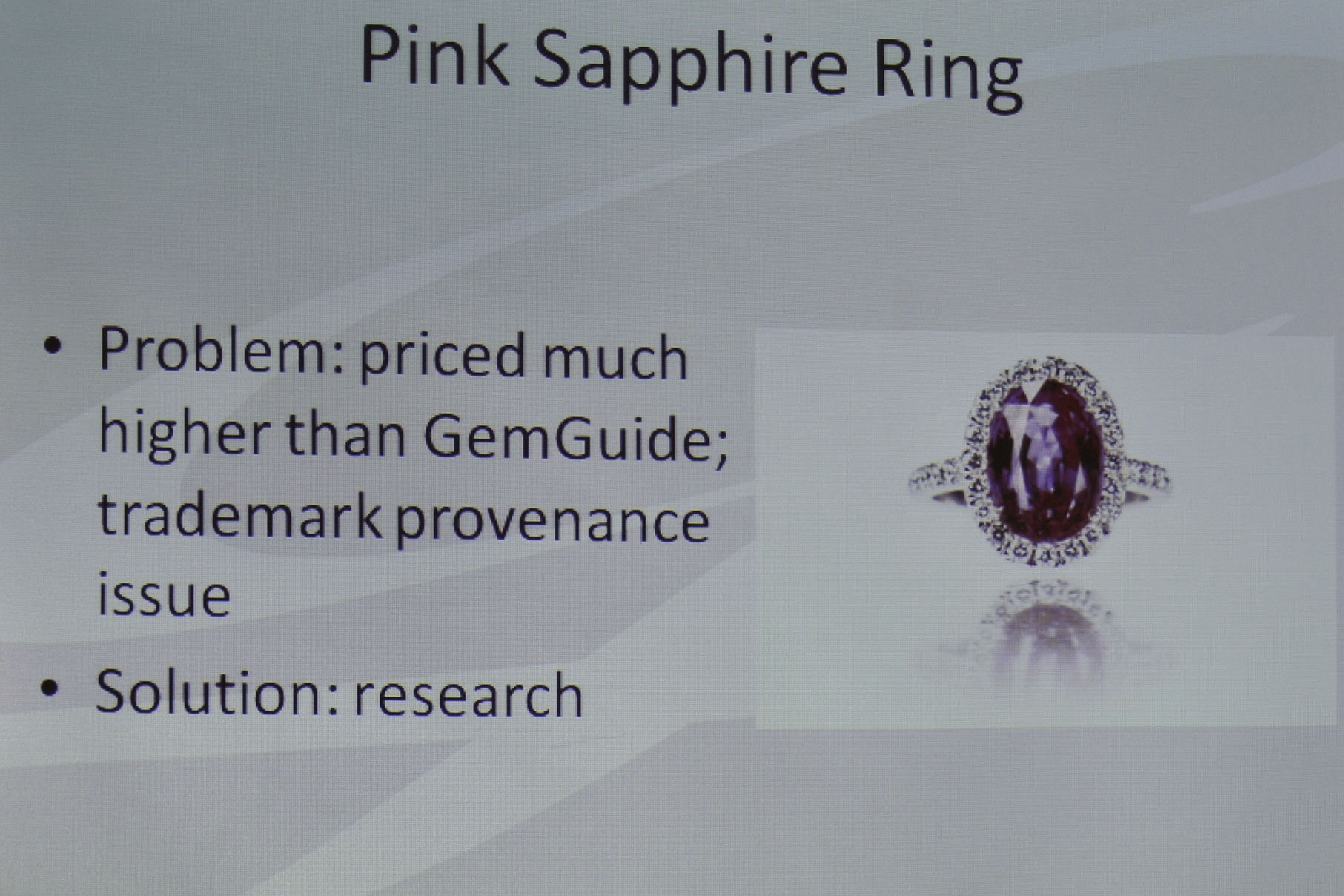
With regards to auctions, there is the provenance issue to consider and for that, due diligence is required when researching for comparables. Online sellers may be working on a “wholesale” price to the public due to low overhead.

pic11With regards to coloured stone pricing, the process is virtually the same.

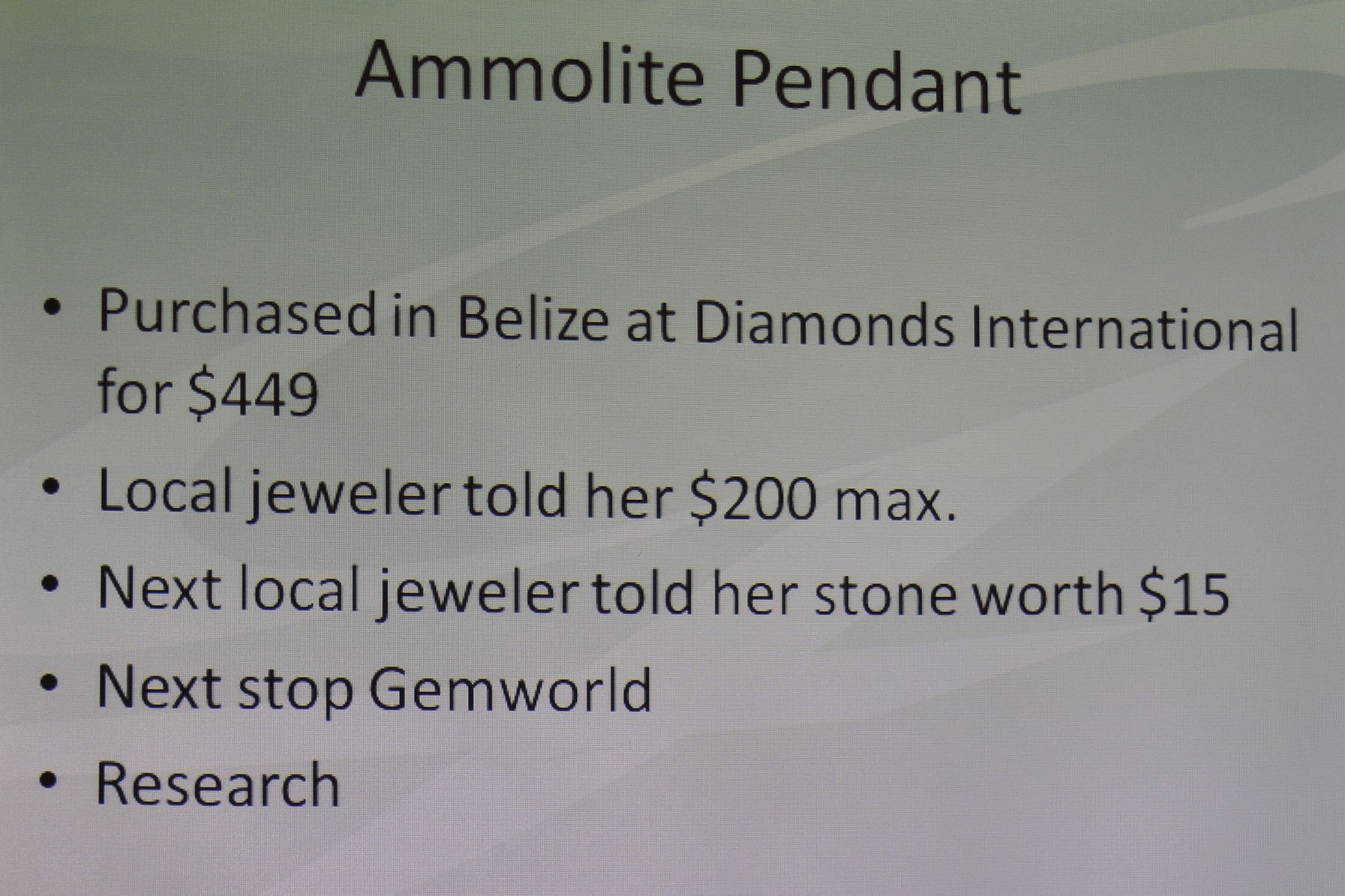
Richard finished with several Gemworld International case studies on actual appraisal assignments, how they researched them, and what the final value conclusion was.

Lively Discussion

Lively Discussion

Submitted by Sherlene Y. Bradbury -Edited by Richard Drucker

Photos by Melanie Marts

Posted in Meeting Archives | Leave a comment

2008 Holiday Auction & Dinner

Carolyn Chappell & Bobby Mann

Carolyn Chappell & Bobby Mann

The Holiday Dinner & Auction was once again a great success!

Thanks go to everyone that worked so hard, before, during and after to put this annual event together.

Thanks also go out to everyone who came and shared the evening with us!

We hope you enjoy the Pictures on this page, and more pictures are available on the ARCHIVES page. A special thanks to all the donors of items provided and sold during the auction, see the full Honor Roll at the end of this post.

From all of us to all of you!

Happy Holidays !!!

Best Wishes for a New Year filled with Peace, Prosperity, Health, and Happiness!

DC Chapter GIA Auction Honor Roll of Donors

1.     Kusam Malhotra “K & K International”
2.     Theresa McGowan & Bobby Mann
3.     Tim Morgan
4.     Anastasia Kim “Transcendental Enterprise LLC”
5.     Mary Loose DeViney “Tuel Jewelers”
6.     Jody Housenger
7.     Jim & June Gianforte “Continental Jewelers”
8.     Eric Hoffman “Far East Gallery”
9.     David Quang
10.   Marcia Rickman
11.    Jessica Barakat “Crown Pawnbrokers”
12.    Bob Davis “Jewellery by da Vis”
13.    Lisa Carp “Designs in Gemstones”
14.    Richard Drucker “Gemworld International Inc.”
15.    Bo Torrey “Pearl World LLC”
16.    Skinner Inc.
17.    GIA Bookstore
18.    Josh Hall “Pala International Inc.”
19.    GIA Alumni
20.    Weschlers Auctioneers & Appraisers
21.     Reiko Nagoya
22.     Tiny Jewel Box
23.     Brenda Foreman
24.     Dennis Nelson “Inner Circle”
25.     John Lees “JAL Co.”
26.     Mason Kay Fine Jade Jewelry
27.     Laura McCloud
28.     Lois Berger
29.     Donalda M. Lovelace “Ardmore Enterprises, Inc.”
30.     Courtland Lee “Boxlee”
31.     Toby & Helen Fitzkee “Five Star Jewelers”
32.     Optima Gems
33.     Anonymous
34.     Stephanie Kenyon “Sloans & Kenyon Auctioneers & Appraisers”
35.     Harold & Evelyn Williams
36.     Audrey Hegedorn
37.     Ronald Suddendorf
38.     Tim Roark Inc.
39.     Ken Achikian “Achikian Goldsmiths”
40.     Carolyn Chappell “Carolyn’s Crystals”
41.     Camilla Nasr
42.     Marvin M.Wambua “Safigems Cutters Limited”
43.     Pam & Brad Stair
44.     Aras Jewelers
45.     Tom & Ling Mangan “Mangan Jewelers”
46.     McCutchen Jewelers
47.     B & C Jewelers
48.     Kate’s Irish Pub
49.     John Greenan & Sons
50.     Ira & Davia Kramer
51.     Ashby Jewelers
52.     Melanie Marts
53.     Donna Sibley
54.     Jerry Root
55.     Doris & Thomas Voigt
56.     Tony Conway
57.     Mary Ehlers “The Nugget”
58.     Kim Hudyma
59.     Lois & Brian Geer
60.     Jim Walker “Tsavorite USA”
61.     Stephen Clarke “Liljenquist & Beckstead”
62.     Madeleine Albright
63.     Josephine Hart Trasher
64.     Jeff Allison
65.     Traci Solovey “Solovey Jewelers”

Posted in Meeting Archives | Leave a comment

Don Kay on Jadeite Jade

Mr. Don Kay

Mr. Don Kay

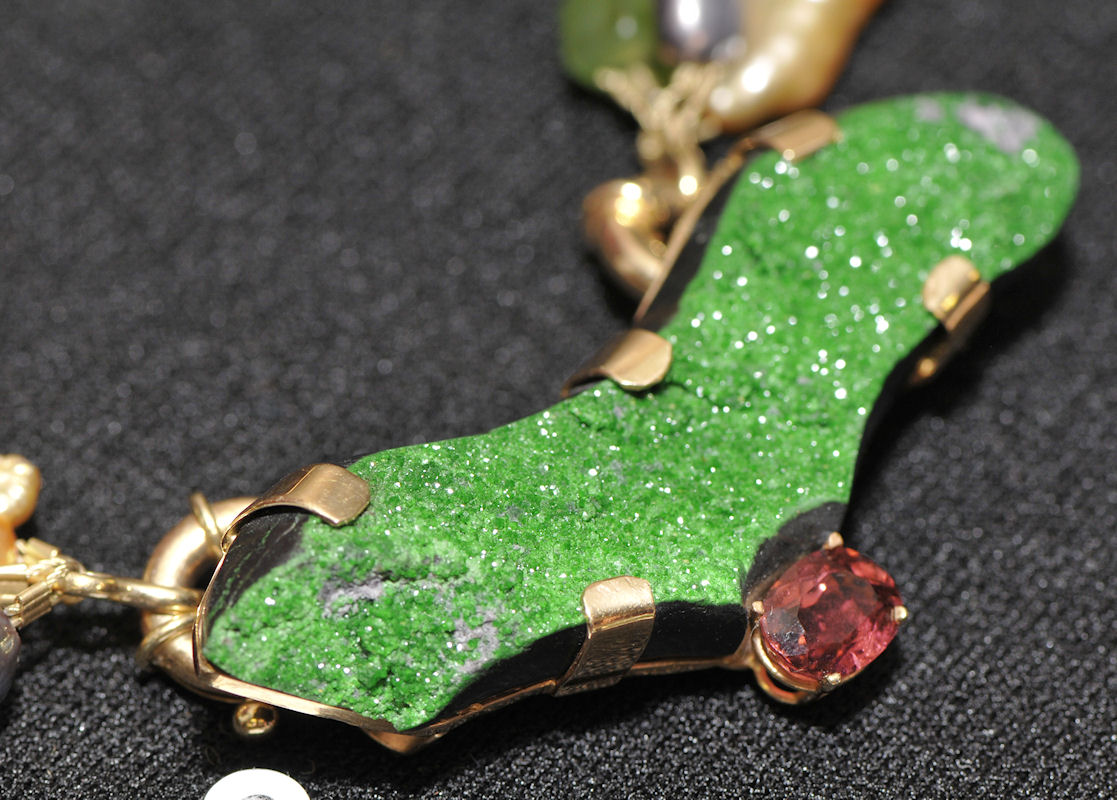
The DC GIA Chapter spent an enticing evening in November with Mr. Don Kay, who gave us insights on appraising Jadeite Jade.

Mr. Kay let us know that most of the quality jadeite comes from Burma, though some comes from Guatemala and Siberia—but the quality is different.

North Burma is the site of the finest jadeite, and the mine is around 200 square miles so there is no danger of running out.


Nov2Nov3


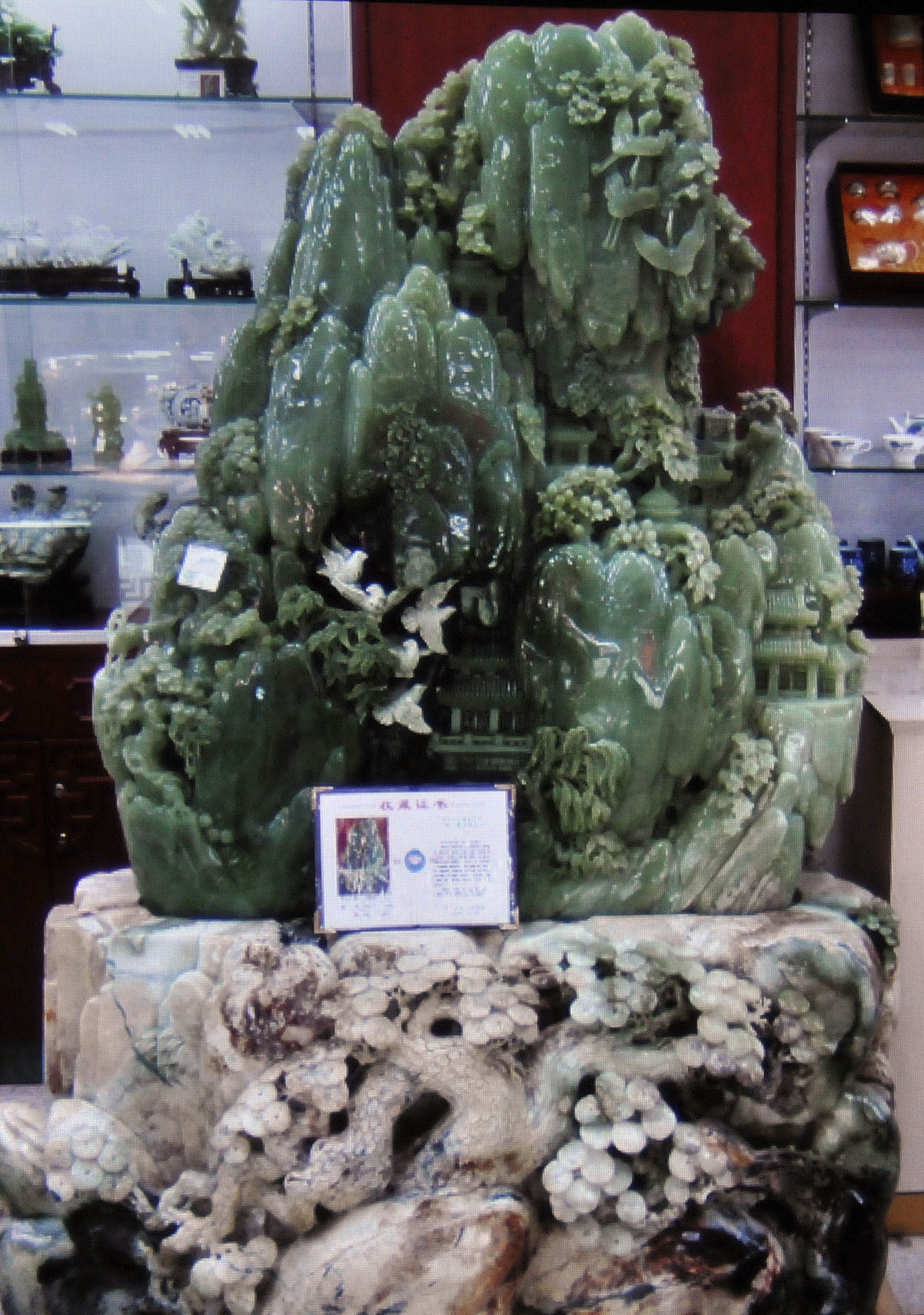
Jadeite is mined from mountains, as well as found alluvially, which tends to be the highest quality because the exterior layer is gone and the pebble is smooth.
Nov4Nov5


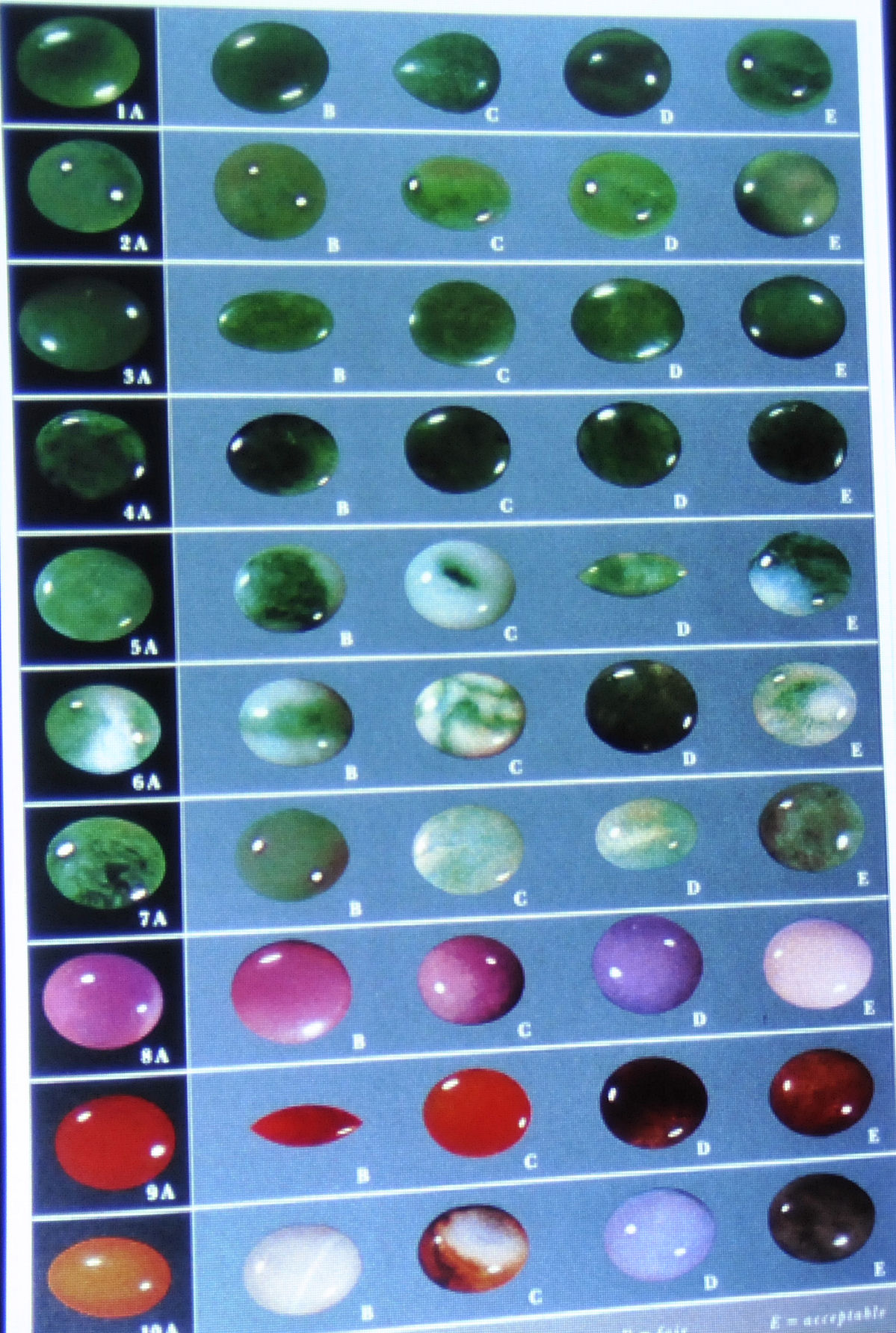
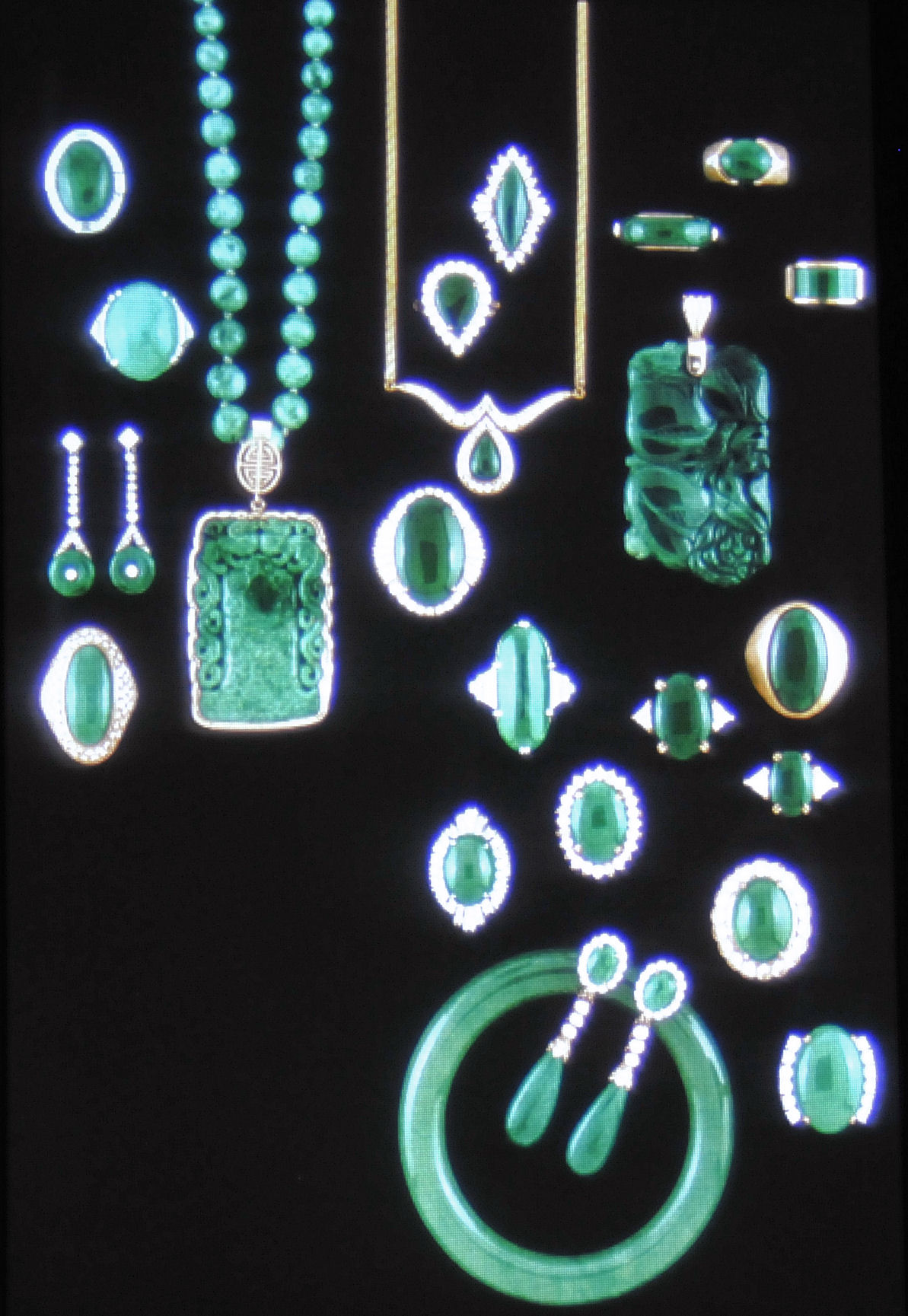
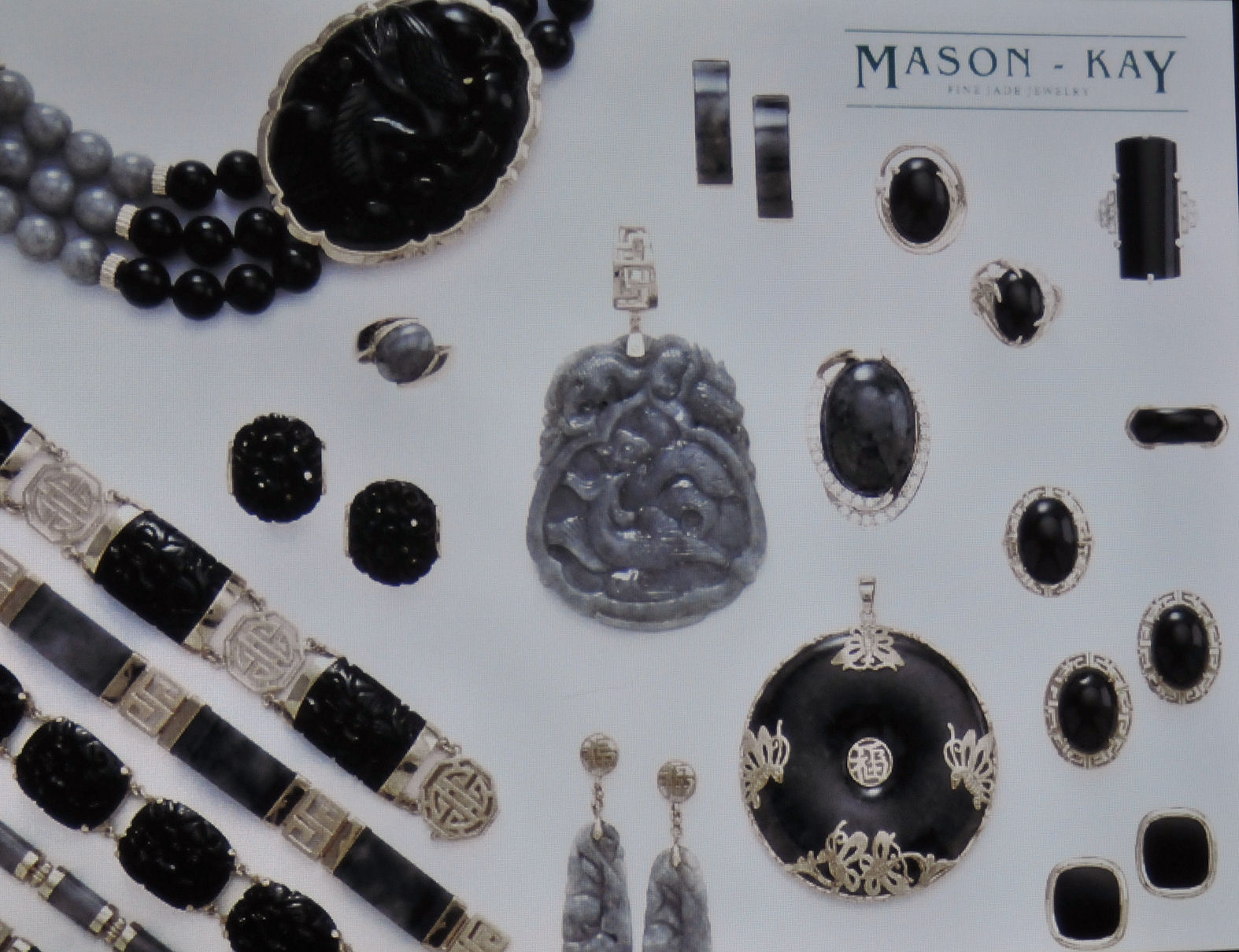
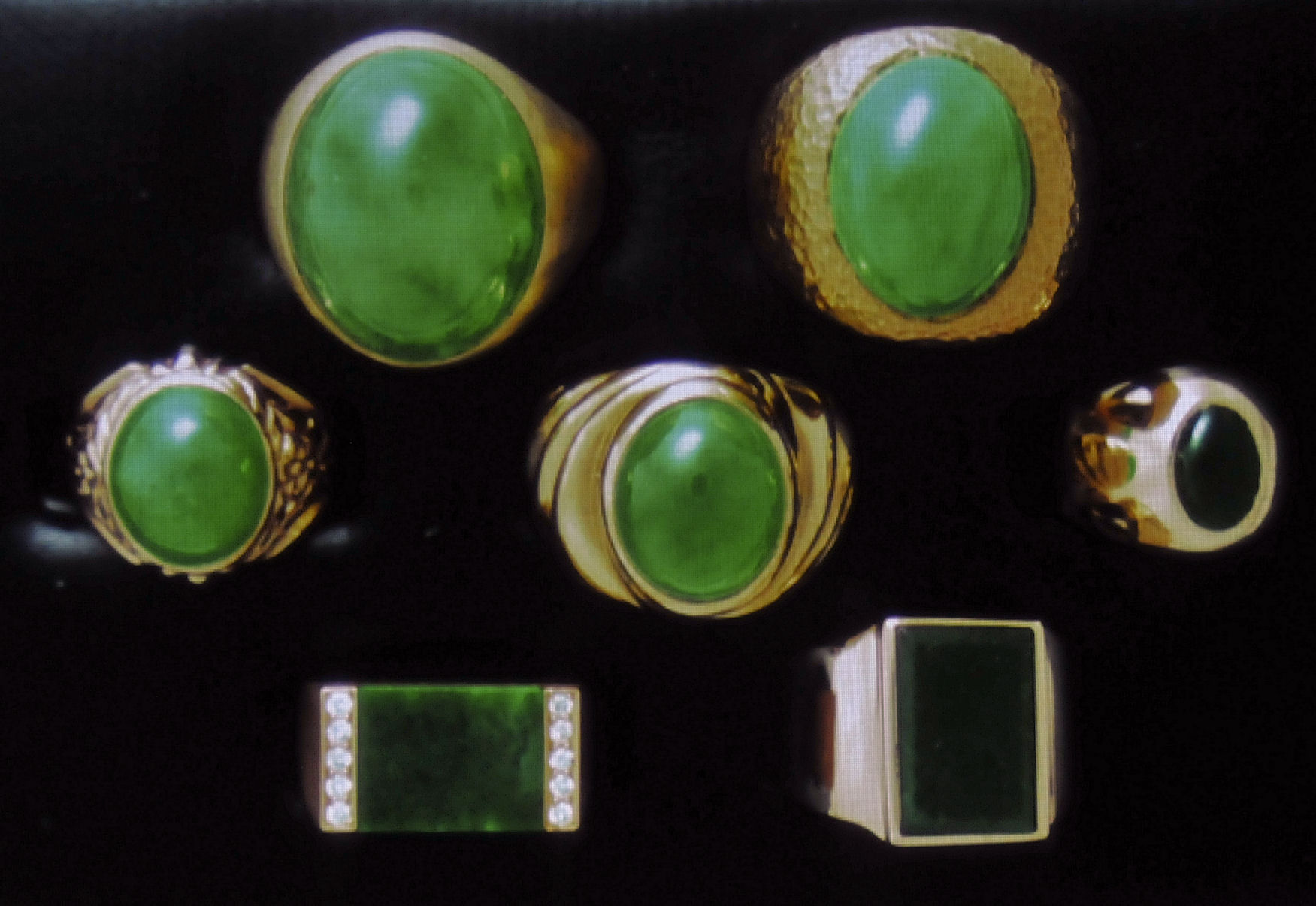
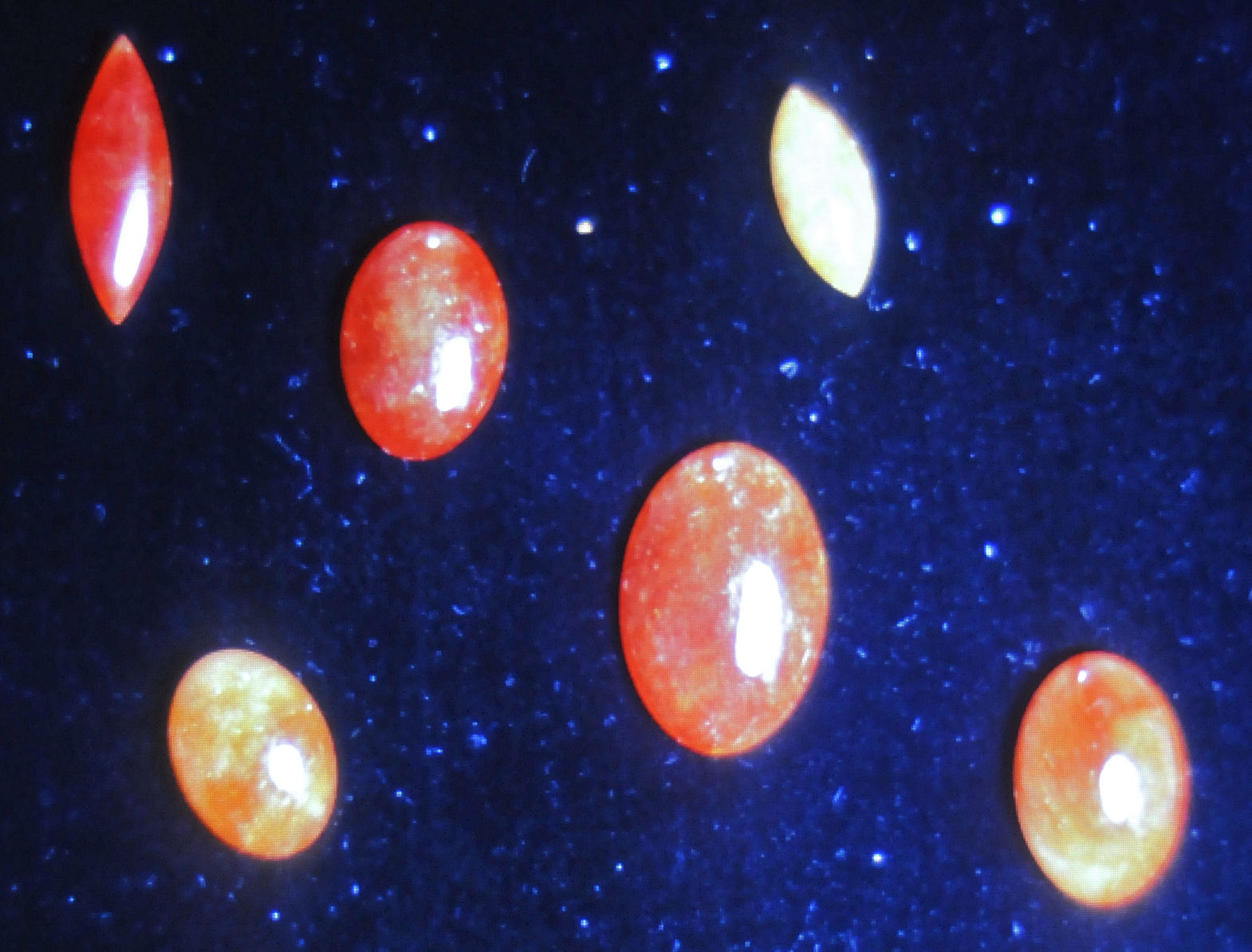
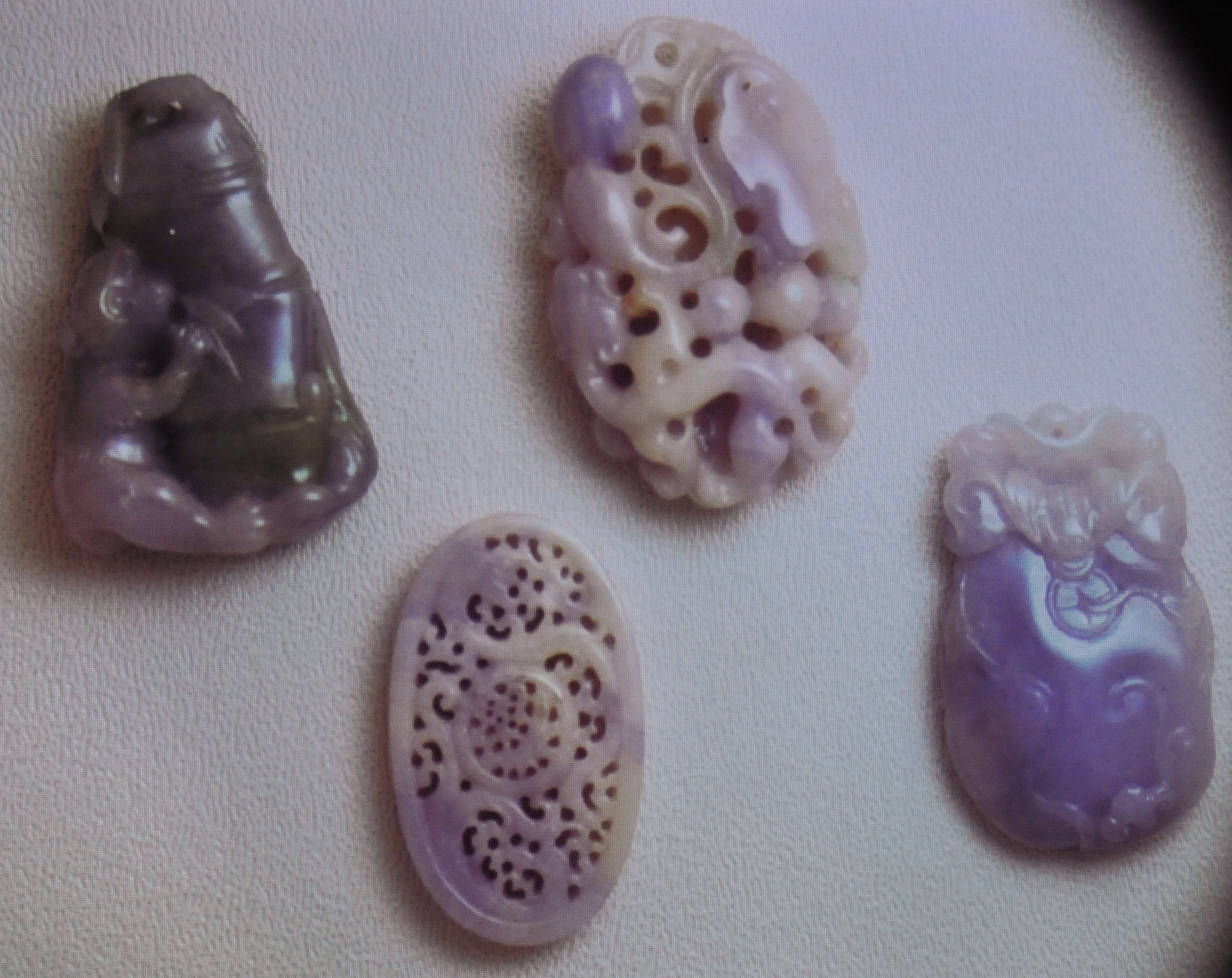
Jadeite’s quality is first determined by color, then texture. Green is the most important color, while the rarest is lavender. Red, yellow and ice jade are growing most rapidly in value. A smooth, even texture is most desirable. Black (yes, black jadeite) and gray jadeite value is approximately that of commercial quality green jadeite.

Nov6


The finest material is dedicated to cabochons. The ideal proportions for a cabochon are 1x2x3 (depth, width, length), and preferably a double cabochon as well. An orange rind texture is typical for jadeite jade polish, though cutters are now able to achieve a mirror polish using diamond dust.
Nov8Nov9


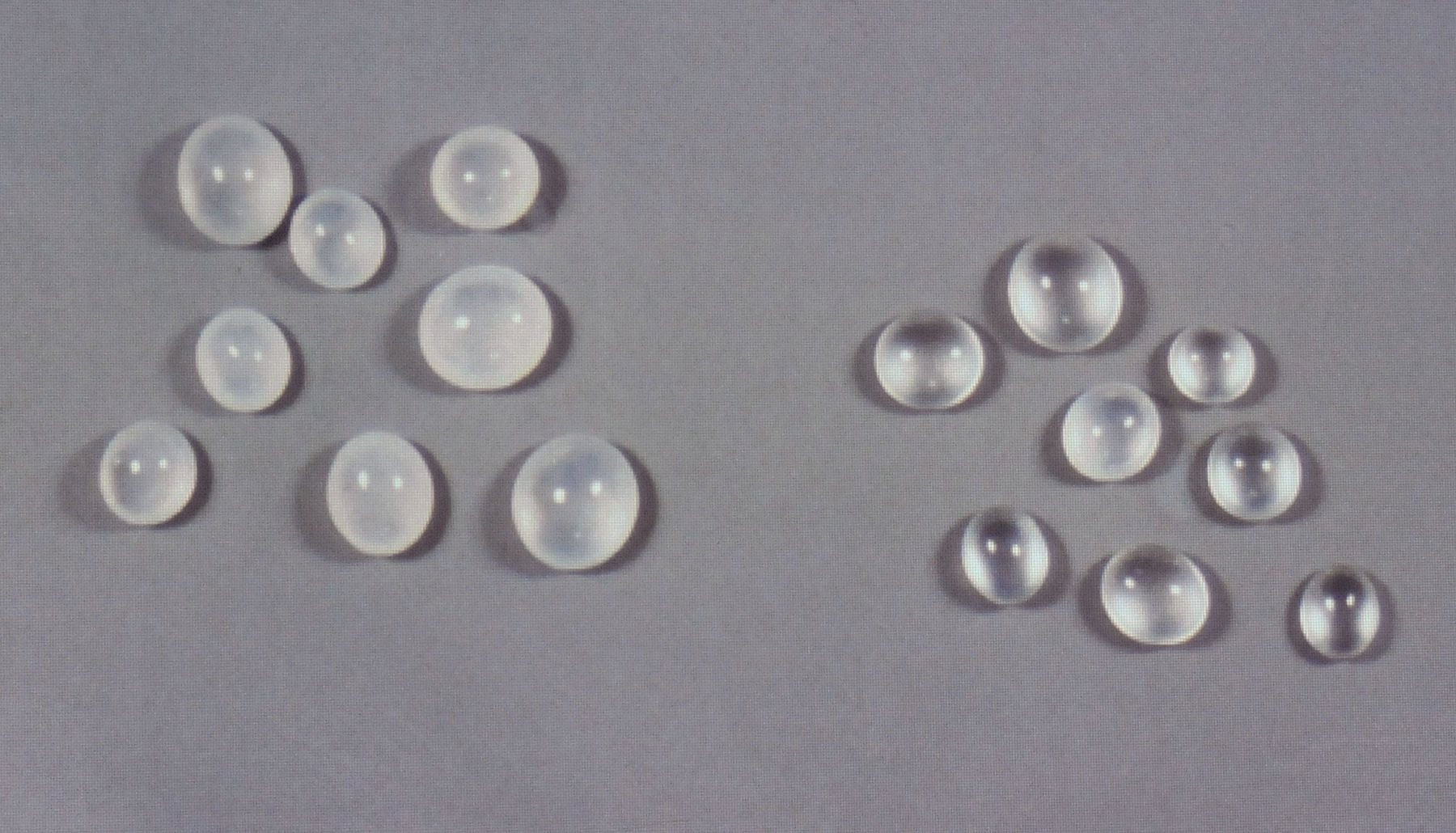
Commercial quality jadeite is mostly what comes in for appraisal. Flat top cabochons are still desirable. Oval cabochons are best, while marquise and pear cabochons have less value. Round cabochons are rare, and usually reused from snuff bottle tops.
Nov10Nov11


Beads, bangles and drops have a great waste factor, so their value goes up faster (beads typically have a 50% waste factor). Smooth trumps carved material in value in jadeite, and cracked cabochons have less value because they don’t sell.

Nov12Nov13


Those of you who missed Don Kay’s lecture missed a wealth of information as well as gorgeous slides on jadeite.

Don KayNov15


We should all keep in mind that Mason Kay is not only generous in sharing their knowledge on jadeite, but they are also purveyors of untreated jadeite and their lab is indispensable for testing jadeite for treatment and providing appraisals.

Meeting Notes Submitted by Etta Marie Dotson, PhD, GG, ISA AM
Photos by Melanie Marts, GG
Posted in Meeting Archives | 1 Comment

“East African Gems” by Jim Walker

Jim Walker

Jim Walker

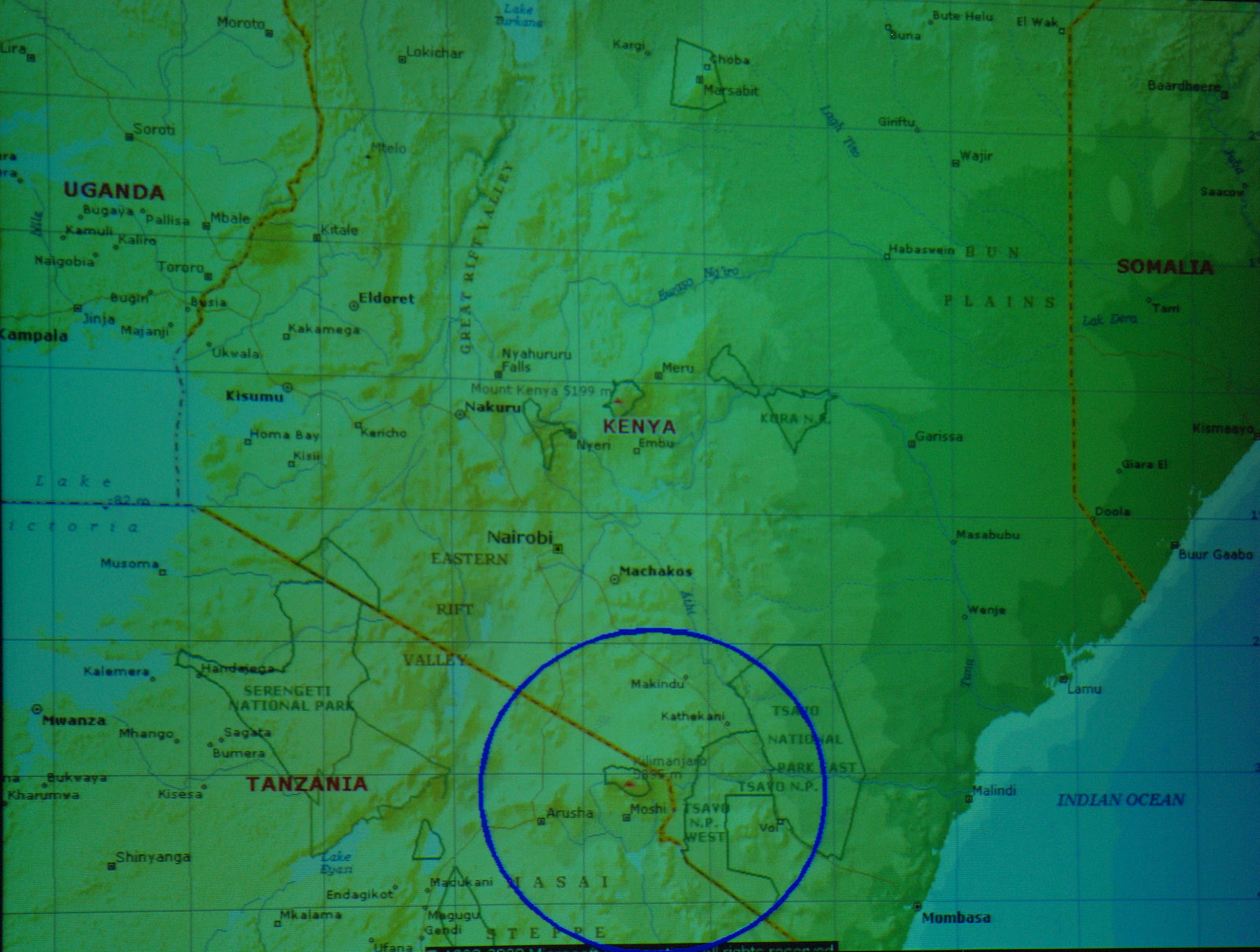
Tuesday October 7th, Jim Walker entertained an enthusiastic group of DC GIA members with tales of his adventures in East Africa.

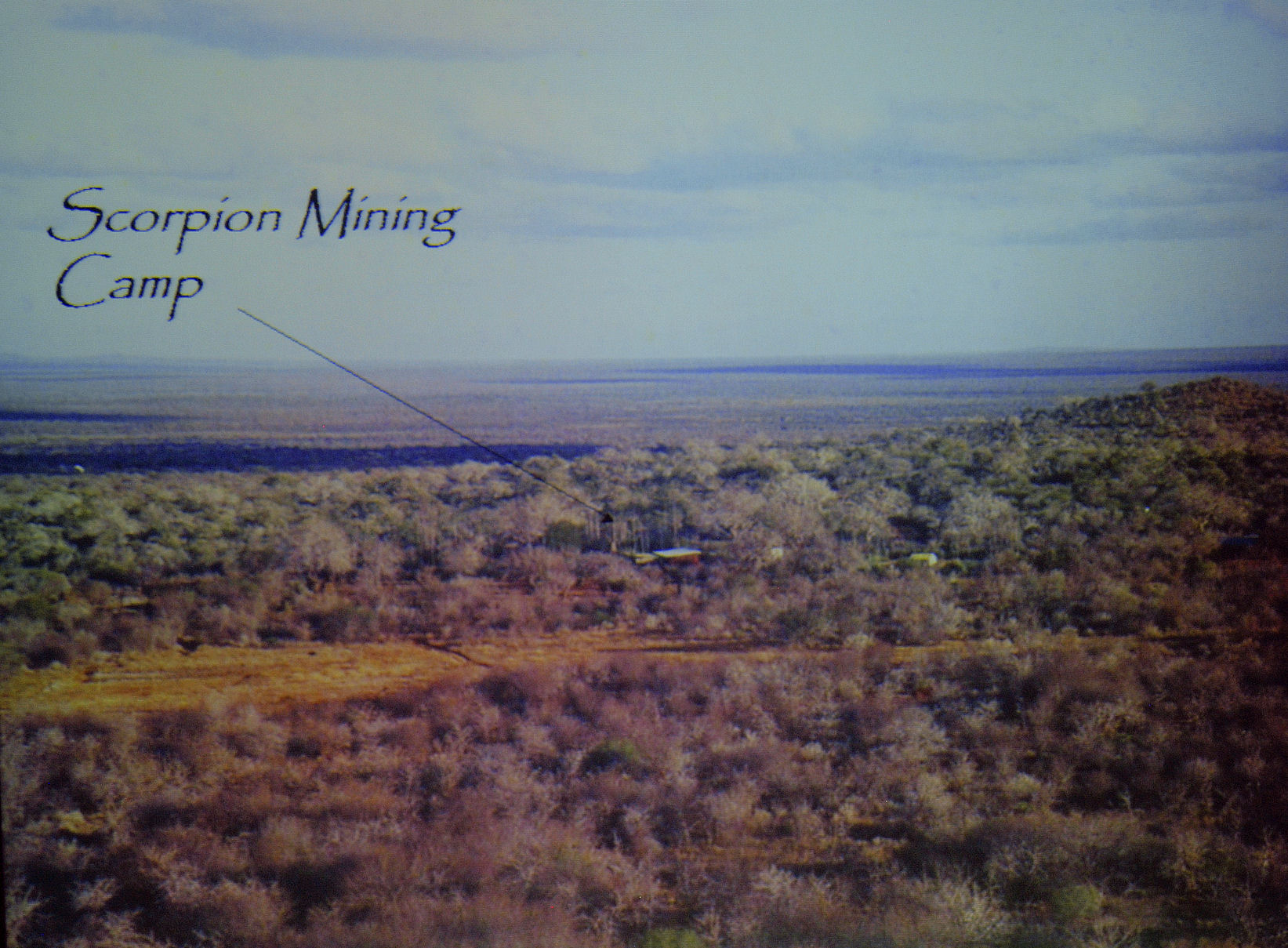
He also fascinated us with information on tsavorite and tanzanite from his mining operation with Campbell Bridges as well as prospecting and mining techniques.

Mr. Walker talked about tsavorite’s earliest discovery in 1961 with Mr. Bridges, and traced it through 1967, when the actual source was discovered in 1967.
pic2pic3


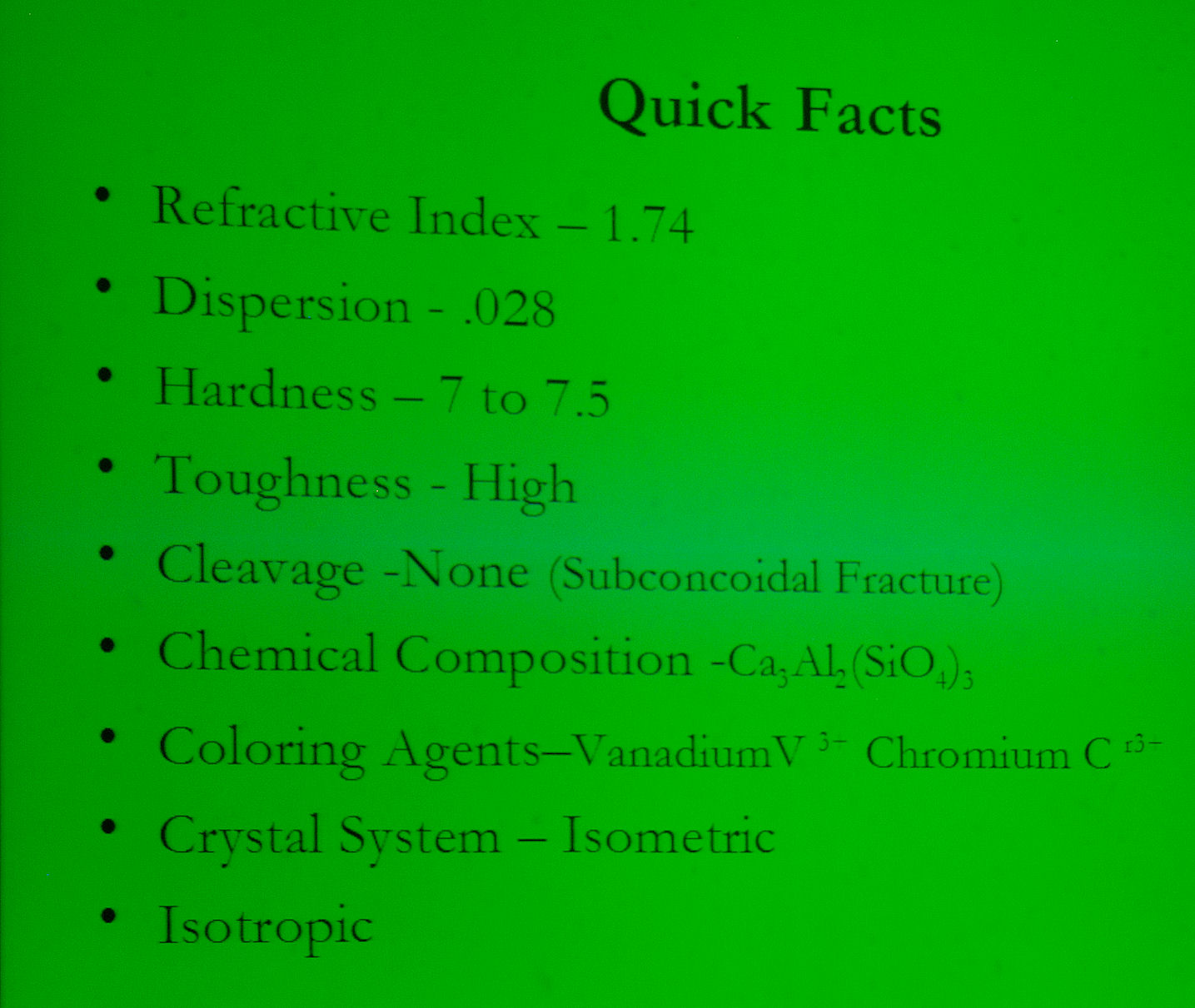
He mentioned that the coloring agents for tsavorite are vanadium and chromium, and that a mixture of 85% vanadium and 15% chromium produces the ideal color.

pic4pic5


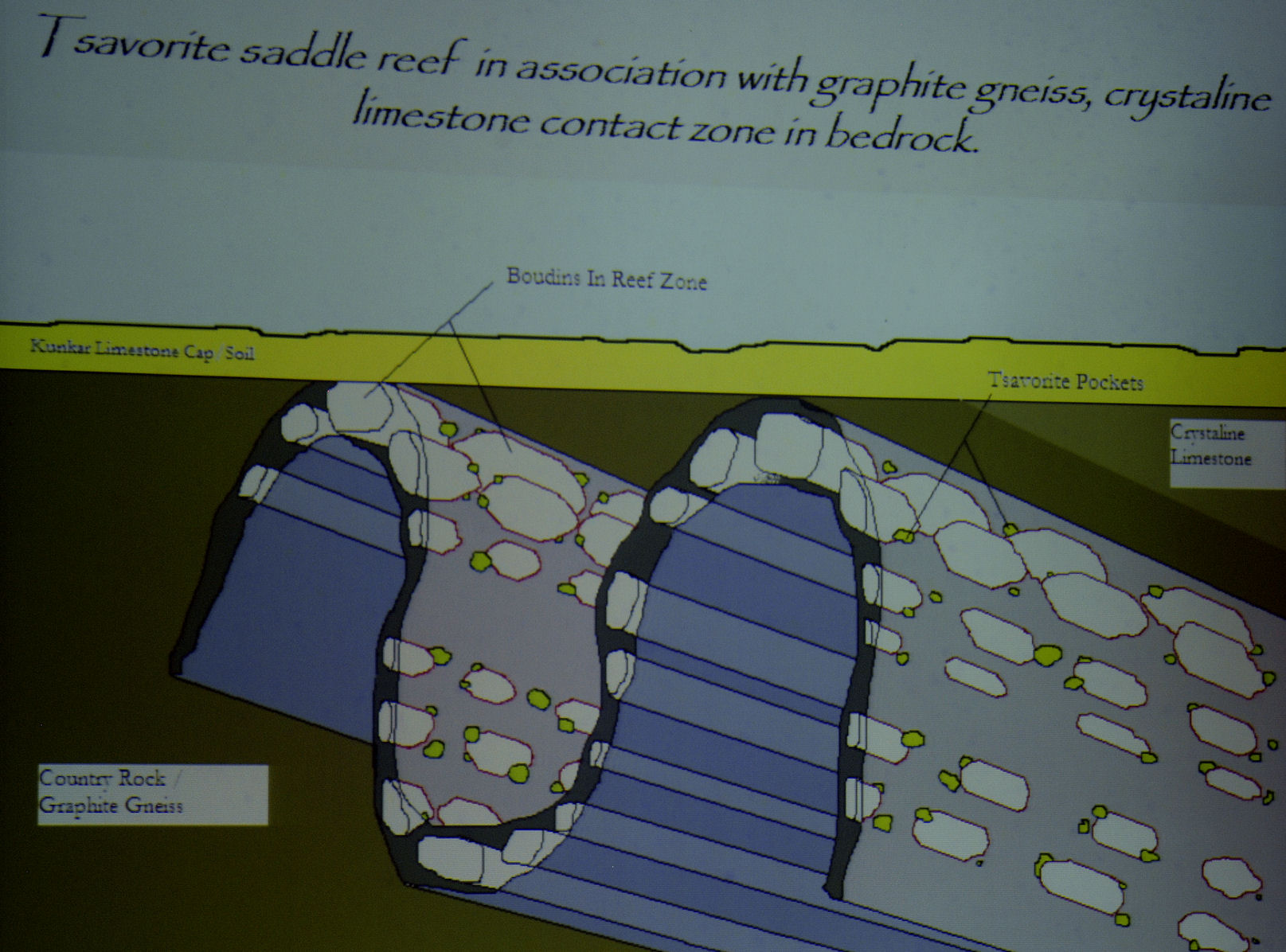
He talked about how their mining operation is sensitive to safety issues and the environment, and has helped set the standard for safe mining in the area. He covered prospecting from the use of termite mounts for spotting potentially gem-rich pockets, to examining geological maps for concentrations of graphite gneiss and limestone to pinpoint areas.
pic6pic7


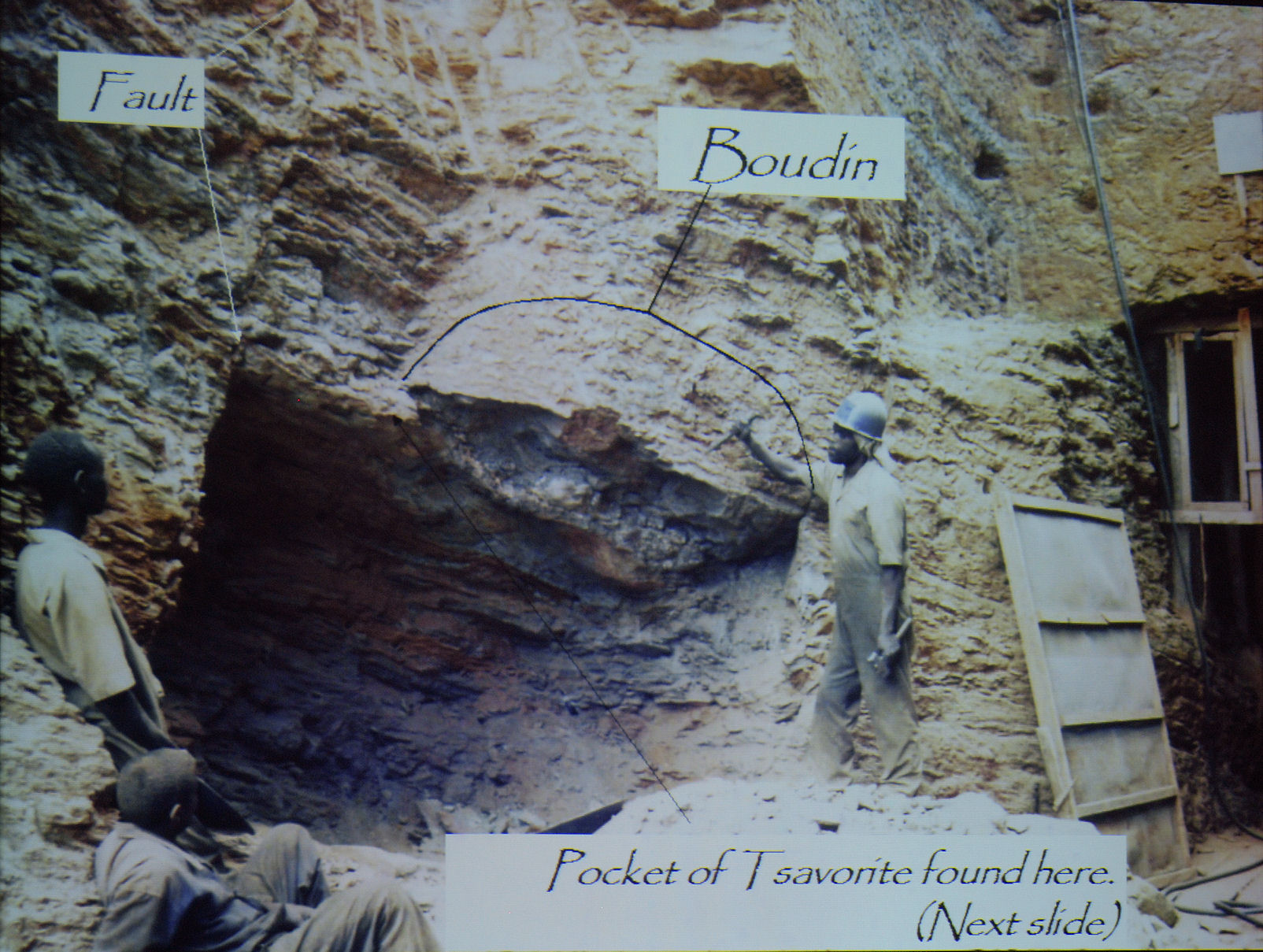
Once the area has been identified, their mining operation lays out a prospecting grid, which is similar to the grid that archaeologists lay out on their site before excavation. The miners dig down to the limestone bedrock, and then break through it to the graphite gneiss below where the gem-bearing reef is located.
pic8pic9


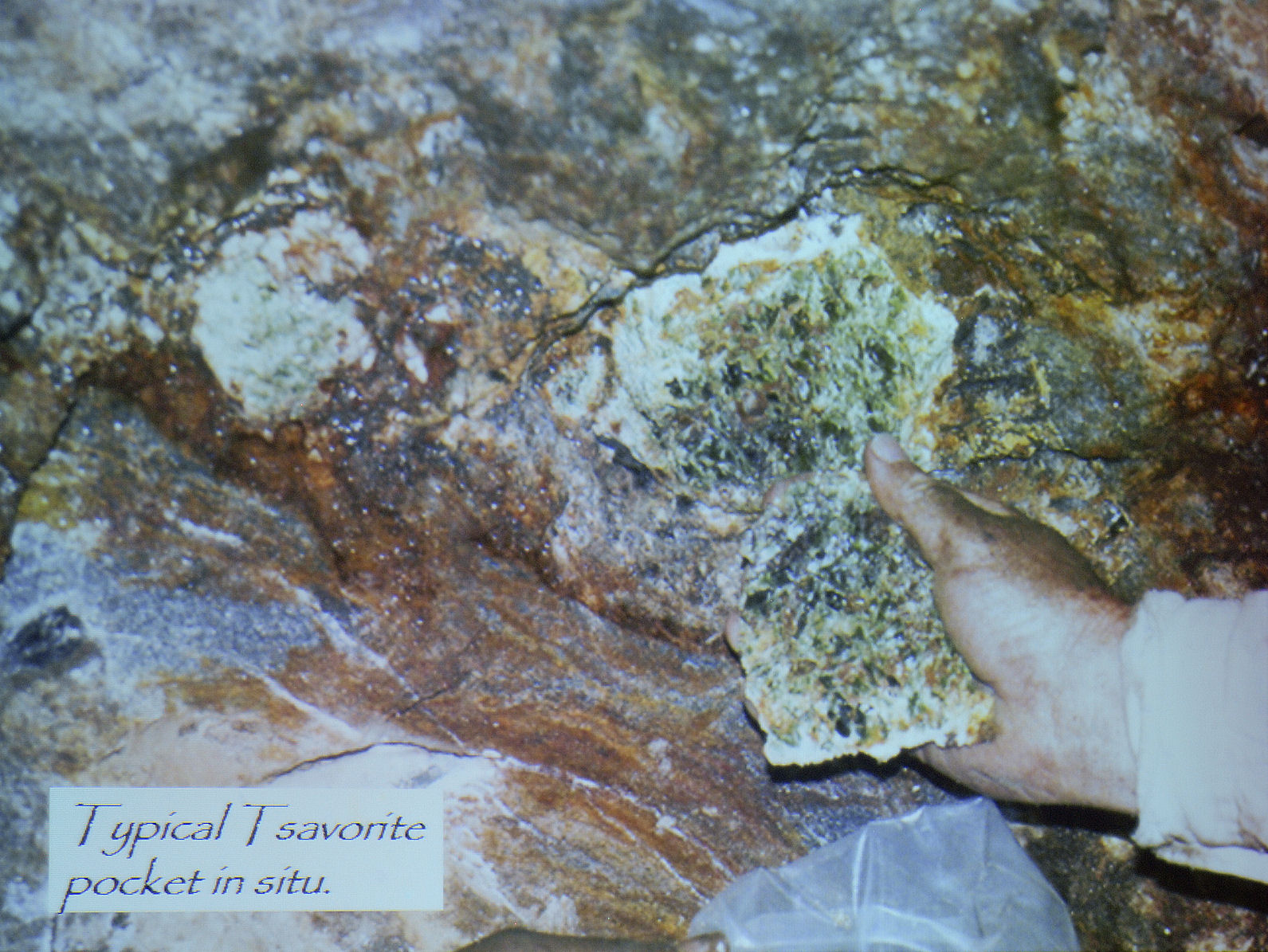
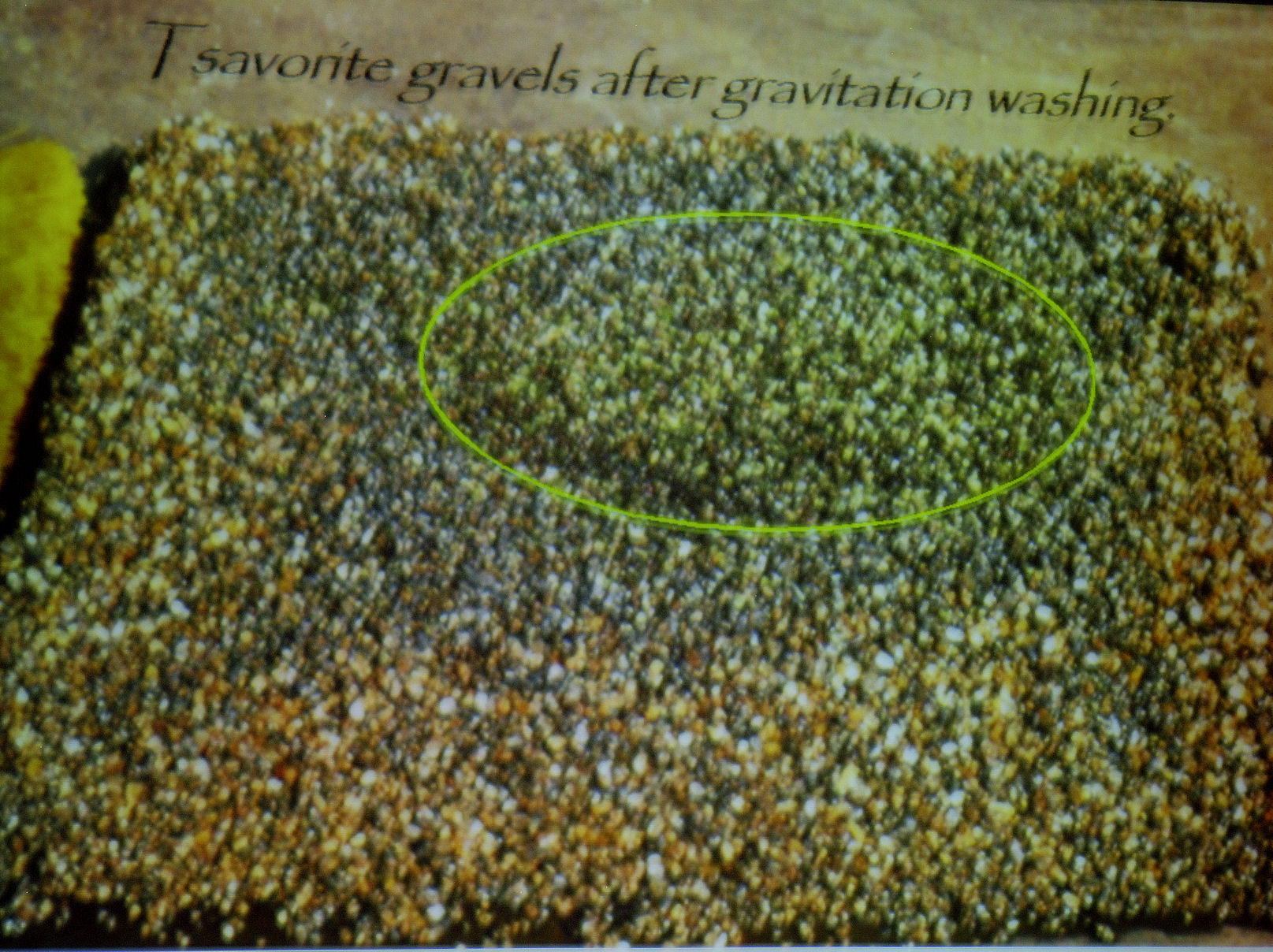
Jim talked about the two different types of reefs that tsavorite is located in, a recumbent curve and a plane. He said that they try not to do open mining, and use ventilation and supports in their tunnels; concepts that are not widely used in East Africa except by their mining operation. He also pointed out that their miners work the gemmy reefs by hand so that they don’t damage the tsavorite crystals. Once the tsavorite is recovered, it is sifted in water using a gravitation method, then graded and cut in house.

pic10pic11


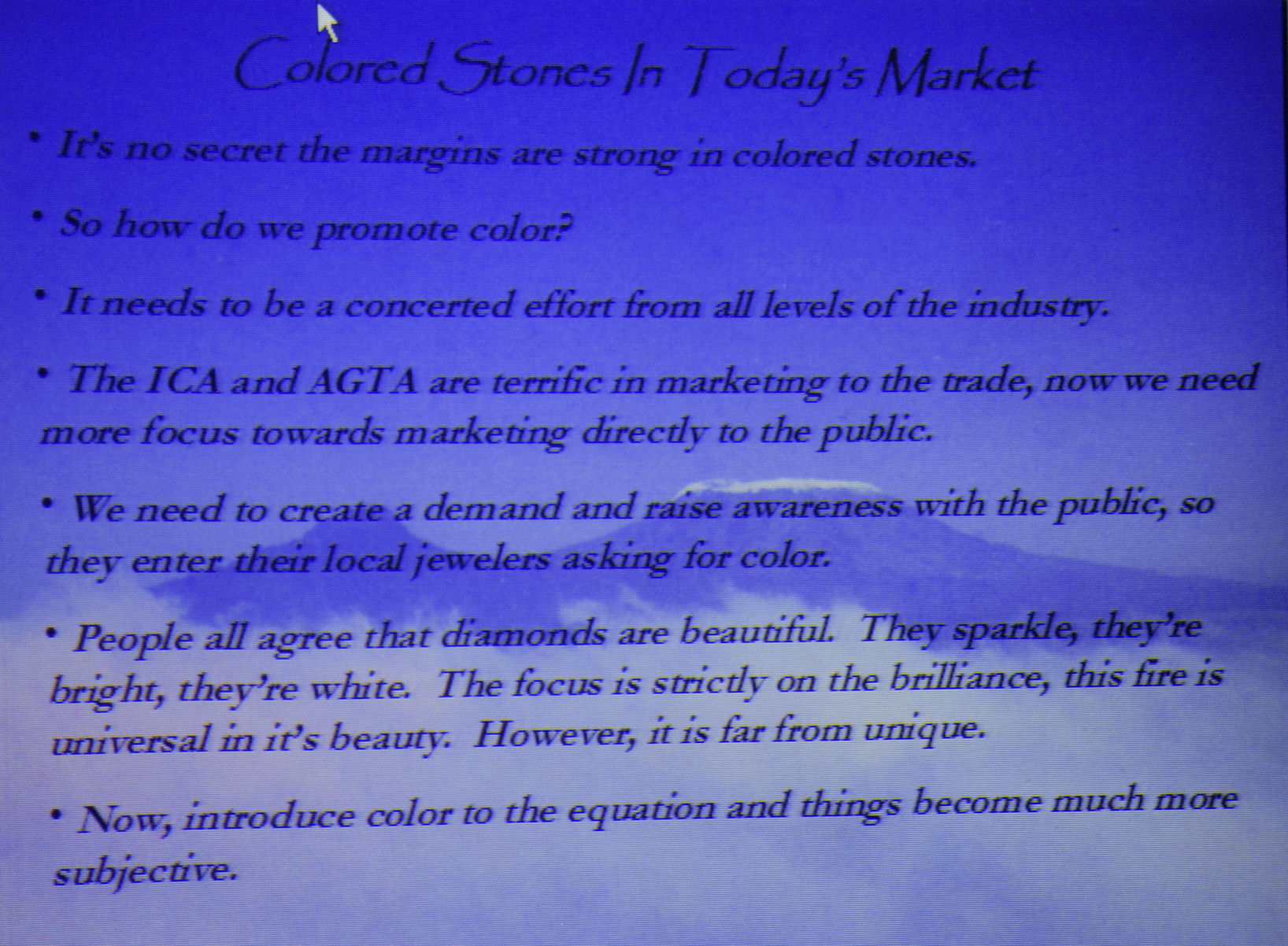
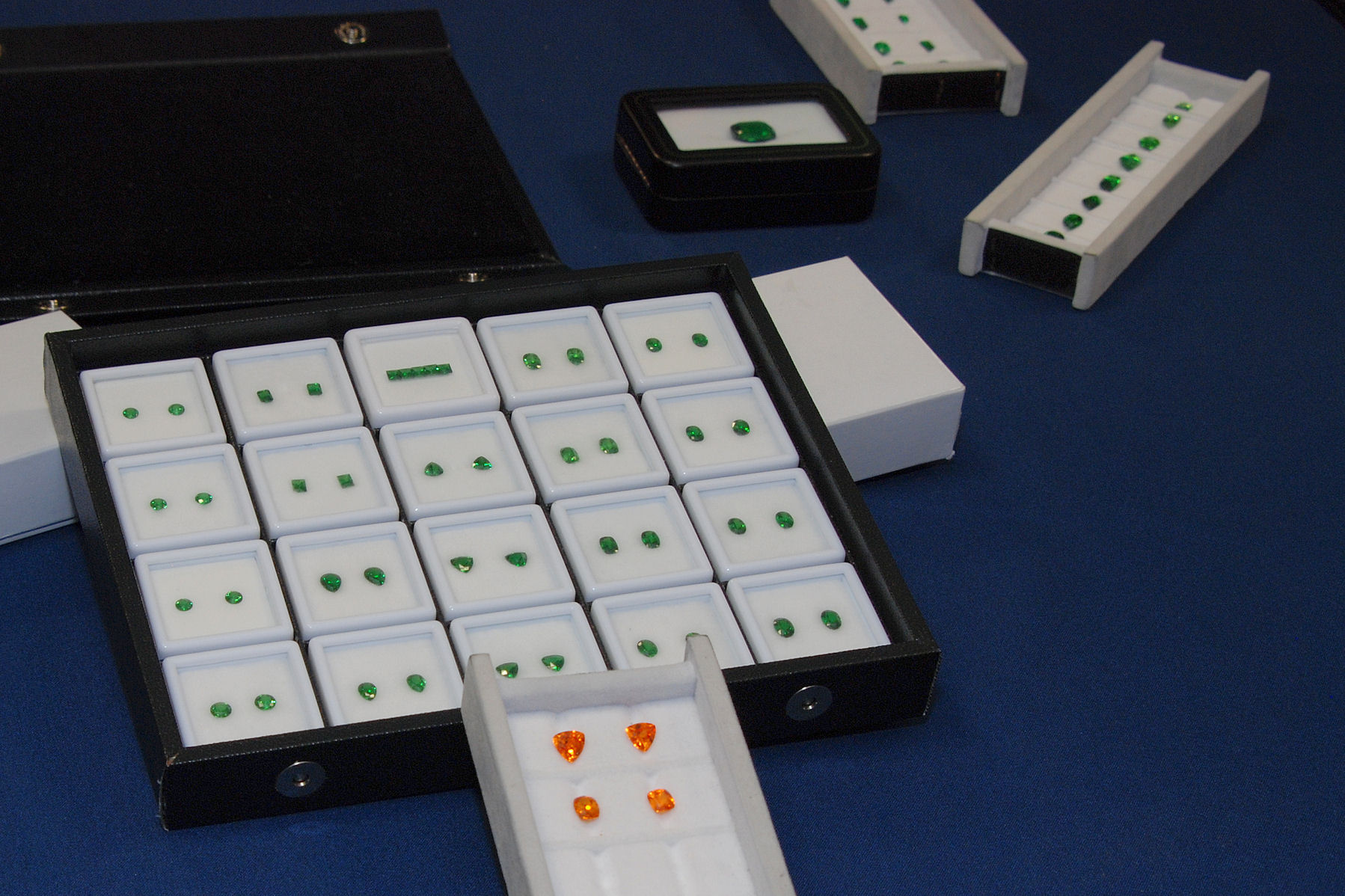
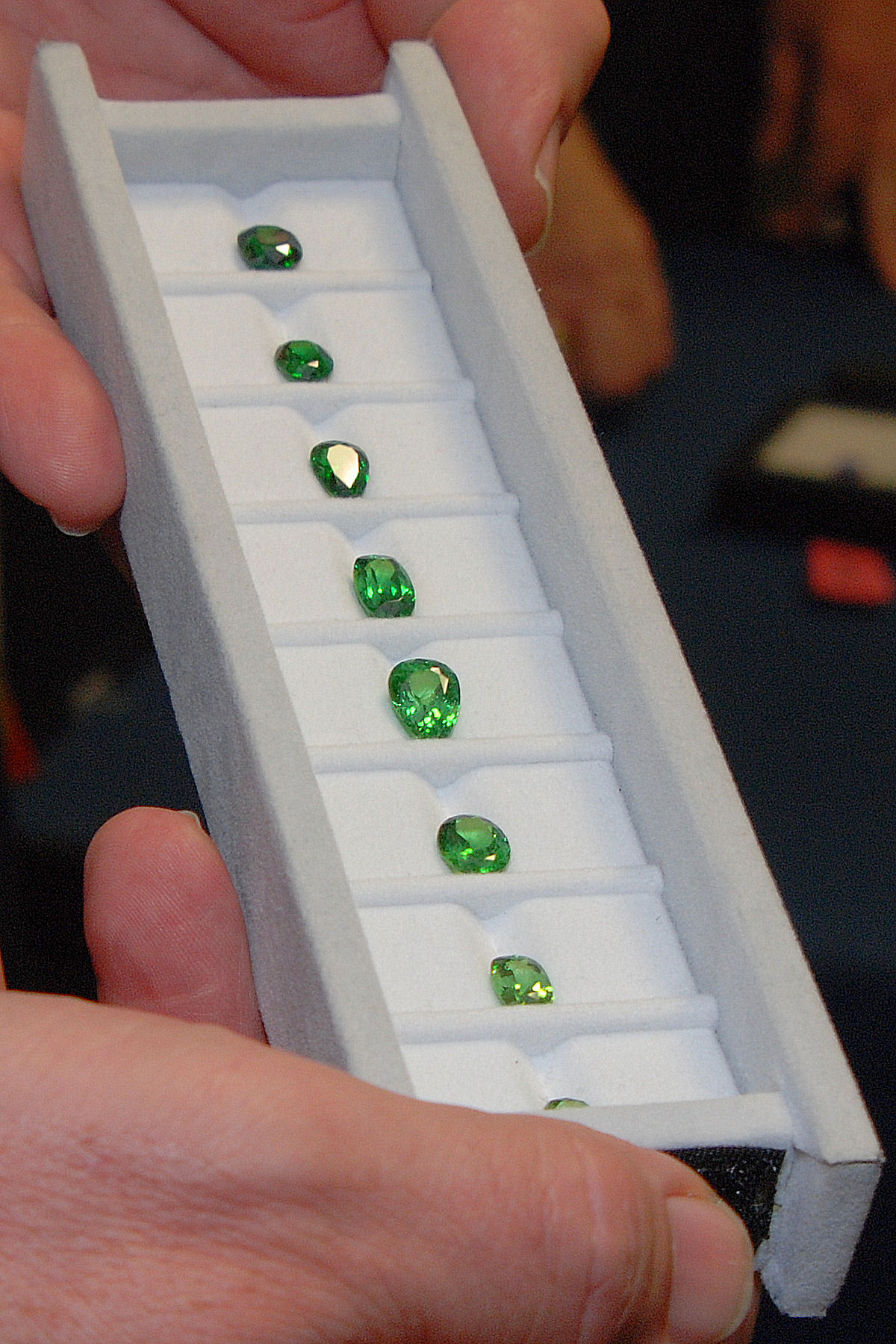
Mr. Walker topped off the evening by suggesting that AGTA organize a marketing campaign to educate the public and raise market awareness for colored gemstones, not unlike what DeBeers has done for the diamond market. He then shared some of his incredible tsavorite and tanzanite samples with our group. It was a “gem-packed” evening!


Meeting Summary by Etta Marie Dotson, PhD, GG, ISA AM

Photos by Melanie Marts, GG

Posted in Meeting Archives | 2 Comments

Gail Brett Levine – Appraising Antique Diamonds

Gail Brett Levine

Gail Brett Levine

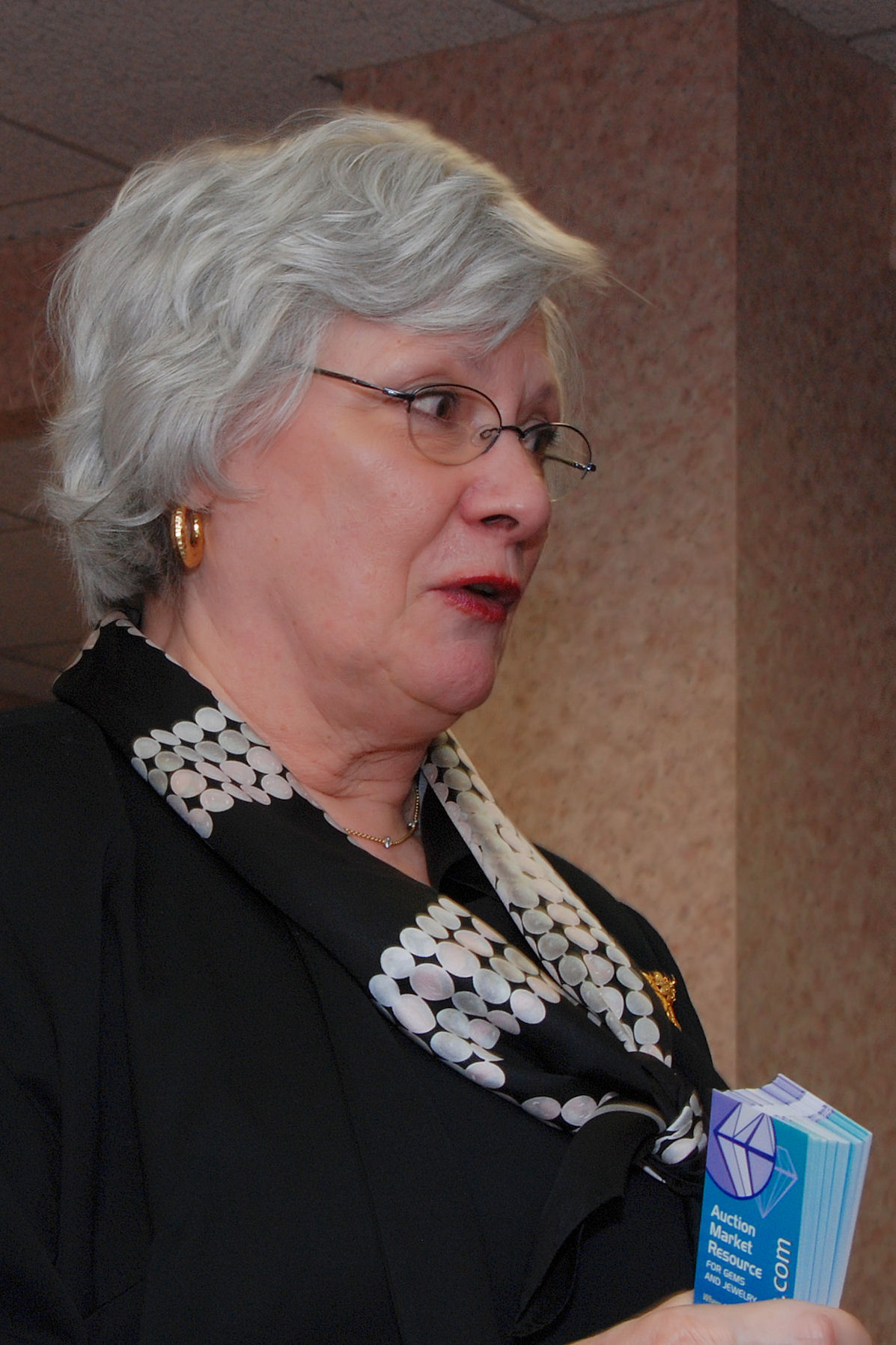
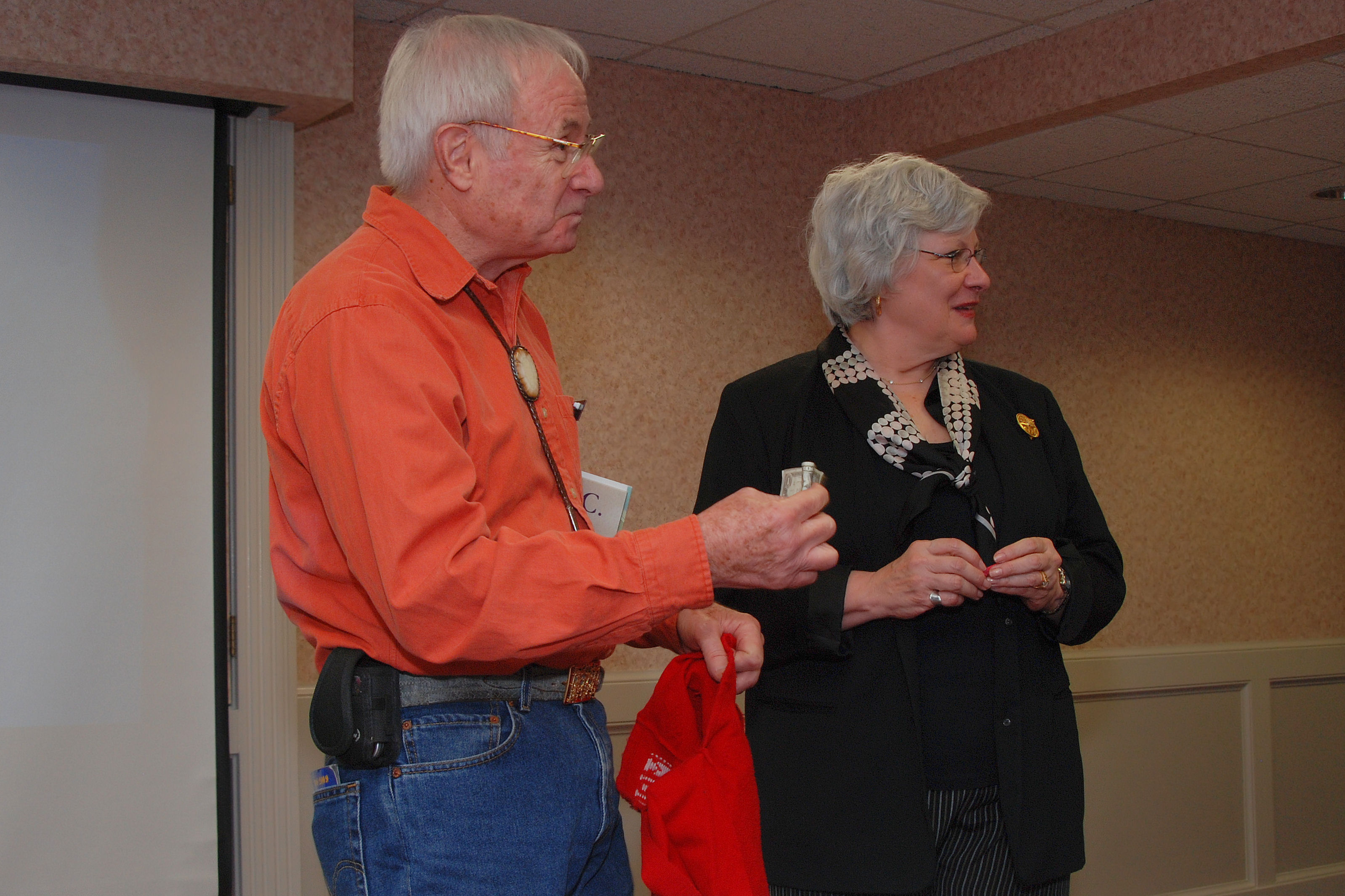
On September 23, 2008 we were treated to Gail Brett Levine, gemologist, author and president of the National Association of Jewelry Appraisers. Gail’s topic for the evening was older diamonds and how to value them. She emphasized that these stones need to be valued for what they are, not what they are not, as in recut to modern proportions.

One school of thought on this is that an old mine or old European stone should be valued based on the recut weight and estimated colour and clarity.

pic1pic2


Ms. Levine disagrees with this and throughout the presentation, gave several resources for research purposes.

pic3pic4


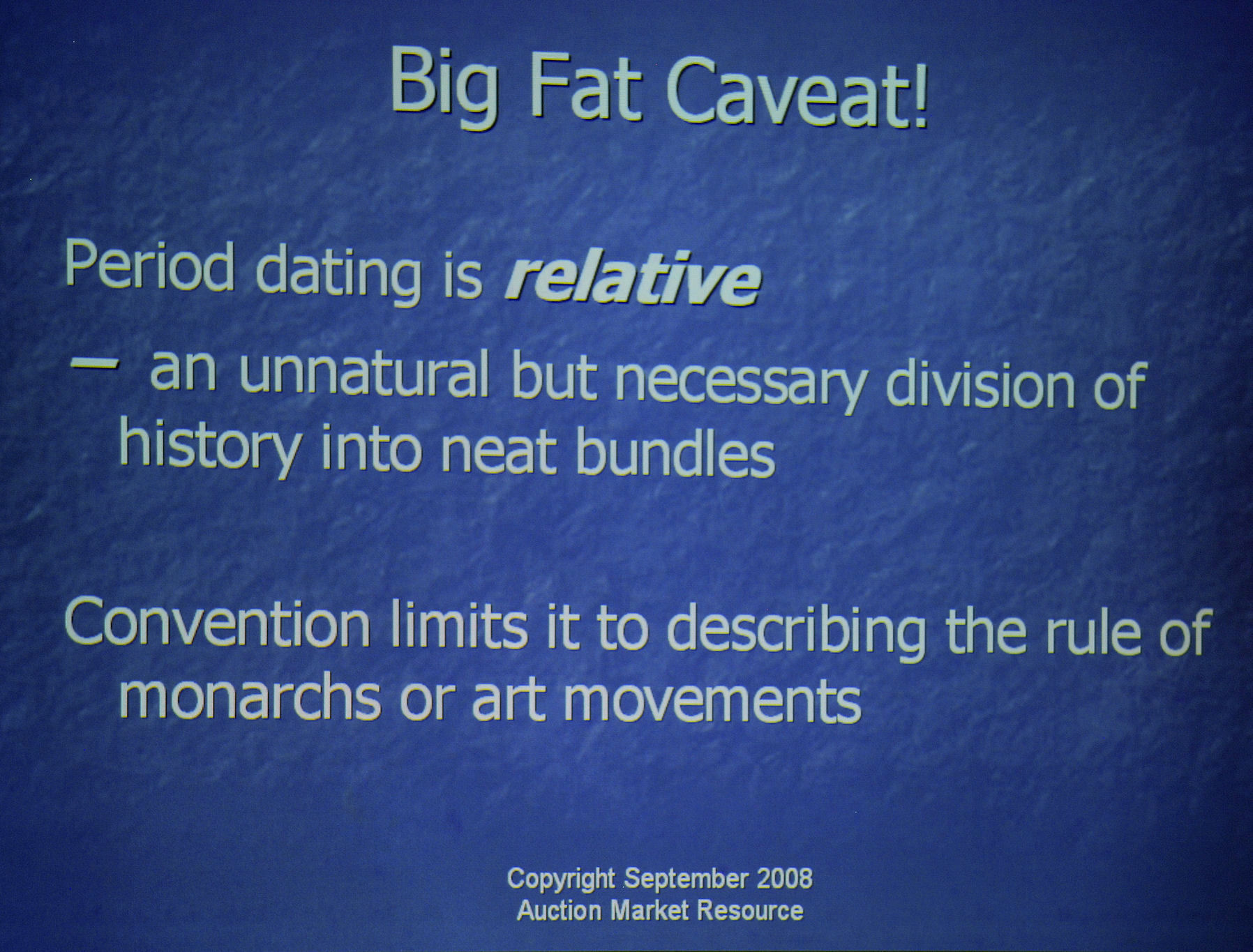
The first determination should be period dating the piece. Since there are many crossover periods, art and monarch dating should also be considered i.e. Deco vs. Nouveau or Napoleonic vs. Victorian to name a few.

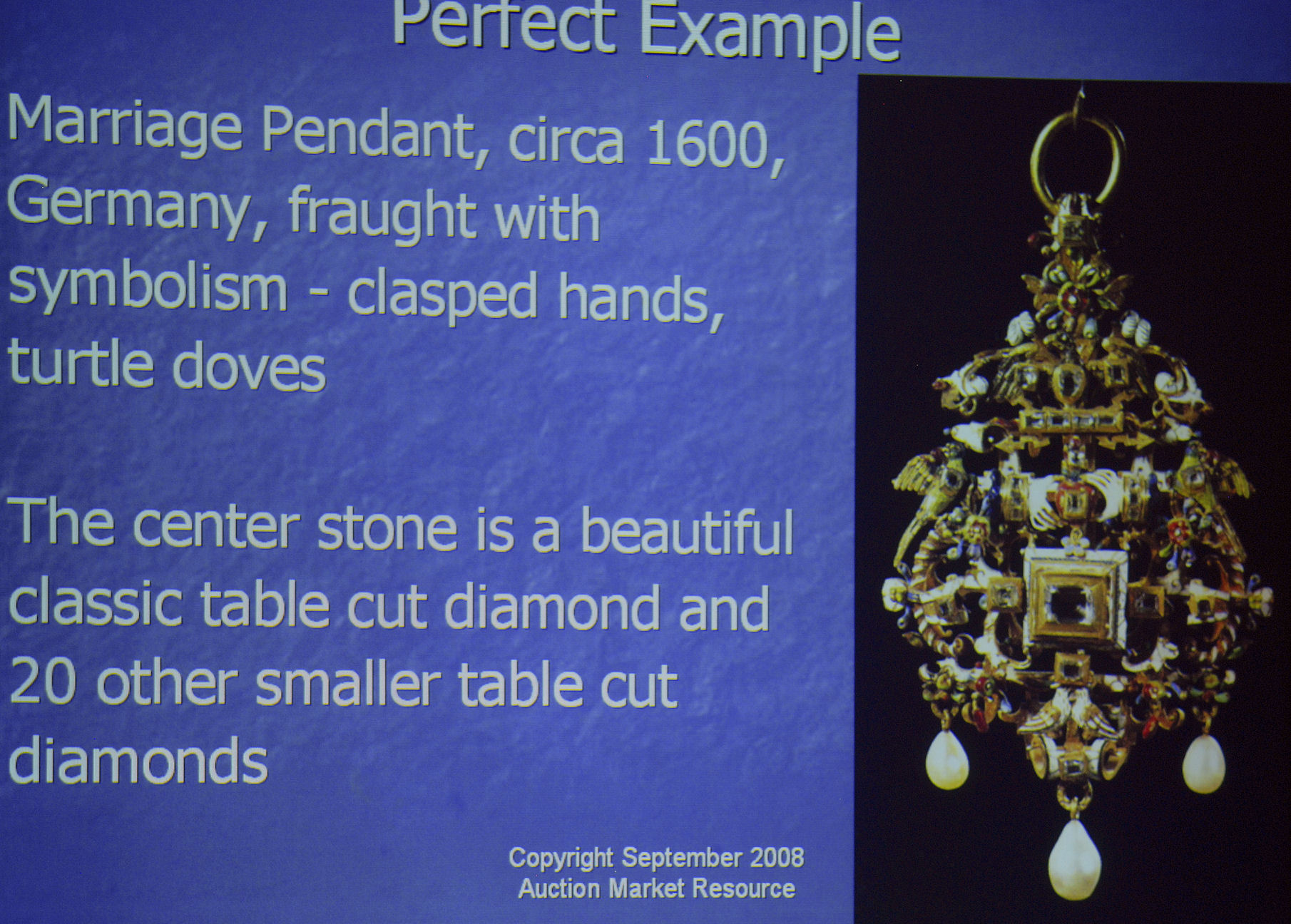
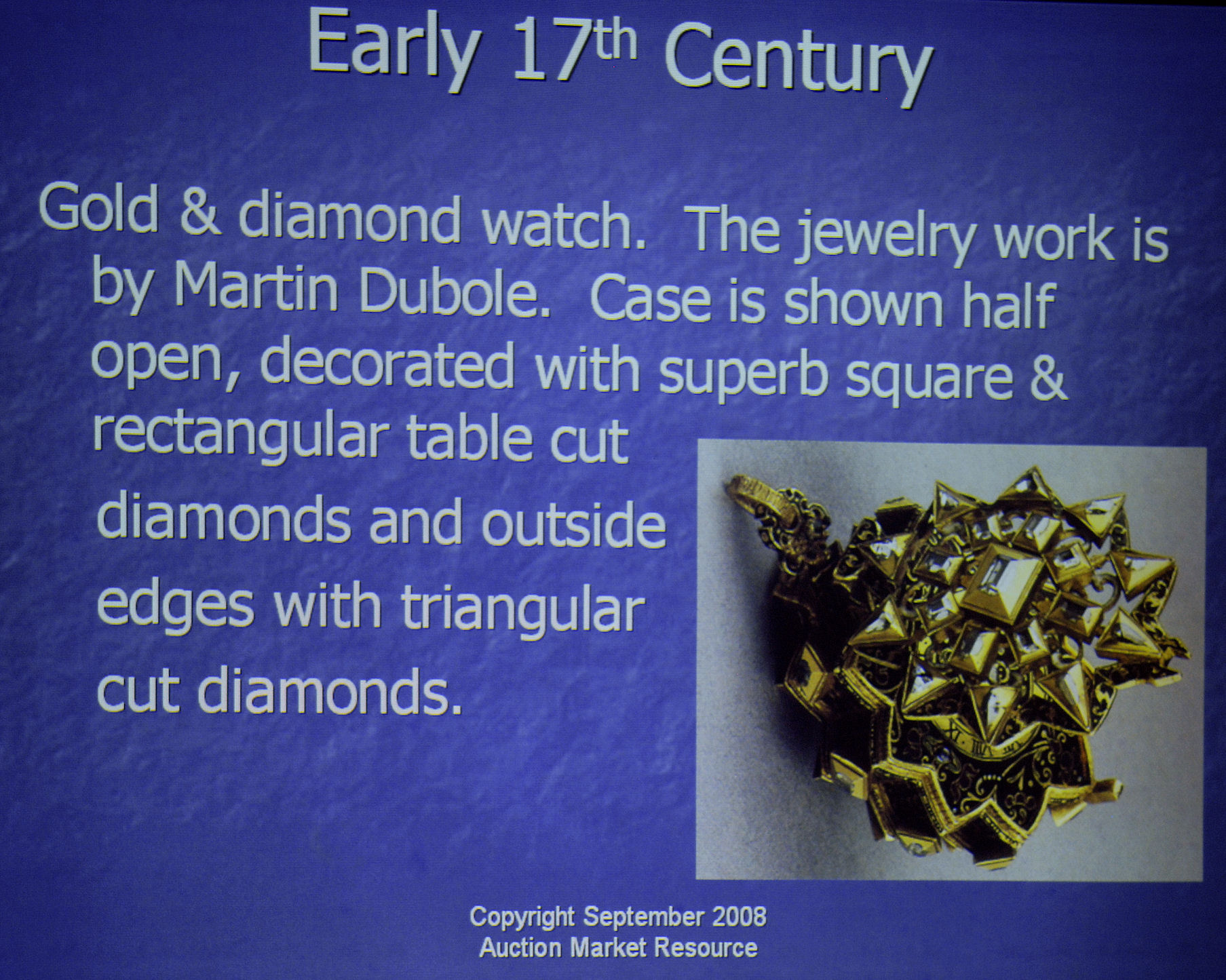
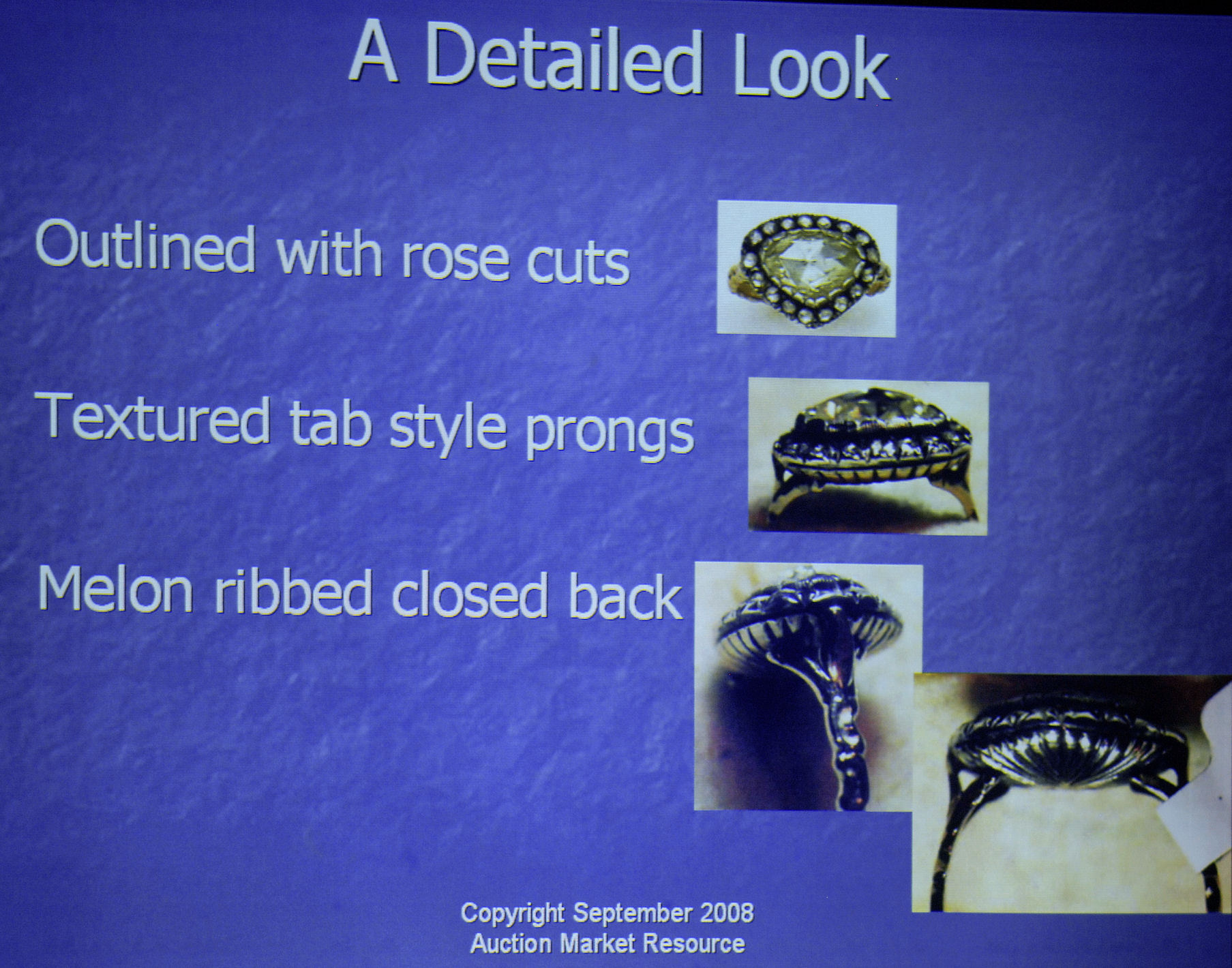
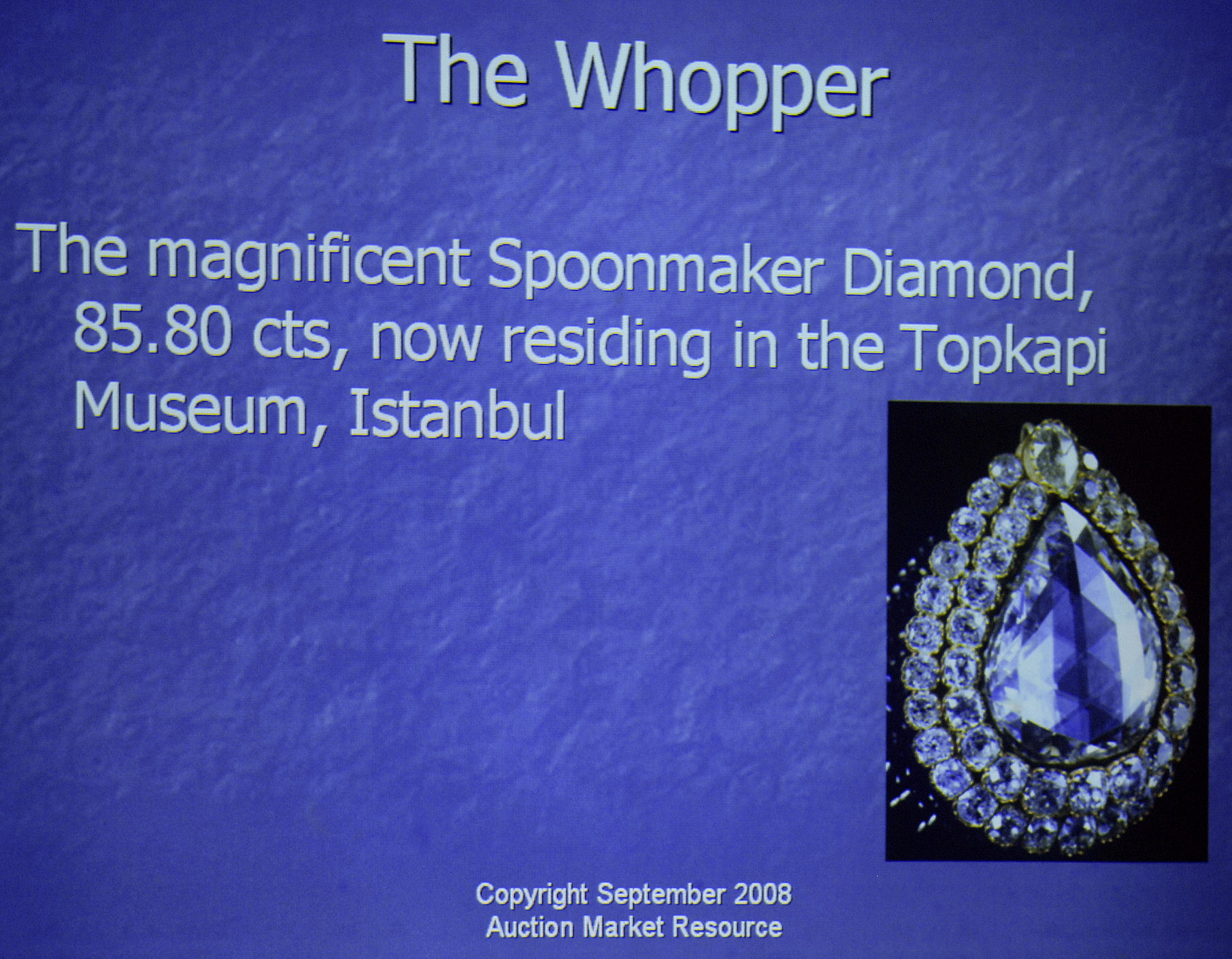
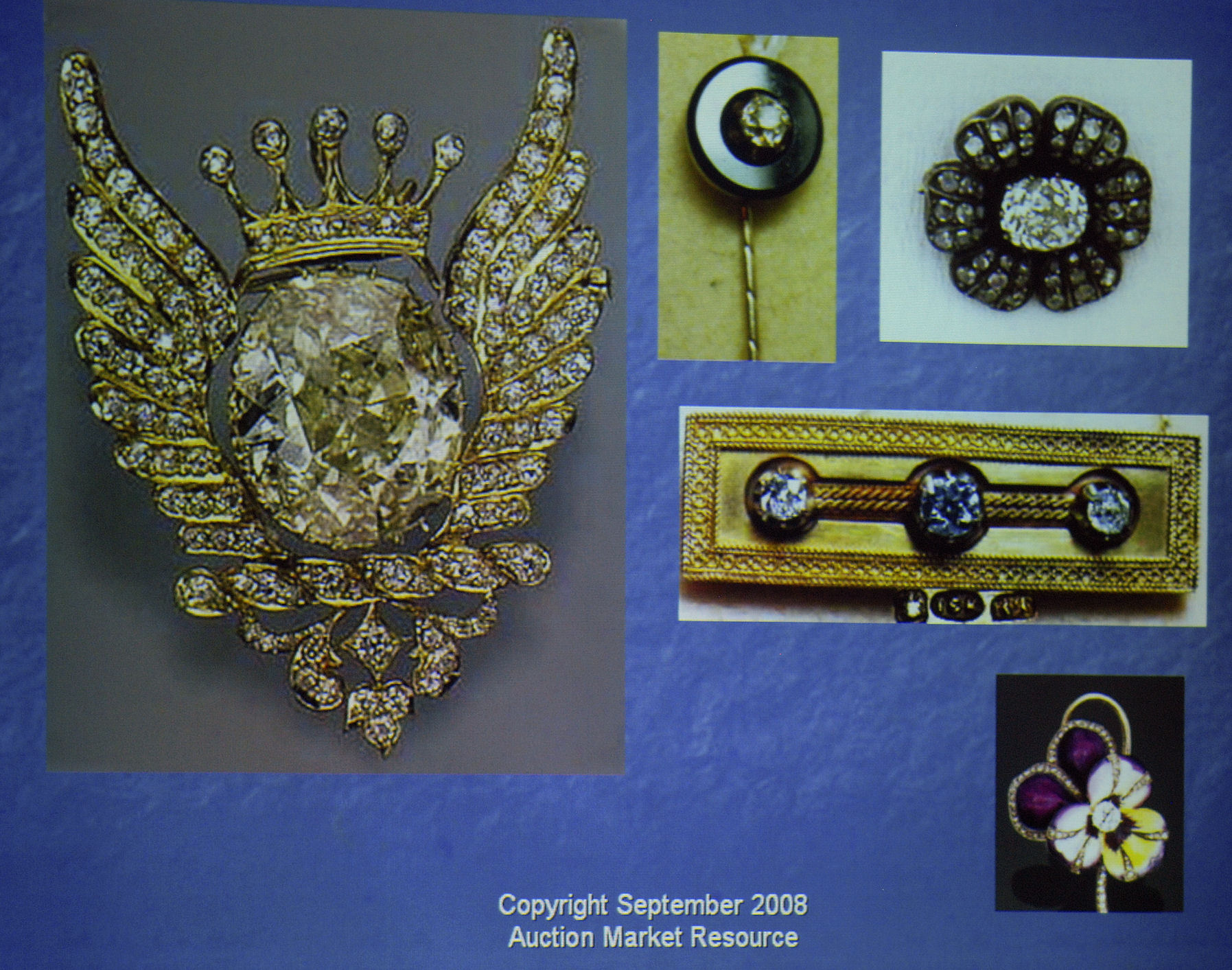
pic5Some of the oldest cuts seen in antique and period jewelry are the table and rose cuts. These cuts date back as far as the early 1300’s. Cutting processes were primitive at best so the stones were mostly flat and rectangular, hence the name. A little further in to the 1600’s, rose cuts appeared. These stones still had flat bottoms but had facets on the top, dome style. There is virtually no light performance to judge and the jewelry was often two-sided.

pic666Gail showed several examples of these. Point cuts were also common during this period and were square with sharp pointed tops and were used for etching names in glass panes. In valuing these pieces, age, provenance and workmanship are key. The best resources are the auctions markets.

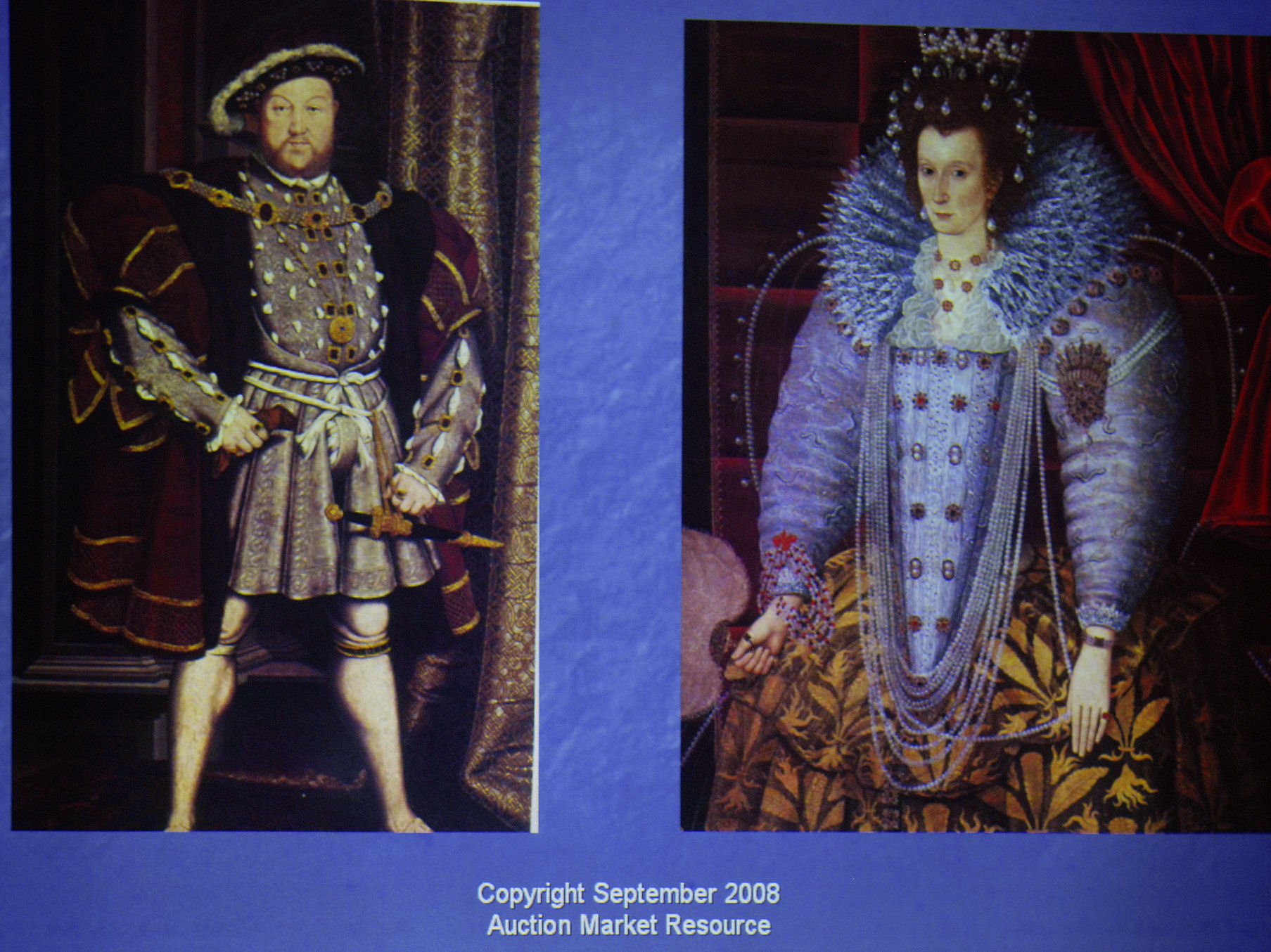
During the Elizabethan era, the queen’s jewels of choice were rubies and pearls. Up until this era, men were the dominant wearers of jewelry. Henry VIII was often pictured with many jewels. The trend then shifted to women. Rose cuts were still the norm with varying triangular faceting. This is key in separating old from new.

pic7pic8


The newer rose cuts are more precise with symmetrical faceting. This was rarely seen in the 16th and 17th centuries. England’s George the III ushered in the “Age of Diamonds” in the mid-1700’s to early 1800’s.

Rose cuts were set with closed, foil backing that yellowed with time. The backs were melon-ribbed. The rings of the period often had a swirl design in the shanks.
pic9pic10


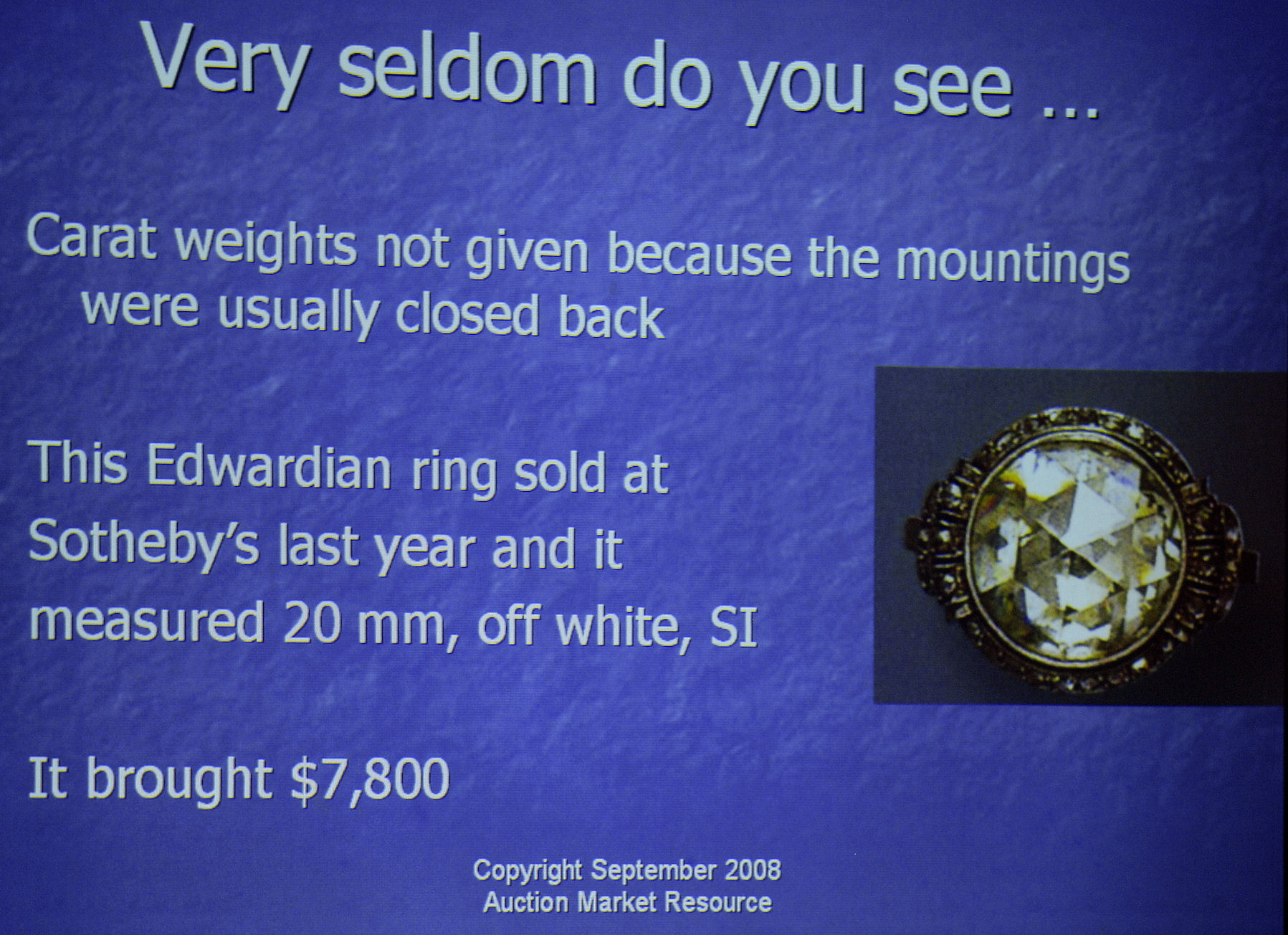
Many pieces were made “en tremblant”. Rose cuts remained popular into the Victorian and Edwardian periods. Due to the closed backs, weight determination is difficult at best so the pieces should be valued based on age, provenance and workmanship. Again, the auction markets would be the resources.
pic12pic13


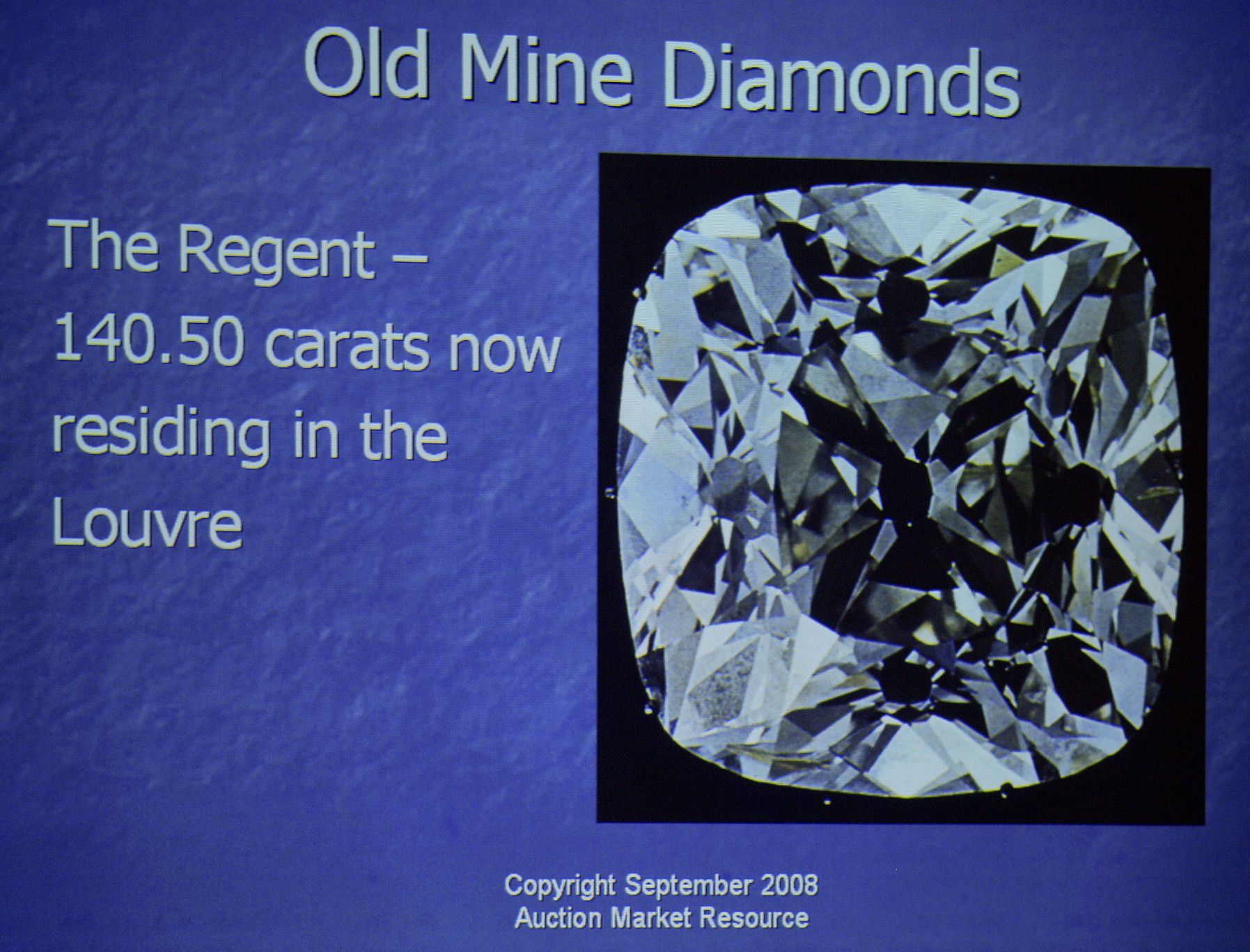
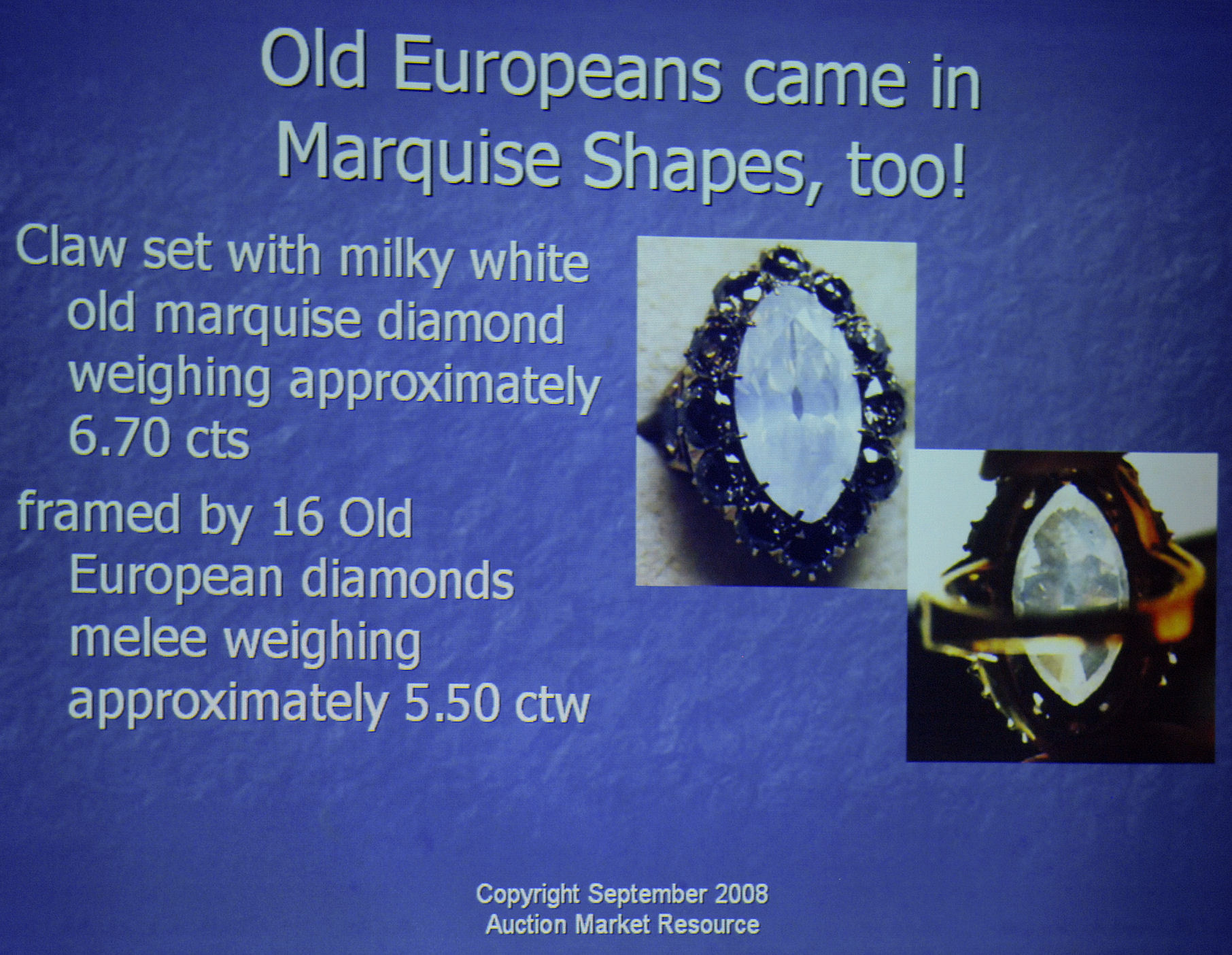
Moving to the old mine and European cuts, the main difference between the two are body outline and faceting. The mine cuts are cushion shaped with a four-rayed, back faceting pattern. The European cuts were typically round but could be other shapes as well. Both styles have high crowns, large culets and small tables. The separation of new mine cuts from old ones is that the new ones typically have small culets, no back rays and finished girdles. The valuing of mines and Europeans is different and there are several resources for this. Gail referenced Don Palmieri, Michael Goldstein and The Guide along with the auction markets. These are real time pricing guides for old cut stones so basing a value on recut weight is not necessary or recommended.
pic14pic15


Gail finished by noting that some older stones are being reset in to modern pieces and should be valued for their intrinsic worth.

Meeting Summary Submitted by Sherlene Y. Bradbury, G.G.
Photos Submitted by Melanie Marts, G. G.

Posted in Meeting Archives | Leave a comment